
Displaying items by tag: musical comedy
Goodman’s Iceboy! Is a Full‑Tilt Blast of Comic Mayhem
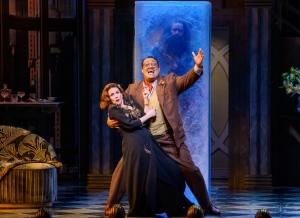
Goodman Theatre’s Iceboy! arrives as a gleefully off the rails musical that blends Broadway glamour, Neanderthal chaos, and theatrical myth making into one of the most delightfully strange premises to hit Chicago in years. It’s a satire, a love letter to showbiz, and a playful reimagining of how Eugene O’Neill might have found inspiration for The Iceman Cometh - if history had taken a wildly different turn.
Set in 1939, Iceboy! or The Completely Untrue Story of How Eugene O’Neill Came to Write “The Iceman Cometh” follows Broadway superstar Vera Vimm, who purchases the newly thawed 40,000‑year‑old Neanderthal after he’s discovered in the Arctic. An orphan herself, Vera risks the last of her money because she sees in Iceboy not just a curiosity, but the possibility of a son. Once he thaws, “Iceboy” unexpectedly becomes a theatrical sensation, charming Manhattan and quickly rising to stardom. His meteoric fame threatens Vera’s own spotlight, creating a comic rivalry as she scrambles to maintain her status.
Meanwhile, playwright Eugene O’Neill - stuck in a bout of severe writer’s block - becomes fascinated by Iceboy’s sudden cultural impact. In this fictionalized retelling, Iceboy’s presence and persona inspire O’Neill to write The Iceman Cometh, intertwining the Neanderthal’s improbable celebrity with one of American theatre’s most iconic works. The musical plays as a satirical backstage romp - part showbiz fable, part absurdist comedy - where ambition, ego, and theatrical legend collide, all delivered with a cheerful, madcap sensibility that feels straight out of the Mel Brooks playbook. The tone is broad, cheeky, and joyfully irreverent, embracing the kind of anything goes comic mayhem Brooks perfected in The Producers and Young Frankenstein.
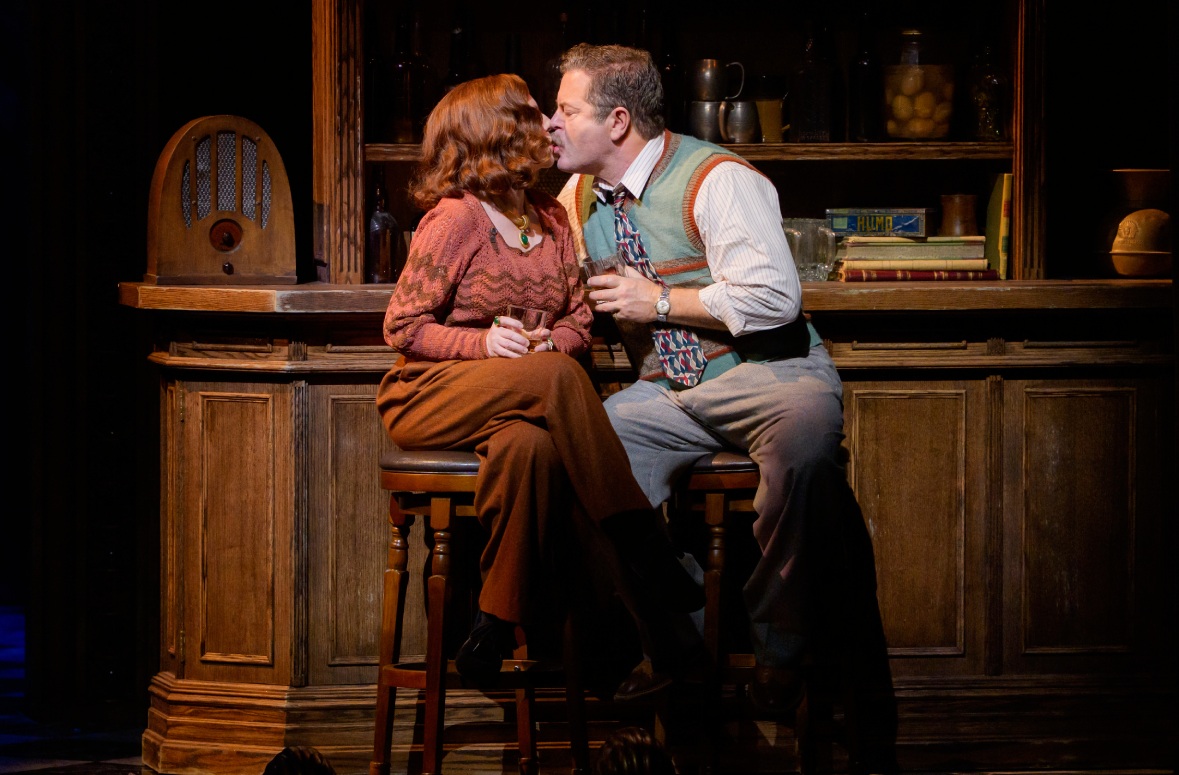
Megan Mullally as Vera Vimm and Nick Offerman as Eugene O'Neill in Iceboy! at Goodman Theatre. Photos by Todd Rosenberg.
To appreciate just how boldly Iceboy! reframes O’Neill’s legacy, it helps to remember what The Iceman Cometh actually is.
O’Neill’s future Pulitzer Prize offering inspired a four-hour film that’s essentially a parade of drunks in a dim bar, each clinging to dreams they’ll never pursue - the bar itself a metaphor for their inability to move forward, trapped in the same place both physically and emotionally. The 1973 film adaptation centers on the down and out patrons of Harry Hope’s saloon in 1912 Greenwich Village. These men - alcoholics, former revolutionaries, disgraced professionals - spend their days drowning in booze and clinging to “pipe dreams” of future redemption.
Their routine is disrupted when charismatic salesman Theodore “Hickey” Hickman arrives - sober, zealous, and determined to force everyone to abandon their illusions. Hickey’s mission to strip the barflies of their comforting fantasies leads to emotional unraveling, bitter confrontations, and ultimately a chilling confession about his own past. The story is a tragic, philosophical exploration of hope, delusion, and the brutal cost of facing reality.
All of that brooding, booze-soaked existentialism makes Iceboy!’s approach even more refreshing. Where O’Neill’s world traps its characters, this musical unleashes its own with joyful abandon - led by an ensemble so charismatic and so sharply funny that the show vibrates with life.
Guiding the production is director Marc Bruni, who shapes the show with crisp timing and a clear sense of comic architecture, keeping its wild premise buoyant without letting it unravel. The music by Mark Hollmann gives the story a light, upbeat foundation, and the lyrics by Hollmann and Jay Reiss add steady humor throughout. The book by Erin Quinn Purcell and Reiss keeps the tone approachable, offering just enough structure for the characters to play within. Joann M. Hunter’s choreography provides simple, well‑placed movement that supports the show’s comic rhythm without calling attention to itself.
It certainly helps that Iceboy! is powered by an outrageously talented and instantly likeable ensemble. Husband and wife duo Nick Offerman and Megan Mullally make a dynamite team - Offerman is superb, bringing his signature deadpan charm to Eugene O’Neill, the same understated precision and dry, unflappable humor that’s made him beloved in Parks and Recreation, Devs, and The Last of Us. Mullally, best known for her Emmy winning turn as Karen Walker on Will & Grace, her unforgettable Tammy II opposite husband Nick Offerman on Parks and Recreation, and her Broadway run in How to Succeed in Business Without Really Trying, delivers a riotously funny, razor sharp performance as Broadway titan Vera Vimm. She tears into the role with fearless comic bravado and vocal firepower that reminds you she’s a true musical theatre pro - her belt is thrilling, her phrasing wickedly playful, and her comedic musicality is a show in itself. Few performers can time a sharp aside with Mullally’s precision.
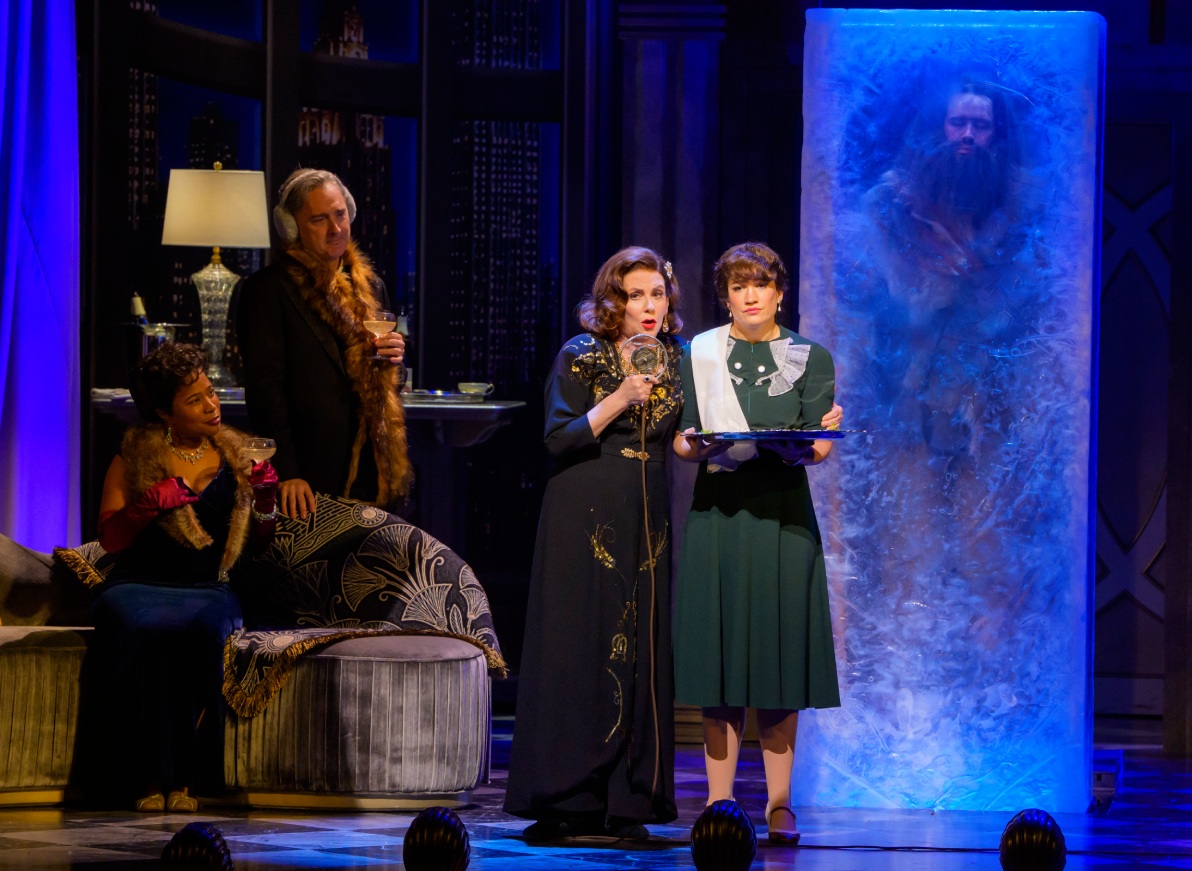
(L-R) Melanie Brezill, Shawn Pfautsch, Megan Mullally, SarahStiles and Grey Henson in Iceboy!
Cedric Yarbrough, best known for Reno 911! and Speechless, is terrific as Floyd Richards, Vera’s devoted lover and perpetually stressed playwright. He brings a warm, rumpled charm to the role, layering Floyd’s desperation with impeccable timing, sly vocal humor, and a steady stream of perfectly landed one-liners. His presence gives the show a grounded comic pulse that keeps the chaos humming - and his baritone is impressive.
Chicago favorite Alex Goodrich is a delight as Frankenstein, one of Vera’s long-suffering caretakers, layering the role with buoyant physical comedy and a wonderfully off-kilter energy that fits the show’s boisterous comic verve.
As Iceboy or “Jeff,” Grey Henson is a revelation - wide eyed, instinctive, and musically explosive. He plays the Neanderthal with such innocence and uninhibited theatrical gusto that the audience can’t help but root for him. He’s a genuine surprise as well, offering several scene-stealing moments that deepen the show’s comic momentum and give its wild energy an extra spark.
And Sarah Stiles, as Lambert, Vera’s whip‑smart, perpetually overwhelmed assistant, makes every appearance count with her explosive comedic instincts and razor‑precise delivery. Her timing is immaculate - every flustered aside, every clipped retort, every moment of mounting panic lands with such clarity and control that she elevates even the smallest beat. Stiles has a way of shaping a line so it hits with both intelligence and impact, turning Lambert’s exasperation into one of the show’s most consistently funny throughlines.
Together, this ensemble - Offerman, Mullally, Yarbrough, Henson, Stiles, Goodrich, and a bench of other strong players rounding out the cast - forms an ecstatically silly comedy machine, a group so talented and irresistibly likeable that the laughs never let up and every performer feels essential to the show’s delirious momentum.
The musical numbers are wonderfully fun. Songs like the opening number “Historic Find,” the gloriously unhinged “Can You Call Me ‘Mama’?,” and the full company showstopper “Hooray for Iceboy!” set the tone for the musical’s raucous spirit. Each one is packed with sharp wit, big Broadway energy, and the kind of gleeful absurdity that keeps the audience laughing long after the button. “Historic Find” opens the show with a clean burst of discovery‑driven momentum, “Can You Call Me ‘Mama’?” makes full use of Mullally and Henson's sharp comic instincts, and “Hooray for Iceboy!” brings the full company together for a lighthearted, good‑natured celebration. This sample size of songs highlights how musically nimble and consistently funny Iceboy! is - a score that shifts easily between cleverness, silliness, and moments of heightened theatrical play.
One of the funniest musical numbers in the show is “Marry Me,” sung with perfect comic contrast by Grey Henson and Sarah Stiles. In it, Iceboy proposes to Lambert with disarming sincerity, offering what he believes are tender declarations of affection - only to fold in a series of prehistoric “courtship traditions” drawn from his caveman understanding of romance. Throughout the song Iceboy sings to her, “I want to take you from behind,” his way of saying he'd like to marry her. The result is a wonderfully off‑balance duet that lands as one of the show’s most genuinely hilarious moments.
Adding to the show’s irresistible charm is the fantastic Art Deco set designed by Paul Tate Depoo, which instantly places us inside Vera Vimm’s lavish living room - all gleaming lines, bold geometry, and glamorous period detail. Depoo’s design captures the theatrical excess of 1939 Broadway while giving the actors a playground of visual delight. On each side of the stage, Eugene O’Neill’s writing desks sit like dueling stations of inspiration and frustration, a clever touch that keeps his presence woven into the action. And, true to O’Neill’s legacy, there’s always a bottle within reach, a sly nod that becomes both a running joke and a thematic anchor. It’s a smart, stylish environment that supports the comedy while grounding the show in a richly imagined world.
Iceboy! or The Completely Untrue Story of How Eugene O’Neill Came to Write “The Iceman Cometh” is an outrageously inventive, joy-charged burst of musical comedy that proves Goodman Theatre can still surprise us in the best possible ways. With its fearless cast, sharp writing, and deliriously fun score, it’s the kind of show that sends you out grinning and grateful for the sheer imagination on display. Iceboy! runs through August 9th at Goodman Theatre and stands as one of the most riotously entertaining nights out you’ll find this summer.
Very highly recommended.
For tickets and/or more show information, click here.
A Quietly Ravishing Night: Marriott’s A Little Night Music
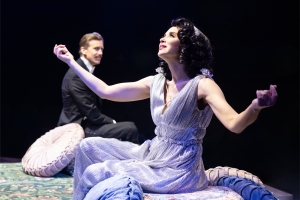
Marriott Theatre’s in‑the‑round intimacy turns A Little Night Music - which premiered on Broadway in 1973 and later became a 1977 film - into a quietly seductive swirl of glances, secrets, and second chances, the kind of production where the waltz feels like its own character. Under the soft glow of perpetual twilight, Sondheim’s lovers and liars circle one another with equal parts longing and restraint, and the space itself heightens every stolen look and half‑spoken truth. It’s a show built on emotional undercurrents, and Marriott’s staging lets those currents ripple right through the audience.
Stephen Sondheim’s A Little Night Music unfolds like a slow-turning dance that keeps tightening its circle, drawing its characters closer to the truths they’ve been avoiding. Set in a turn‑of‑the‑century Sweden where manners are crisp but desires run hot, the story follows lawyer Fredrik Egerman, a man trying to convince himself he’s content. He’s recently married Anne, a porcelain‑delicate young bride who’s still clinging to her innocence, while his son Henrik broods in the corner, nursing both a cello and an unspoken crush.
Everything tilts when Fredrik reconnects with Desiree Armfeldt, the actress he once loved and never quite got over. Desiree, ever the pragmatist, is juggling her own complications - namely Count Carl‑Magnus Malcolm, a swaggering dragoon whose jealousy burns hotter than his intellect. When Desiree attempts to untangle her romantic knots, she invites everyone to her mother’s country estate for a “quiet weekend,” which of course becomes anything but.
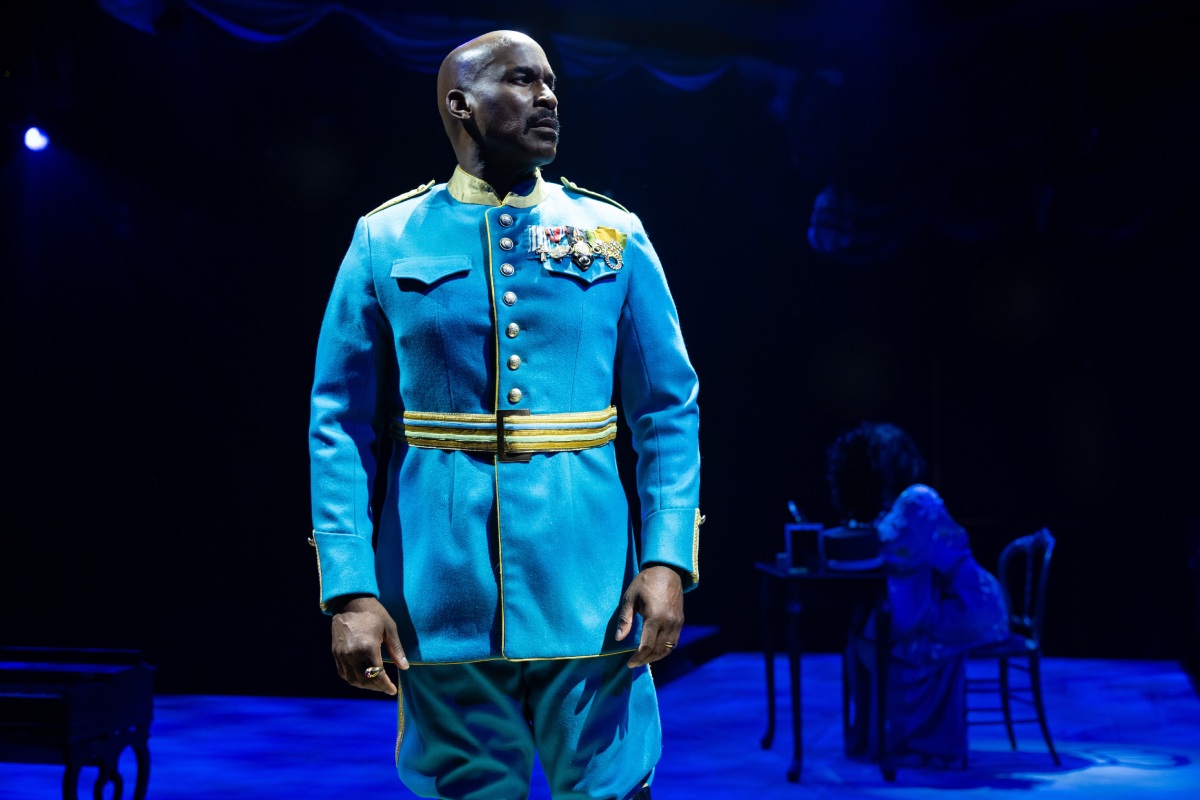
Alan H. Green in Marriott Theatre's A Little Night Music.
What follows is a weekend of mismatched couples, misread signals, and emotional truths finally spoken aloud. Under the glow of the perpetual Nordic twilight, partners shift, illusions crack, and the characters discover that love - in all its foolishness and ache - is rarely tidy but often exactly what they need. By the time the final waltz resolves, hearts have realigned, old wounds have softened, and the night has delivered its promised wisdom.
Sondheim’s score remains the production’s quiet spellbinder - a latticework of turning phrases, reprises, and melodic ironies that reveal as much about the characters as the book does. Songs like “Now,” “Soon,” and “Later” braid together with clockwork precision, exposing the emotional stalemates everyone is too polite to name, while “A Weekend in the Country” bursts with layered wit and rising chaos. And when the music finally slows into the aching simplicity of “Send in the Clowns,” the entire evening seems to exhale. Marriott’s staging lets these songs land not as showpieces but as confessions, each one circling closer to the truths the characters have been dancing around all night.
Under Nick Bowling’s beautifully calibrated direction, A Little Night Music moves with a clarity, elegance, and emotional intelligence that allows every waltz, glance, and confession to land with quiet precision.
Marriott’s production finds its center of gravity in Alexandra Silber, whose Desirée Armfeldt glows with the practiced sparkle of an actress slightly past her prime who knows exactly how she’s perceived and used by the married men who adore her - and the bruised vulnerability of someone who’s finally tired of the performance. Silber calibrates every beat with care: the sly asides, the brittle composure, the ache that flickers just beneath the surface. When she reaches “Send in the Clowns,” it doesn’t arrive as a grand gesture but as something far more intimate - a truth about the “bread crumbing” type of love she’s accepted as a traveling working actress that she’s been circling and battling for years. Opposite her, Andrew Samonsky gives Fredrik Egerman a beautifully worn‑in charm, the kind of man who hides his longing behind polite smiles and a touch of self‑mockery. His Fredrik isn’t a fool; he’s a man quietly unraveling, caught between the mature love he’s built and the young carefree one he still imagines he can achieve with his much younger bride. Samonsky’s performance is both sensual and frustratingly narcissistic. One example of this is when Fredrik apologizes to Desiree - as he leaves her heartbroken yet again - for confessing the tempting truth that her very presence is his safe haven… even though he has no intention of ever being saved by her.
I absolutely adored every delicate moment between lovers, friends, and husbands and wives in this gracefully performed piece, which reveals how men and women are still, even now, navigating the ever‑shifting moods of the partners in their lives in order to sustain lasting relationships.
Alan H. Green makes a vivid impression as Count Carl‑Magnus Malcolm, swaggering through the role with puffed‑up bravado and razor‑sharp comic instinct. Veronica Garza matches him effortlessly as Charlotte, her barbed wit and impeccable comedic timing turning bitterness into something unexpectedly funny and deeply human. Addie Morales gives Anne a shimmering, anxious innocence that feels grounded, while Eldon Warner‑Soriano lets Henrik’s turmoil simmer until it finally breaks open into something raw and affecting.
The singing voices of every single member of this talented and attractive cast are of true opera quality, and paired with the astoundingly modern, lyrical poetry of Sondheim’s evergreen script, I found myself leaning in to catch every word from their lips like a bee sipping nectar from flowers. Across the board, the vocals are rich, expressive, and beautifully attuned to the intricacies of Sondheim’s score.
From there, Carmen Roman anchors the evening with a magnetic, unhurried authority as Madame Armfeldt, delivering Sondheim’s sharpest observations with the cool precision of someone who has cataloged every shade of heartbreak and delicious, luxurious romance from men of great standing throughout her long life. She brings down the house with superbly dry one‑liners like, “Don’t serve them the best champagne - I’m saving that for my funeral!”
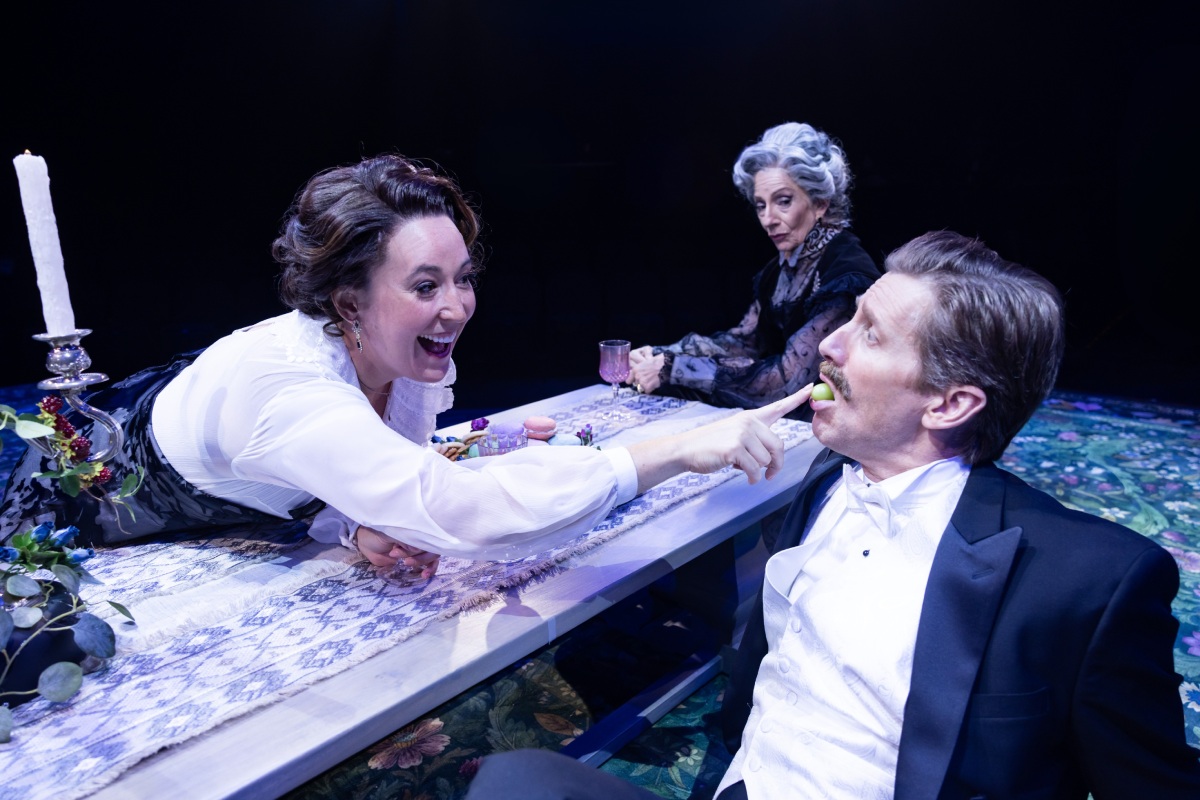
Veronica Garza, Andrew Samonsky and Carmen Roman (rear) in A Little Night Music at Marriott Theatre. Photos by Justin Barbin.
Madison Uphoff brings Petra a bold, earthy vitality - a reminder that desire belongs to everyone, not just the elegantly miserable. Together, this ensemble moves through Sondheim’s bittersweet waltz with nuance, confidence, and a clear understanding of the emotional architecture beneath the score.
Scenic Designer Regina García shapes the evening with a clean, elegant visual world that proves how little is needed to conjure an entire emotional landscape. The stage remains mostly bare - a chaise lounge here, a writing desk there - yet the details she chooses carry real poetic weight: a graceful two‑person swing drifting down from the rafters like a shared memory, a balmy moon casting its soft glow across the space, and strands of hanging lights and flowing ribbon that give the in‑the‑round theatre the feeling of a summer night suspended in time.
Associate Choreographer Katie Johannigman threads movement through this environment with a light, intuitive touch, while under Brad Haak’s baton, Sondheim’s score unfurls with clarity and warmth. Sally Dolembo’s costumes superbly wrap the production in period elegance. Dolembo’s designs resemble modern ballet costumes and express the unique sensuality and sexuality of both the male and female characters in a most tasteful and expressive way that makes your eye want to follow their every move especially the graceful way they make love to one another. The delicate, mostly pastel costumes emote a subtle erotic beauty without overwhelming each character’s emotional and comedic shifts as the night deepens and the whirl tightens its hold.
Marriott Theatre’s A Little Night Music unfolds on the perfectly intimate size of their theatre in the round stage, and the production’s emotional reach is anything but small. What emerges over the course of the evening is a circling dance of sensual longing, unrequited love and unexpected grace - a reminder of how Sondheim’s work can pierce straight through the heart when handled with this level of care. By the time the final notes fade and the lovers step back into the soft glow of twilight, the production has delivered something quietly luminous: a story about desire and forgiveness told with wit, tenderness, and a deep understanding of the ways men and women walk the tightrope of love and pride, playing love like a game of egos until they realize true love is the one thing they truly cannot live without.
Highly recommended.
For tickets and/pr more show information, click here.
Nunsense, Not Quite Immaculate - But Blessed With a Strong Cast
Following its recent winter production of Sister Act, Drury Lane Theatre returns to the convent with Nunsense, a light-hearted musical comedy which, as the title implies, is a lot of nonsense.
The premise is funny, albeit morbid. After an unfortunate mishap, 52 members of the Little Sisters of Hoboken die from tainted soup prepared by Sister Julia, Child of God. With limited resources, the surviving nuns can only cover the funeral expenses of some of their sisters - leaving the remaining four bodies in their convent freezer, awaiting burial. How can they solve this problem? Well, stage a variety show, obviously! After all, while these women are nuns, they all wanted a moment in the spotlight.
E. Faye Butler, who also directed Sister Act, returns to stage Nunsense and injects the same optimism into this show. Unfortunately, it lacks the same substance, failing to elevate its premise beyond the initial idea.
The origin of Nunsense seems to explain its structural weakness. In the early 1980s, playwright Dan Goggin created a line of tongue-in-cheek greeting cards featuring a nun offering witty, irreverent quips. The cards were a hit, and Goggin used them as a jumping-off point for a cabaret show, which was later expanded into a full-length musical.
Unfortunately, the script doesn’t have much narrative depth or structural momentum. It seems to wander through quips and gags, trying to find a laugh rather than developing character or plot. At one point, we learn that a health inspector will fine them if they can’t raise the money by tomorrow, but it doesn’t land as a serious threat or even a driving force for the remainder of the show. The problem even has a quick resolution when Sister Mary Amnesia remembers her identity and discovers she’s suddenly rich thanks to a contest - talk about a deus ex machina (mary-ina, if you will).
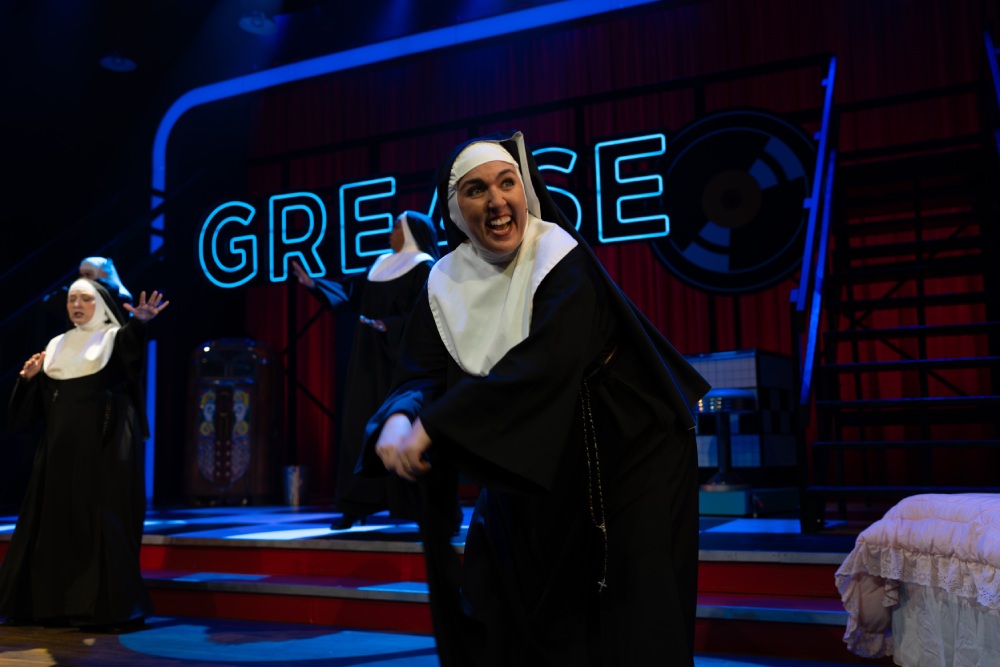
Rachel Carreras in Drury Lane THeatre's Nunsense. Photos by Caitlin Dennis.
The book’s weaknesses are unfortunate because the cast is genuinely strong. Every member brings spectacular vocals to the stage, effortlessly belting out musical numbers and sounding excellent throughout.
Sharriese Hamilton delivers a standout performance as Sister Hubert. Her sassy comebacks and vocal riffs are hilarious, especially her trill in their rap. Her big second-act number, "Holier Than Thou," takes the audience to church and gives the show a much-needed jolt of energy. Cory Goodrich, Rachel Carreras, Kelly Felthous, and Aurora Boe also do well in their solo moments, whether it’s physical comedy, playing with a puppet, or ballet. Felthous gets to shine with her audience work and banter, and it is fun to see the cast do callbacks to specific interactions, such as flirting with or chiding audience members.
The show succeeds best when it moves quickly. Without much plot, gags can get tired easily. For instance, the Reverend Mother accidentally inhales a drug found in the girls’ locker room and goes to pieces. The sequence goes on a few beats too long. Transitions also could be tightened so the show doesn’t lose steam between numbers.
Nunsense is a fun idea, but the script fails to execute it satisfyingly. It’s also unclear who the intended audience is; the PG‑13 tone might make it a slightly tougher fit for families, even though they’d otherwise be a natural demographic.
While each performer gets a well-deserved moment to shine, it is a shame that such a talented cast doesn't have better material to serve either their collective skills or a meaningful story. Drury Lane's Nunsense has its moments, but it never quite reaches divine heights.
This review is proudly shared with our friends at www.TheatreInChicago.com.
BrightSide’s intimate staging of The Producers shines with Broadway-sized power

BrightSide Theatre’s The Producers storms into Meiley Swallow Hall with the kind of swagger only Mel Brooks can inspire: brash, brazen, and blissfully unconcerned with good taste. From the moment the lights rise, the show charges ahead with a manic momentum that feels both affectionately old school and sharply self-aware. It knows exactly what it’s here to do: go big, go bold, and never apologize for the mayhem.
Under the confident direction of Artistic Director Jeffrey Cass, this staging taps directly into Brooks’ outrageous, boundary-poking sensibility and never loosens its grip. Cass understands that The Producers thrives when its humor teeters on the edge, and he captures that gleeful imbalance with remarkable control. The original film premiered in 1967, the musical exploded onto Broadway in 2001, and if anyone wonders whether that brand of audacity still lands in 2026, the answer is an unequivocal yes. The Naperville audience laughed steadily from the first scene to the curtain call, proving that Brooks’ anarchic wit remains timeless.
BrightSide’s version brings the show’s wild premise to life with full comic force: washed-up Broadway producer Max Bialystock (Scott Kelley) and anxious accountant Leo Bloom (Michael Metcalf) concoct a get-rich-quick scheme to stage the biggest flop in theatre history. If the show collapses on opening night, they can pocket the investors’ money and disappear. Their hunt for guaranteed failure leads them to the worst script imaginable, the most misguided director in town, and a cast so spectacularly wrong that success seems impossible. But in classic Brooks fashion, the plan detonates in the most unexpected way, turning their surefire disaster into an accidental triumph and leaving the pair scrambling to survive the fallout.
That spirit of intentional ruin pulses through the musical numbers, each one another attempt to engineer catastrophe. “Springtime for Hitler,” the show-within-the-show’s notorious centerpiece, is crafted as an overblown, tasteless pageantry meant to repel audiences instantly. “Der Guten Tag Hop Clop” and “Haben Sie gehört das Deutsche Band?” push the absurdity even further, spotlighting a playwright and director whose delusions should have doomed the project. Even “Keep It Gay,” with its flamboyant insistence on excess, is part of Max and Leo’s strategy to stack the deck with choices so misguided they can’t possibly succeed. Ironically, the songs are so bold, so shamelessly theatrical, and so cleanly executed that the very elements meant to sink the show end up turning it into the hit they never wanted.
Scott Kelley’s Max Bialystock and Michael Metcalf’s Leo Bloom make a terrific duo, striking a lively balance between showmanship and panic. Kelley barrels through the role with larger-than-life bravado, while Metcalf’s tightly coiled nervousness plays off him beautifully. Their timing is crisp, their rapport effortless, and together they elevate every scheme, meltdown, and misstep.

Max Bialystock (Scott Kelley) and Company.
Amelia Tam is outstanding as Ulla, the blonde bombshell Max hopes to lure to his “casting couch”. She is an amazing dancer with an equally outstanding voice, commanding attention the moment she steps onstage with a blend of radiant charm and razor-sharp comedic instinct. Her Ulla rises far above the familiar Swedish ditzy-blonde trope, becoming a spark of vitality who shifts the temperature of every scene she enters. Tam mixes wide-eyed innocence with sly intelligence, making each line land with extra bite. Whether stretching a vowel for comedic payoff or launching into “When You Got It, Flaunt It” with fearless gusto, she turns Ulla into a character who is not only irresistible but essential to the show’s rhythm.
The supporting cast is uniformly strong, powered by an ensemble that moves with clarity (credit to choreographer Mary Grace Martens), hits its jokes cleanly, and fills the stage with infectious confidence. Cheryl Newman shines as one of Max’s elderly ‘investors,’ delivering sharp comedic work while also contributing behind the scenes as costume designer - a pair of responsibilities she handles with impressive finesse. Michael John Lynch brings delicious flair to Carmen Ghia, the impeccably mannered yet cutting assistant whose every gesture blends elegance and threat. Myles Mattsey is memorable as Franz Liebkind, the unhinged playwright whose patriotic fervor is both alarming and hilarious, while John B. Boss transforms director Roger DeBris into a gleaming spectacle of theatrical excess. Together, they form a gallery of eccentrics who keep the show’s momentum high and its humor constant.
All the while, Phil Videkis provides excellent musical leadership, guiding the orchestra with crisp pacing and keeping the score bright, tight, and perfectly attuned to the show’s comic sensibility while supporting Thomas Meehan’s book with well-judged musical choices.
The staging makes clever use of an economical but highly effective set designed by Ariel Mozes, shifting smoothly from location to location without ever feeling limited. What the physical scenery lacks in large-scale opulence, it compensates for with smart configuration and adaptability, allowing the story to move quickly while keeping the focus on the performers. Enhancing that versatility is a programmable LED backdrop that becomes one of the production’s most dynamic tools, transforming into windows, rainbows, bursts of color, or even spelled-out words that heighten key moments. Together, Mozes’ resourceful design and the vivid LED wall create a surprisingly rich visual world that expands far beyond the modest footprint.
BrightSide Theatre once again demonstrates a sharp eye for material, adding The Producers to its growing list of savvy, crowd-pleasing selections. This staging delivers everything a Mel Brooks musical should: big laughs, confident performances, and a joyful sense of mischief that never lets up. It’s a lively, high-spirited evening that embraces the show’s outrageous personality while still finding its own clever touches along the way. This musical comedy is highly recommended, playing through June 28th at the Theater at Meiley Swallow Hall, an ideal summer outing for anyone craving a night of bright, unapologetic fun.
For tickets and/or more show information, visit https://brightsidetheatre.com/producers/.


Latest Articles
-
 Collaboraction’s The Light Youth Ensemble, 19 Chicago teens intent on careers in the arts, each passionate about positive social change, announce 2026 Summer Tour
Written by Buzz Center StageWhat’s on the minds of Chicago’s youth?Find out when Collaboraction Theatre’s 2026 The Light Youth Ensemble brings their talent, fused with a strong passion for positive social change, for free performances at several key Chicago events this summer. Now in…
Collaboraction’s The Light Youth Ensemble, 19 Chicago teens intent on careers in the arts, each passionate about positive social change, announce 2026 Summer Tour
Written by Buzz Center StageWhat’s on the minds of Chicago’s youth?Find out when Collaboraction Theatre’s 2026 The Light Youth Ensemble brings their talent, fused with a strong passion for positive social change, for free performances at several key Chicago events this summer. Now in… -
Collaboraction Theatre announces July shows and events in its new House of Belonging in Humboldt Park
Written by Buzz Center StageCollaboraction Theatre Company’s new House of Belonging is now fully activated in the Kimball Arts Center, 1757 N. Kimball Ave in Humboldt Park. Open since February, audiences, artists, activists, the Humboldt Park community, and the general public are discovering the…
-
Babes with Blades Presents the World Premiere of the Queer Pirate Joy play, YO HO. Beginning Saturday, July 25th
Written by Buzz Center StageBabes With Blades Theatre Company's (BWBTC) 2026 season opens with a world premiere, yo ho., by playwright SMJ, directed by JD Caudill and fight choreography by Carly "CB" Cason, July 19 - August 29 at The Edge Theater Off Broadway,…
-
 Goodman’s Iceboy! Is a Full‑Tilt Blast of Comic Mayhem
Written by Ken PayneGoodman Theatre’s Iceboy! arrives as a gleefully off the rails musical that blends Broadway glamour, Neanderthal chaos, and theatrical myth making into one of the most delightfully strange premises to hit Chicago in years. It’s a satire, a love letter…
Goodman’s Iceboy! Is a Full‑Tilt Blast of Comic Mayhem
Written by Ken PayneGoodman Theatre’s Iceboy! arrives as a gleefully off the rails musical that blends Broadway glamour, Neanderthal chaos, and theatrical myth making into one of the most delightfully strange premises to hit Chicago in years. It’s a satire, a love letter…
Does your theatre company want to connect with Buzz Center Stage or would you like to reach out and say "hello"? Message us through facebook or shoot us an email at This email address is being protected from spambots. You need JavaScript enabled to view it..
*This disclaimer informs readers that the views, thoughts, and opinions expressed in the text belong solely to the author, and not necessarily to Buzz Center Stage. Buzz Center Stage is a non-profit, volunteer-based platform that enables, and encourages, staff members to post their own honest thoughts on a particular production.