
Displaying items by tag: live theatre
& Juliet Turns Shakespeare Upside Down in a Burst of Pop Brilliance
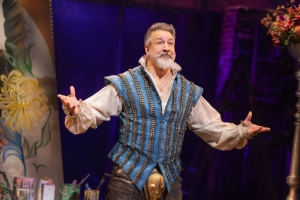
Broadway in Chicago’s latest offering at the Auditorium Theatre, & Juliet, bursts onto the stage with the kind of vibrant confidence that makes it clear this isn’t your high school Shakespeare. The production arrives as a full-throttle pop spectacle, gleefully mashing up Elizabethan trappings with late ’90s and early 2000s chart-toppers from Max Martin’s hit factory. It’s a show that knows exactly what it is: a glitter-soaked, self-aware remix of a classic that wastes no time inviting the audience into its playful rebellion against the tragic ending we’ve all been taught to accept. Since its 2019 world premiere in Manchester, & Juliet has evolved into an international hit, and this touring production carries that same electric swagger.
So, what is & Juliet? The musical tosses out the tragic final pages of Romeo and Juliet and launches into a sparkling, beat-driven alternate timeline where Juliet decides her story isn’t over. Shakespeare strides in ready to unveil his masterpiece, only to be challenged by his wife, Anne Hathaway, who argues that Juliet deserves more than a death scene. Their creative tug-of-war becomes the show’s framing device, with the couple rewriting the narrative in real time as Juliet, newly widowed, furious, and independent, sets off for Paris. Joined by the steadfast Nurse, Angélique, and May, a tender, nonbinary friend navigating their own romantic complications, Juliet begins carving out an identity that isn’t tethered to Verona’s star-crossed expectations.
Once Juliet arrives in Paris, the musical fully embraces its jukebox identity. Max Martin’s catalog - Britney Spears, Backstreet Boys, Katy Perry, Robyn, and more - becomes the emotional architecture of the plot, each anthem amplifying Juliet’s bursts of confidence, heartbreak, and rebellion. A new love interest, a handful of identity mix-ups, and the inconvenient reappearance of a very alive Romeo keep the story spinning with lively drive. Beneath the glossy sheen, the show’s core is Juliet’s reclamation of her narrative: she challenges every man, myth, and playwright who tries to script her life. Much like Greta Gerwig’s Barbie, & Juliet reframes a familiar figure by handing her the agency she was never originally given. By the final number, the musical has transformed a centuries-old tragedy into a neon-bright celebration of autonomy, reinvention, and the exhilarating freedom of choosing your own ending.
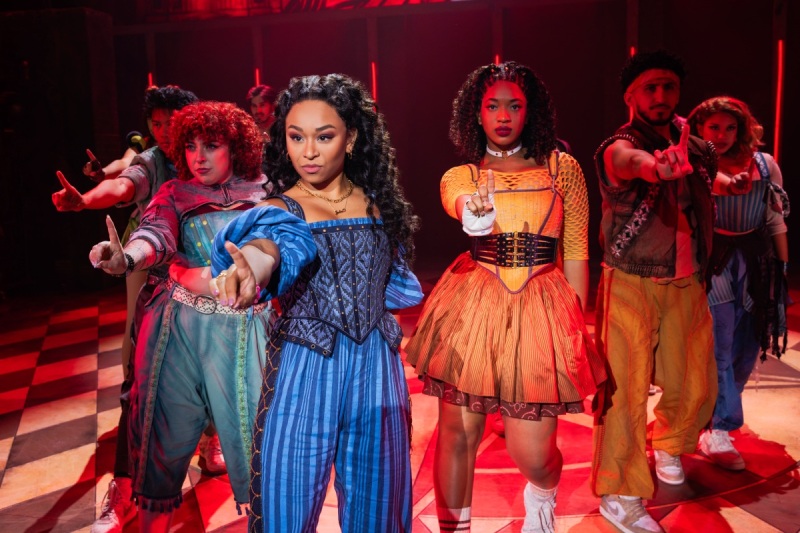
Fabiola Caraballo Quijada and the company of the North American Tour of & JULIET - Photo Credit Evan Zimmerman for MurphyMade.
Riding the show’s high-voltage spark, Joey Fatone slides into the role of Lance with an easy, self-aware charm that fits perfectly with & Juliet’s playful spirit. As a founding member of *NSYNC and a frequent Max Martin collaborator, Fatone is woven into the DNA of the musical’s soundtrack, giving his performance an extra layer of authenticity. His résumé stretches from Broadway to television to his memorable turn in My Big Fat Greek Wedding, but it’s his work here that stands out: he brings crisp, confident vocals and an easy comedic charm that consistently lifts the charge onstage. Fatone proves he’s far more than a nostalgic casting choice, emerging as one of the production’s most charismatic assets.
Fabiola Caraballo Quijada leads the company with a performance that feels like the show’s beating heart, delivering Juliet with a thrilling mix of vocal firepower and emotional nuance. She tears into Max Martin staples like “...Baby One More Time” and “Since U Been Gone” with bright, commanding vocals, then pivots into moments of vulnerability that make Juliet’s journey feel genuinely earned. Her presence centers the production, funny, fierce, and fully in control.
The supporting cast matches her drive with sharp, engaging work across the board. CJ Eldred’s Shakespeare brings a sly, lightly exasperated charm, leaning into the playwright’s ego without overplaying it, while Crystal Kellogg’s Anne Hathaway counters him with warmth, clean comic timing, and an easy wit. Together, they turn their marital back-and-forth into a steady, engaging thread that helps anchor the show’s driving rhythm and provides some of its funniest moments. Nico Ochoa’s May delivers one of the evening’s most affecting performances, especially in “I’m Not a Girl, Not Yet a Woman,” sung with disarming honesty. Joseph Torres dives gleefully into Romeo’s chaotic bravado, Noah Marlowe’s François adds irresistible comedic sparkle, and Kathryn Allison’s Angélique unleashes powerhouse vocals that stop the show in its tracks. Together, they form a tight, dynamic ensemble that amplifies Juliet’s story and keeps the production pulsing with life.
The show also finds touching emotional beats in Fatone’s Lance, whose scenes with Marlowe’s François carry a gentle, fatherly warmth that echoes the same kindness in François’s growing bond with Ochoa’s May.
Fatone and Allison’s duet on “Overprotected” is a standout, giving Lance and Angélique’s reunion a burst of humor and genuine warmth, and it’s just the start of Fatone’s musical impact throughout the night. His biggest showcase, “Teenage Dream,” becomes a warm, gently comic surprise as he embraces the Katy Perry hit with earnest, velvety vocals that give the number a sweetness you don’t see coming. Fatone may play Lance as the show’s affable comic relief, but his pop pedigree shows; every musical moment feels relaxed, lived in, and delivered with the kind of easy charisma that lifts the entire stage. It would have been nice to hear another number or two from him, especially since he proves he can still bust a move in the big ensemble dance feature “Everybody (Backstreet’s Back).”
The ensemble deserves its own praise, offering crisp harmonies, sharp choreography, and a lively spirit that keeps the show’s force surging. They match Fatone’s charisma beat for beat, creating a lively backdrop that makes each of his musical moments land even more effectively. Their collective precision and enthusiasm elevate the production, giving the score the full, joyful lift it needs.
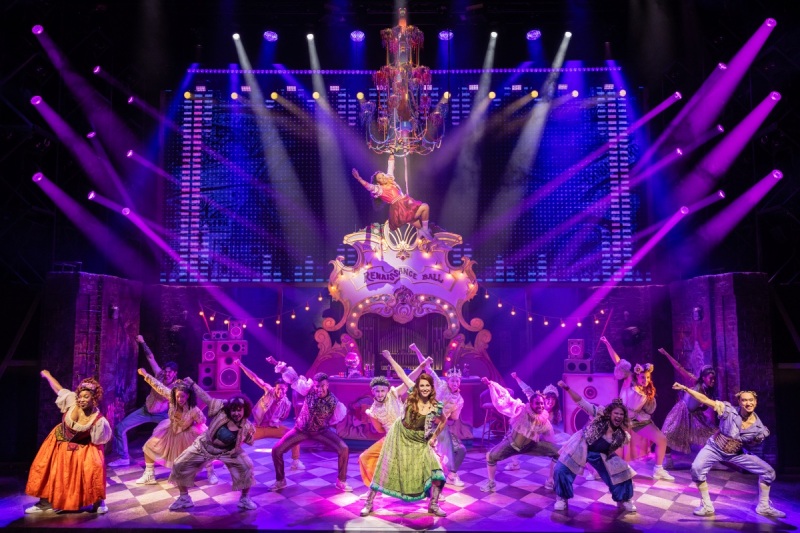
The company of the North American Tour of & JULIET (1) - Photo Credit Evan Zimmerman for MurphyMade.
If there’s anything I’d tweak, it’s that a few of the show’s narrative threads resolve a bit quickly in Act II, especially once Romeo crashes back into the story and the plot starts juggling multiple character arcs at once. The momentum never falters, but you can feel the show accelerating to tie up loose ends, which leaves certain beats landing faster than they need to. Like many jukebox musicals, a handful of emotional moments feel shaped more by the song than the situation, and a couple of supporting journeys wrap up a bit neatly compared to Juliet’s richer, more fully realized arc. These aren’t flaws so much as brief soft spots in an otherwise confident production, but they do create moments where the storytelling feels slightly compressed next to the show’s usual clarity, wit, and spark.
Even with those brief pacing dips, the production stays remarkably unified, and much of that cohesion comes from the creative team’s razor-sharp vision and assured hand. With a book by David West Read, the Emmy-winning writer behind Schitt’s Creek, the show’s humor lands with a cheerful, contemporary snap that is clever without ever feeling smug and heartfelt without tipping into sentimentality. Luke Sheppard’s direction keeps the pace brisk and the tone delightfully self-aware, guiding the audience through rapid-fire shifts between Shakespearean parody and pop-musical exuberance. Jennifer Weber’s Emmy-winning choreography is the engine that keeps the whole thing pulsing, layering crisp, high-impact movement over Max Martin’s hits in ways that feel both nostalgic and freshly inventive. Together, they shape a production that is as smart as it is spectacular, proving that & Juliet succeeds because its creative foundation is every bit as strong as its glittery, radio-hit exterior.
What I love is how much the show feels like a full-tilt party. Throughout the night, the musical keeps slipping into irresistible, disco-bright bursts of celebration - confetti, fireworks, and bouncy dance numbers - the kind that wash over the Auditorium Theatre with a buoyant, communal energy. Even the live band, tucked out of sight, delivers with such punch that the show takes on a concert-like charge at times. By the end, the audience is on its feet, cheering as if they’ve been part of the celebration all along.
The design team behind & Juliet gives this touring production its glossy, high-octane finish, each element snapping together with precision. Soutra Gilmour’s scenic design provides a playful, ever-shifting backdrop, while Howard Hudson’s lighting drenches the stage in radiant color and concert-style intensity. Paloma Young’s costumes amplify the show’s turn-of-the-millennium exuberance, blending Shakespearean silhouettes with modern pop flair to mirror the musical’s playful collision of eras, and Gareth Owen’s sound design keeps Max Martin’s hits punchy and impeccably balanced. Add Andrzej Goulding’s video and projection work, and you get a production that feels polished, cohesive, and irresistibly alive.
& Juliet continues to light up Chicago with glitter, heart, and high-voltage joy, and this touring production proves itself an outright delight. Running July 22 through August 2, 2026, the Broadway in Chicago engagement at the Auditorium Theatre delivers a vibrant, tightly crafted experience that never loses sight of its emotional core. With a knockout lead performance, a dynamic ensemble, and a creative team working at peak imagination, this tour shows exactly why & Juliet has become one of the most irresistible modern musicals. It is a jubilant, neon-bright celebration of rewriting your own story and absolutely worth catching before it dances out of the city.
Highly recommended.
Kokandy Productions' Sunday in the Park with George - The Chopin Theatre - Through November 29th
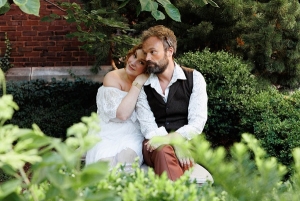
Following its critically acclaimed productions of Sweeney Todd and Into the Woods, Kokandy Productions once again celebrates the great Stephen Sondheim with a revival of his stunning masterpiece Sunday in the Park with George, playing August 13 – November 1, 2026 in the intimate Chopin Downstairs Studio, 1543 W. Division St. in Chicago. Tickets are on sale now at kokandyproductions.com or bit.ly/SundayChicago.
This beloved musical will feature Kevin Webb (Sweeney Todd, Into the Woods) as George and Missy Wise Vanderzee (Bonnie & Clyde) as Dot/Marie with an ensemble including Nick Arceo as Boatman, Danny Andrew Bennett as Jules, Rachel Carreras as Nurse, Ella Carson as Louise, Emily Holland as Celeste 1, Lauren Miller as Old Lady, Z Moore as Franz, Samantha Ringor as Celeste 2, KyraJo Petit-Walla as Frieda, Nathe Rowbotham as Yvonne, Jack Saunders as Soldier and Abraham Shaw as Louis. Swings include Brittney Brown, David Gordon-Johnson, Gabriel Levi, Brady Magruder, Halli Morgan, Sarah Seidler and Elexis Selmon.
The first Chicago storefront production Sunday in the Park with George in over 15 years is directed and choreographed by Producing Artistic Director Derek Van Barham with music direction by Nick Sul, book by James Lapine and music and lyrics by Stephen Sondheim.
About the Production
Inspired by the painting, "A Sunday Afternoon on the Island of La Grande Jatte" by Georges Seurat, Sunday in the Park with George merges past and present into beautiful, poignant truths about life, love and the creation of art. One of the most acclaimed musicals of our time, this moving study of the enigmatic painter, Georges Seurat, won a Pulitzer Prize and was nominated for an astounding ten Tony Awards, including Best Musical.
"Sunday in the Park with George was one of the first shows I pitched to direct when interviewing to join the company back in 2018," says Producing Artistic Director Derek Van Barham. "It's almost a decade later and we're finally visiting this astonishing masterpiece. It feels like the right time. The show offers us a chance to reflect on what we've been creating and to look forward at what we still hope to achieve – both as a company and as individual artists. Sunday reminds us not to linger too much on the future or the past, but to focus on the present moment, to connect with each other in real space and time. What a gift that will be. What a gift it is to be together in a room, taking in a piece of art, having communal and singular experiences at the same time."
The production team includes G "Max" Maxin IV (Scenic and Lighting Design), Rachel Sypniewski (Costume Design), Matt Reich (Sound Design), Julian Weslander (Properties Design), Syd Genco (Makeup Design), Keith Ryan (Wig and Hair Design), Stone TeSelle (Associate Scenic Design), Shane Roberie (Casting Director), Nicholas Reinhart (Production Manager), Amelia Osborn (Associate Production Manager), Kendyl Meyer (Stage Manager), Ethan Colish (Assistant Stage Manager), Michael Coppola (Stage Management Intern), Scot Kokandy (Executive Producer) and Derek Van Barham (Producing Artistic Director).
PRODUCTION DETAILS:
Title: Sunday in the Park with George
Book: James Lapine
Music & Lyrics: Stephen Sondheim
Director and Choreographer: Producing Artistic Director Derek Van Barham
Music Director: Nick Sula
Cast (in alphabetical order): Nick Arceo (Boatman), Danny Andrew Bennett (Jules), Ella Carson (Louise), Rachel Carreras (Nurse), Emily Holland (Celeste 1), Lauren Miller (Old Lady), Z Moore (Franz), KyraJo Petit-Walla (Frieda), Samantha Ringor (Celeste 2), Nathe Rowbotham (Yvonne), Jack Saunders (Soldier), Abraham Shaw (Louis), Kevin Webb (George) and Missy Wise Vanderzee (Dot/Marie).
Swings: Brittney Brown, David Gordon-Johnson, Gabriel Levi, Brady Magruder, Halli Morgan, Sarah Seidler and Elexis Selmon
Location: Chopin Downstairs Studio, 1543 W. Division St., Chicago
Dates: Previews: Thursday, August 13 – Friday, August 28, 2026
Regular run: Sunday, August 30 – Sunday, November 1, 2026
Curtain Times: Thursdays, Fridays and Saturdays at 7 pm; Sundays at 5 pm.
Tickets: Previews $28.52* general admission, $39.19* reserved seating. Regular run $55.20* general admission, $65.87* reserved seating. Students/seniors $44.52*. There will be a limited number of lower-priced tickets (with code ARTIST) available to artists for each performance. Tickets are on sale now at kokandyproductions.com or bit.ly/SundayChicago. *Ticket prices include processing fees
Sunday in the Park with George is presented through
special arrangement with Music Theatre International (MTI).
About the Artists
Derek Van Barham (Director and Choreographer) is the Producing Artistic Director of Kokandy Productions. Directing credits include Children of Eden in Concert (Broadway In Chicago), Jekyll & Hyde (BIC/Kokandy), Amélie, Into the Woods, Alice by Heart, Sweeney Todd, American Psycho, Head Over Heels (4 Jeff Awards and 3 Jeff nominations, Kokandy); Spring Awakening (Flint Rep); Rock of Ages (Metropolis); The View Upstairs (Circle Theatre); Miracle by Dan Savage, Poseidon (Hell in a Handbag) Natasha Pierre and the Great Comet of 1812, Carrie, Bat Boy, Merrily We Roll Along (CCPA/Roosevelt University). Choreography credits include Evil Dead (Jeff nomination), Coraline the Musical, Ghost Quartet and Shockheaded Peter (Black Button Eyes). He was previously named one of Windy City Times' 30 Under 30, and one of Newcity Magazine's 50 Players 2024 and 2026. MFA: CCPA/Roosevelt University. IG: @dvbarham
Nick Sula (Music Director) is an award-winning pianist and music director, proud to return to Kokandy Productions and the Chopin Theatre where he served as music director for the Jeff Award-winning productions of Jekyll & Hyde (Jeff Award for Outstanding Music Direction), Sweeney Todd (Jeff Award for Outstanding Music Direction), Into the Woods (Jeff Awards for Outstanding Music Direction and Orchestrations) and the Chicago Musical Theatre Festival. Other Chicago theatre music direction credits include: Octet (Raven Theatre); Anything Goes (Porchlight Music Theatre); Ghost Quartet (Black Button Eyes Productions). As a professor of musical theatre he serves as a music director, instructor and vocal coach at the Chicago College of Performing Arts at Roosevelt University.
About Kokandy Productions
Founded in 2010, Kokandy Productions seeks to leverage the heightened reality of musical theatre to tell complex and challenging stories, with a focus on contributing to the development of Chicago-based musical theatre artists, and raising the profile of Chicago's non-Equity musical theatre community.
The company's artistic staff is comprised of Derek Van Barham (Producing Artistic Director), Scot Kokandy (Executive Producer) and Adrian Abel Azevedo & Leda Hoffman (Artistic Associates). The Board of Directors includes Preston Cropp, Scot T. Kokandy, Danielle Sparklin and Katie Svaicer.
For additional information, visit kokandyproductions.com.
Steppenwolf Theatre Names Stage Manager Laura D. Glenn Newest Ensemble Member
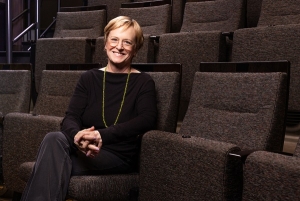
Steppenwolf Theatre Company Artistic Directors Glenn Davis and Audrey Francis are thrilled to welcome veteran Production Stage Manager Laura D. Glenn into the company's world-renowned ensemble. Glenn, whose journey with Steppenwolf began as a summer intern in 1988, has worked on more than 100 Steppenwolf productions over 38 years and collaborated with all 55 ensemble members. This historic appointment makes Glenn the second-ever stage manager invited into the ensemble, joining the late Malcolm Ewen. She has traveled with the company to Broadway, London and Ireland's Galway International Arts Festival. Glenn has been a proud member of Actors' Equity Association for 36 years and received the inaugural Joseph Jefferson Impresario Award for Stage Management in 2025.
Steppenwolf Artistic Directors Glenn Davis and Audrey Francis comment, "Laura has been an invaluable part of the Steppenwolf community for nearly 40 years. She has supported directors to execute their vision, cared for actors as productions evolve from the first day of rehearsal to closing, and has mentored the next generation of stage managers. Every artist and ensemble member who has had the privilege of working with Laura has felt her care and appreciation for the craft. We cannot tell the story of Steppenwolf without including the contributions of Laura D. Glenn. She is a singular artist who has garnered the respect of our entire community. Even though she has felt like an ensemble member for decades, it's an honor to finally make it official."
Laura D. Glenn adds, "I am honored, moved and humbled by Audrey and Glenn asking me to join the Ensemble. Steppenwolf has been my life's work, and I am excited for this next step."
About Laura D. Glenn:
Laura D. Glenn's history with Steppenwolf began as an intern in 1988, working various jobs on productions of Killers and The Grapes of Wrath at the theatre's then home at 2851 N. Halsted St. After completing her Theater Arts Degree at SUNY New Paltz, Glenn immediately returned to Chicago and worked as Assistant Stage Manager on Steppenwolf's 1989 Educational Outreach production of A Midsummer Night's Dream. In 1990, she was asked to stage manage her first Steppenwolf production: Love Letters – and secured her Equity card during the show's nearly five month run. Following an "all hands on deck" move to Steppenwolf's current home at 1650 N. Halsted St., Glenn stage managed 1991's Curse of the Starving Class, the second production at the new theater. Over the following 36 years, Glenn has worked as Stage Manager or Assistant Stage Manager on more than 100 Steppenwolf productions and collaborated with all 55 ensemble members. Glenn traveled to Broadway with Buried Child (1996), London's Barbican BITE Festival with The Man Who Came to Dinner (1988) and took multiple productions to Ireland's Galway Arts Festival including Purple Heart, Orange Flower Water and True West. Her most recent Steppenwolf credits include Purpose, Little Bear Ridge Road, Amadeus, The Dance of Death and Catch as Catch Can. Other favorite productions over the years include Picasso at the Lapin Agile, Buried Child, Space, Three Days of Rain, The Drawer Boy, Superiors Donuts, Domesticated, Downstate and True West. Between 2002 – 2016, Glenn also worked on 22 productions at the esteemed Northlight Theatre and returned to Galway with Northlight's production of Better Late starring John Mahoney. In 2025, she received the inaugural Joseph Jefferson Impresario Award for Stage Management. Glenn has been a proud member of Actors' Equity Association for 36 years.
The Steppenwolf ensemble includes: Joan Allen, Kevin Anderson, Alana Arenas, Randall Arney, Kate Arrington, Ian Barford, Robert Breuler, Cliff Chamberlain, Gary Cole, Carrie Coon, Celeste M. Cooper, Glenn Davis, Kathyrn Erbe, Audrey Francis, K. Todd Freeman, Laura D. Glenn, Francis Guinan, Moira Harris, Jon Michael Hill, Tim Hopper, Tom Irwin, Ora Jones, Rajiv Joseph, Terry Kinney, Tina Landau, Tracy Letts, John Malkovich, Sandra Marquez, Tarell Alvin McCraney, James Vincent Meredith, Laurie Metcalf, Amy Morton, Sally Murphy, Caroline Neff, Bruce Norris, Austin Pendleton, Jeff Perry, William Petersen, Yasen Peyankov, Martha Plimpton, Rondi Reed, Molly Regan, Karen Rodriguez, Anna D. Shapiro, Eric Simonson, Gary Sinise, Namir Smallwood, Lois Smith, Rick Snyder, Jim True-Frost and Alan Wilder. Steppenwolf honors the memory of late ensemble members Malcolm Ewen, Frank Galati, Martha Lavey, Mariann Mayberry and John Mahoney. For additional information, visit steppenwolf.org/ensemble.
About Steppenwolf Theatre Company:
Steppenwolf Theatre Company is the nation's premier Ensemble Theater with 51 members who are among the top actors, playwrights and directors in the field. Thrilling, powerful, groundbreaking productions have made this theatre legendary. From the early phenomenon of Balm in Gilead, to The Grapes of Wrath, August: Osage County, Downstate, The Brother/Sister Plays, and more recently, the Pulitzer Prize and Tony Award-winning Purpose, Steppenwolf Theatre has had a long-running and undeniable impact on American Theatre and Chicago's cultural landscape. Founded in 1974 by Terry Kinney, Jeff Perry and Gary Sinise, Steppenwolf started as a group of friends in their teens and early 20s performing in the basement of a school in Highland Park, Illinois. Today, the company's artistic force remains rooted in the original vision of its founders: an artist-driven theatre, whose vitality is defined by its appetite for bold and innovative work. Every aspect of Steppenwolf is rooted in its Ensemble ethos, from the intergenerational artistic programming to the multi-genre performance series LookOut, to the nationally recognized work of Steppenwolf Education and Engagement which serves nearly 15,000 teens annually. While grounded in the Chicago community, more than 40 original Steppenwolf productions have enjoyed success nationally and internationally, including Broadway, Off-Broadway, London, Sydney, Galway and Dublin. Steppenwolf also holds accolades that include the National Medal of Arts, 14 Tony Awards, two Pulitzer Prize-winning commissions and more. Led by Artistic Directors Glenn Davis and Audrey Francis, Executive Director E. Brooke Flanagan and Board of Trustees Chair Keating Crown — Steppenwolf continually redefines the boundaries of live theater and pushes the limits of acting and performance.
Steppenwolf's Mission: Steppenwolf strives to create thrilling, courageous and provocative art in a thoughtful and inclusive environment. We succeed when we disrupt your routine with experiences that spark curiosity, empathy and joy. We invite you to join our ensemble as we navigate, together, our complex world. steppenwolf.org, facebook.com/steppenwolftheatre, twitter.com/steppenwolfthtr and instagram.com/steppenwolfthtr.
Chicago Tap Theatre Founder, Mark Yonally, Receives HOOFER AWARD from AMERICAN TAP DANCE FOUNDATION
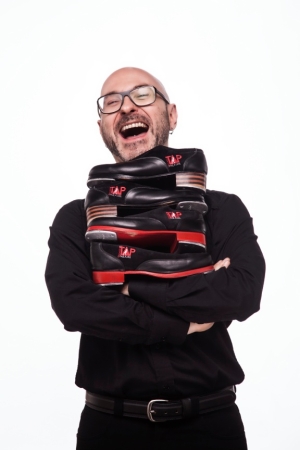
Chicago Tap Theatre (CTT) is proud to announce its Founder and Artistic Director Mark Yonally has been selected by the Preservation Committee for the American Tap Dance Foundation to receive the 2026 Hoofer Award. Yonally will accept the honor at the Tap City Awards, Friday, Sept. 11 at 7 p.m. at the Bruno Walter Auditorium at the New York Public Library for the Performing Arts at Lincoln Center, 111 Amsterdam Ave, New York City. The annual Hoofer Award recognizes prominent tap artists as leaders in the community for their unique contributions to the form and for inspiring future generations. For more information on Yonally and upcoming Chicago Tap Theatre events go to ChicagoTapTheatre.com.
As part of the Tap City Awards, Yonally was given the opportunity to have a performance honoring him. He selected Chicago Tap Theatre, the company he founded, to perform, with guest artist Lisa LaTouche.
The night before the award Yonally, with CTT Artistic Associate Sterling Harris and Rehearsal Director Molly Smith, will present a two hour event, "The Chicago Tap Theatre Connections Lab: Sharing the Repertory and Rhythm of CTT with the NYC Community" at the Rhythmic Arts Center in Harlem, 175 E. 105th St. in New York City. The class will be followed by an hour-long "Connection" for the NYC tap dance community to learn more about Chicago Tap Theatre, their processes, values and open Company and Apprentice positions.
The Hoofer Award was created in 2001 with the presentation of the inaugural award to the late Gregory Hines. Since then, Hoofer Awards have been presented to fellow Chicago-artists M.A.D.D. Rhythms Bril Barrett, Dean Diggins, Reginald McLaughlin, "Reggio the Hoofer," Ted Levy as well as Ayodele Casel, Lynn Dally, Derick K. Grant, Sarah Petronio and the late Ernest "Brownie" Brown, Buster Brown, Jimmy Slyde and other notable members.
The Tap City Awards honors recipients of the American Tap Dance Foundation's Hoofer, Tap Preservation and International Tap Dance Hall Of Fame Awards. The evening will include surprise guests, archival film clips and live performances, celebrating the rich legacy and vibrant future of tap dance. Yonally, as well as Ali Bradley from Michigan will receive the Hoofer Award. In addition, Buddy Bradley, LaVaughn Robinson and NYC Tapworks will be joining the Tap Dance Hall of Fame and Thelma Goldberg will receive the Preservation Award.
"I am beyond thrilled to have been selected to receive the prestigious Hoofer Award," said Founder and Artistic Director Mark Yonally. "I am still trying to find words that truly express my feelings as I join this list of former Hoofer Award-winners including mentors, idols and contemporaries. My sincerest gratitude goes to the American Tap Dance Foundation for honoring me."
ABOUT MARK YONALLY
Mark Yonally is the founder and artistic director of Chicago Tap Theatre (CTT), a critically acclaimed dance company in Chicago, performing an annual three-show season and touring in America and Europe. CTT's performances have been recognized by the Chicago Tribune, Chicago Sun-Times, SeeChicagoDance.com and Windy City Media, with the 2016 show "TimeSteps" named Best New Production by Dance Magazine Reader's Poll. Yonally is renowned internationally, performing solo in cities like Chicago, Helsinki, Barcelona, New York, Amsterdam and Paris, and has worked with mentors such as Sam Weber and Dianne Walker. He has performed with the Bill Evans Dance Company and Especially Tap Chicago at prestigious festivals, including the St. Louis Tap Festival and the Royal Opera House in Helsinki. His choreography has been commissioned by various dance companies and he collaborates with Valérie Lussac and Guillem Alcalay, teaching annually in Toulouse and Barcelona. He teaches and judges at dance conventions across the United States and is an educator at Oklahoma City University and Hope College. He has published in Dance Spirit, Dance Teacher and Dance Magazine and hosts "The Tea on Tap," featuring interviews with noted tap dancers.
ABOUT CHICAGO TAP THEATRE
Founded in 2002, Chicago Tap Theatre is a growing and vibrant dance company dedicated to preserving the quintessentially American dance form of tap while taking it to the next level of creativity, innovation and quality. CTT performs exclusively with live music provided by some of Chicago's finest musicians playing everything from Duke Ellington to David Bowie and many artists in between. Under the dynamic direction of master teacher and performer Mark Yonally, CTT has gained a loyal and sizable following in Chicago and continues to tour both nationally and internationally. Having pioneered the "tap opera" format, which tells stories with compelling characters and intriguing plots, CTT has used the language of tap dance, live music and narration to move audiences for more than 20 years.
ABOUT AMERICAN TAP DANCE FOUNDATION
The American Tap Dance Foundation (ATDF) is a non-profit 501c3 organization committed to establishing and legitimizing Tap as a vital component of American dance through creation, presentation, education and preservation. ATDF is recognized as a local, national and international leader in the field and continues to further three main objectives:
- to perpetuate Tap as a flourishing contemporary art form on a national and international level,
- to provide a basis for the growth of tap dance by teaching new generations through comprehensive educational programs and
- to preserve the artistry of the early generations of tap masters.
OPERATION MINCEMEAT: A NEW MUSICAL coming to CIBC Theatre September 29 – October 11
Broadway In Chicago is thrilled to announce that single tickets for Tony® and Olivier Award®-winning OPERATION MINCEMEAT: A NEW MUSICAL, Entertainment Weekly’s #1 Broadway Show of 2025, are now on sale. OPERATION MINCEMEAT: A NEW MUSICAL will play Broadway In Chicago’s CIBC Theatre (18 W. Monroe St.) for a limited two-week engagement, September 29 – October 11, on its North American leg of its World Tour.
In OPERATION MINCEMEAT: A NEW MUSICAL, it’s 1943, and the Allied Forces are on the ropes. Luckily, they’ve got a trick up their sleeve. Well, not up their sleeve, per se, but rather inside the pocket of a stolen corpse. Equal parts farce, thriller, and Ian Fleming-style spy caper (with an assist from Mr. Fleming himself), OPERATION MINCEMEAT tells the wildly improbable and hilarious true story of the covert operation that turned the tide of WWII.
Written by triple Tony Award nominees SpitLip (comprised of David Cumming, Felix Hagan, Natasha Hodgson, and Zoë Roberts), OPERATION MINCEMEAT began performances on Broadway on February 15, 2025, and continues to play at the historic Golden Theatre (252 West 45th Street), where it has been extended eight times and will soon celebrate its 500th performance. The West End production, which has been playing at the Fortune Theatre since March 29, 2023, is widely recognized as one of the best-reviewed shows in West End history, holding the record for the most five-star reviews for a new musical, with a tally of 131. OPERATION MINCEMEAT has just launched its world tour, beginning with a UK leg before heading across the pond.
Olivier Award nominated Robert Hastie (Standing at the Sky’s Edge, National Theatre – Best New Musical Olivier Award winner) will reprise his work for the tour, while Olivier Award nominated Jenny Arnold (Jerry Springer: The Opera, National Theatre) continues as Choreographer. The creative team will include Olivier nominated Set and Costume Designer Ben Stones (Standing at the Sky’s Edge), Tony and Olivier winning Lighting Designer Mark Henderson (The History Boys), Tony nominated Sound Designer Mike Walker (Charlie & The Chocolate Factory), Tony nominated Orchestrator Steve Sidwell (Beautiful: The Carole King Musical), and Olivier nominated Music Supervisor Joe Bunker (Spring Awakening). Georgie Staight is Associate Director and Paul Isaiah Isles is Associate Choreographer. Production Stage Management is by Geoff Maus, Casting is by Carrie Gardner, CSA, and General Management is by TT Partners.
OPERATION MINCEMEAT has been nominated for 64 awards since opening at the 77-seat New Diorama Theatre in 2019, winning 13, including Best Musical three times, from the Olivier Awards®, WhatsOnStage Awards, and Off-West End Awards. On Broadway, the show was nominated for four Tony Awards® in 2025, including Best Musical. The production won Best Featured Actor in a Musical for Jak Malone ’s portrayal of Hester Leggatt, who previously won the Olivier Award® in the same category. The production has also received nominations for Outstanding Production of a Musical at the Drama League Awards, Outstanding New Broadway Musical at the Outer Critics Circle Awards, Best Musical at the BroadwayWorld Theater Fans’ Choice Awards, and Favorite New Musical at the Broadway.com Audience Choice Awards.
Over 2,000 performances – from its origins on the London Fringe to the West End, to Broadway, OPERATION MINCEMEAT has cultivated a fervent fanbase, affectionately dubbed “Mincefluencers.” On Broadway alone, more than 2,000 audience members – roughly one in fifty – have bought tickets for multiple performances, including 53 superfans who have purchased tickets for ten or more shows.
OPERATION MINCEMEAT is produced on Broadway, in the West End and on its world tour by Avalon (in association with SpitLip). The show was commissioned by New Diorama Theatre, co-commissioned by The Lowry, and also supported by the Rhinebeck Writers Retreat.
For more information, visit operationmincemeat.com/tour/us
Follow OPERATION MINCEMEAT on TikTok, X, and Instagram.
TICKET INFORMATION (As of July 17, based on availability and subject to change)
Individual tickets for OPERATION MINCEMEAT: A NEW MUSICAL are on sale now and range from $40.00 - $135.00 with a select number of premium tickets available. Ticket price listed is when purchased in person at the box office. Additional fees apply for online purchases. Tickets are available now for groups of 10 or more by calling Broadway In Chicago Group Sales at (312) 977-1710 or emailing This email address is being protected from spambots. You need JavaScript enabled to view it.. For more information, visit www.BroadwayInChicago.com.
ABOUT BROADWAY IN CHICAGO
Broadway In Chicago was created in July 2000 and over the past 26 years has grown to be one of the largest commercial touring homes in the country. A Nederlander Presentation, Broadway In Chicago lights up the Chicago Theater District entertaining up to 1.7 million people annually in five theatres. Broadway In Chicago presents a full range of entertainment, including musicals and plays, on the stages of five of the finest theatres in Chicago’s Loop including the Cadillac Palace Theatre, CIBC Theatre, James M. Nederlander Theatre, The Auditorium, and just off the Magnificent Mile, the Broadway Playhouse at Water Tower Place.
For more information and tickets, visit www.BroadwayInChicago.com.
Follow @BroadwayInChicago on
Facebook ● Instagram ● TikTok ● Bluesky ● YouTube
#broadwayinchicago
Kokandy’s HAIR Revival Finds a Modern Footing
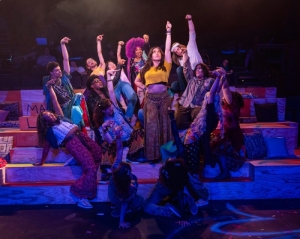
Kokandy Productions’ HAIR revival lets the sunshine in this summer at the Chopin Theatre. Directed and choreographed by Brennan Urbi, this remount is a fresh, funky and poignant riff on the classic 1960s tribal love-rock musical by Galt MacDermot. The large cast of new and returning Kokandy faces bring this musical out of its time capsule and into the 21st century with incredible vocals and unwieldy energy. In short, this cast is having a blast and so will you.
HAIR is one of the rare musicals whose songs actually crossed over into mainstream pop/rock. Perhaps most notably by way of The 5th Dimension’s iconic medley of ‘Aquarius’ and ‘Let the Sunshine In’ from 1969. However, one doesn’t have to look far to find songs like ‘Good Morning, Starshine’ and the title track ‘Hair’ used throughout pop culture. Re: Simpsons did it. Most people who have never seen HAIR the stage musical, or its film adaptation are at least somewhat familiar with its refraining choruses.
That said, by now HAIR has been lampooned as a shallow hippie fever dream known for simulated pot smoking and full-frontal nudity. Some elements of the musical might support the stereotype, but Urbi digs deeper into the lyrics and book by Gerome Rangi and James Rado and creates a much more cohesive and contemporary production than even the renowned 2009 Broadway revival.
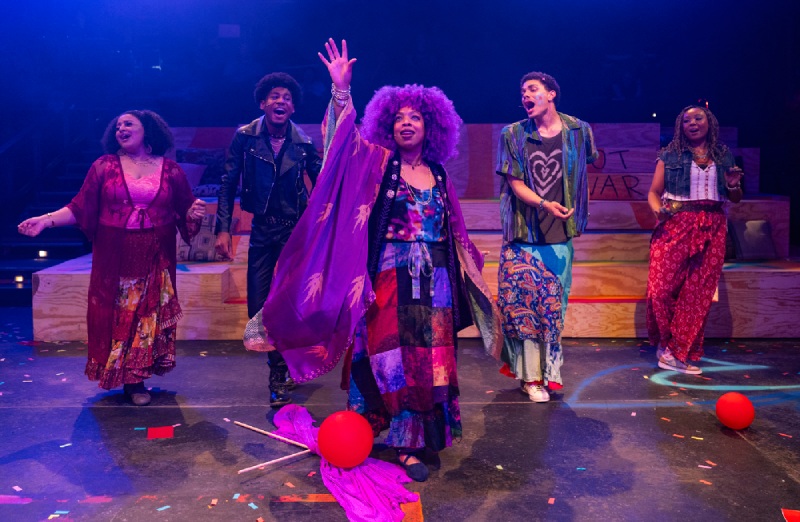
(left to right) Diana Marilyn Alvarez, Joshua Emmanuel, Chosen Mitchell, Kijani Xand Caitlin Dobbins in Kokandy Productions’ revival of HAIR. Photo by Michael Brosilow.
While HAIR might lack an immediate plotline, it instead spends the first third of the show exploring the themes of the 1960s counterculture through conceptual songs that don’t quite further the action but are incredibly catchy. Claude, Berger and Sheila emerge as the show’s main protagonists, which is where things get more interesting.
Berger is the tribe’s ringleader, a young sexually charged dropout played by Zac Richey. His main concern is certainly the “free love” element of hippy culture and not much else. Claude serves as the show’s moral compass–another dropout who questions the ethics of dodging the draft and whether hippie culture is as altruistic as it claims. Sheila, played by Catherine Rodriguez O’Connor, is an activist caught between the two male leads. Her voice is showstopping throughout, especially during the arresting finale.
Style is an essential component of HAIR. While it’s impossible to stray far from the 1960s given its direct references to the Vietnam War, costume designer Rachel Sypniewski and lighting designer G “Max” Maxin IV, bring a certain modern rave aesthetic to Kokandy’s production. Those who choose to sit on scenic designer Eleanor Kahn’s conversation pit-flavored set will be richly rewarded by all the trippy lights and wild action happening around them.
HAIR is a largely ensemble-driven show and they’re doing their job well here. The character Dionne begins the show with a stirring version of ‘Aquarius’ impeccably sung by Chosen Mitchell. Honestly, any production of HAIR is only as good as its Dionne. You won’t be able to take your eyes off Mitchell whose vocal gymnastics throughout the show will make the hair on your arms stand up. Styled perfectly against the club lighting, Mitchell proves to be the show’s hidden gem. It’s a hard bar to clear as this ensemble is giving some of the tightest harmonies Kokandy has ever produced.
This revival of HAIR is one for the Chicago books. It captures the spirit of the 1960s, but with the frustrations of 2026 youth culture it begs the question, how on Earth are we still singing about more or less the same societal ills?
Through September 13 at Kokandy Productions at the Chopin Theatre. 1543 W Division St. 773-278-1500
Pure Vocal Magic: Goodman’s Octet Redefines Musical Innovation
Dave Malloy’s Octet is a musical with daring aspirations, currently gracing the stage in a powerhouse co-production between the Raven Theatre and the Goodman Theatre. This staging, directed by Keira Fromm, first debuted at the intimate Raven Theatre, where it enjoyed a highly successful run before its move to the Goodman - a transition that proves the project is as robust as it is ambitious. Octet stands apart as a completely a cappella experience, relying entirely on the human voice to build its intricate, immersive, and haunting soundscape.
Malloy’s imprint is everywhere in this piece. He wrote the music, lyrics, book, and even the intricate vocal arrangements, crafting a score constructed without a single instrument to generate its tension, beauty, and emotional architecture.
Set in a sparse, church-basement style meeting room, the play introduces us to the “Friends of Saul,” a support group for people struggling with internet addiction. Their relationship to the online world is so fraught that they refuse to say its name, calling it only “the monster” to avoid giving it more power. Throughout their time together, the eight participants take turns sharing fears of being canceled, pornography, gaming, the pull of incel communities, and the inability to connect with others. Their discussions are brutally honest, darkly comedic, laced with expletives, and at one point offer an especially disturbing illustration of just how grotesque the monster can be. It’s unlike anything before.
The show threads each character’s intimate, emotionally charged account into sweeping ensemble passages that rise like contemporary hymns, the group joining voices to confront and grieve the “monster” that binds them. The interplay creates a pulse that feels communal and ritualistic, as though every personal admission is carried forward and reshaped by the collective.
The performances are nothing short of a whirlwind. The talent onstage is beyond belief. The ensemble showcases astonishing vocal mastery, blending with precision to create rich, enveloping music.
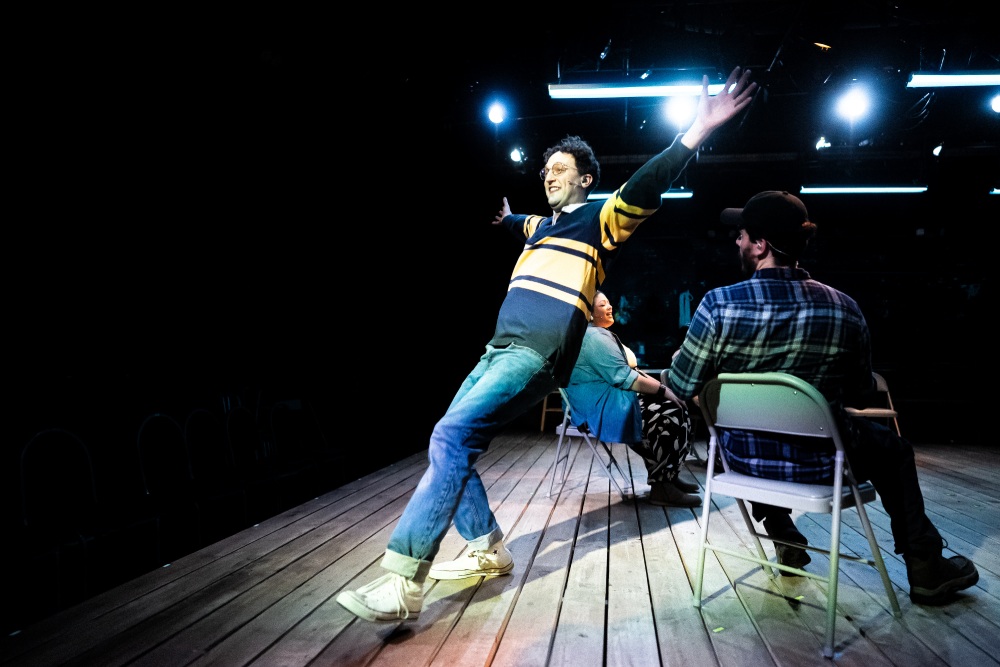
Sam Shankman in Dave Malloy's Octet at Goodman THeatre in collaboration with Raven Theatre. Photo by Joe Mazza.
Neala Barron, as Jessica, is phenomenal with powerhouse vocals and a dynamic stage presence. Her rendition of “Refresh” is delivered with the intensity of a tiger trapped in a cage, perfectly capturing the visceral feeling of being humiliated online and the subsequent rage against the world. Along with dramatic chops, she makes her comedic lines sizzle.
Sam Shankman plays the comedy perfectly as Henry. His portrayal of a tone-deaf, slightly dorky addict is both identifiable and deeply empathetic. His song “Candy” is a standout that demonstrates how this ensemble can craft story using only a cappella sound and how their movement reinforces the narrative.
Teressa La Gamba, as Paula, the group’s moderator, brings a gentle strength and compassion that helps root the show. But when she sings, it feels as if the roof will fly off. She commands the stage with perfect vocal precision, whether in a solo or complex ensemble passages.
The set is intentionally sparse and open, which functions perfectly for the show’s focused format, a choice scenic designer Milo Bue shapes with thoughtful restraint. The lighting design, crafted by Maximo Grano de Oro, is similarly impressive. Overhead lights shift deftly from the feel of a bland meeting room to the vibrant, chaotic interior of a Candy Crush interface or the dark corners of a character’s mind. In an instant, you can be transported to an entirely different plane and lost in its overwhelming atmosphere.
As the plot unravels, the staging seems intent on exploring where hope can or cannot be found, and it makes clear that faith-based religion is not where it looks. The script often approaches Christian belief with a skeptical edge, sketching certain “believer” archetypes in broad, unflattering strokes. The structure of “Friends of Saul” reinforces this orientation, lightly echoing the format of Alcoholics Anonymous. AA, one of the most widely recognized recovery communities, is often described as spiritual in nature, while many participants experience it as rooted in a faith-guided model, as it was originally intended. “Friends of Saul,” by contrast, operates with a more nonreligious bent, occasionally running out of pamphlets for “Steps for Agnostics and Atheists,” a detail made all the more ironic given that their meetings take place in a church basement - a space that pointedly distances itself from the faith‑oriented tradition AA is often associated with.
That contrast deepens in “Little God,” one of the staging’s more unusual songs. Here, Marvin (Jordan Golding), a committed atheist, describes an encounter with an all-powerful being represented onstage by a small girl and reflects on his compulsion to debate creationists about evolution. The moment is very much Malloy’s choice, framing Marvin’s fixation as a kind of intellectual loop: the irresistible pull of trying to reason through the idea that something as vast as existence might emerge from nothing at all, a purposeful artistic angle that shapes the show’s worldview.
Given these choices, the staging’s perspective may not resonate as strongly with audiences who hold traditional Christian views, which seems intentional, reflecting a deliberate direction in Malloy’s overall vision. In contrast, the show places greater emphasis on new age spirituality and tarot, treating these elements with notable sincerity. Each character has direct parallels to tarot cards, and Velma (Joryhebel Ginorio) finds her spiritual awakening through them. In fact, she is the only member of the group who speaks the monster’s true name, “internet,” throughout the night. Ultimately, the musical suggests that a blend of new age spirituality and human connection is the most viable path to inner peace.
Although these elements may pose challenges for certain audiences, Octet remains a triumph of vocal performance. These actors represent the highest caliber of Chicago talent, and when their voices come together, the result is breathtaking and inspiring. If you are looking for choral artistry, Octet delivers. For some audiences, Octet’s philosophical stance may feel more contemplative than corrective, raising more questions than answers about our relationship to the online world - but its musical brilliance makes the journey more than worthwhile.
Recommended.
Venue: The Goodman Theatre – The Owen 170 N. Dearborn Street, Chicago
Run Dates: Through August 2
Performance Schedule:
- Wednesdays: 7:30 p.m.
- Thursdays: 2:00 p.m. & 7:30 p.m. (No evening performance on July 30)
- Fridays: 7:30 p.m.
- Saturdays: 1:00 p.m. & 7:30 p.m.
- Sundays: 2:00 p.m. (Additional 7:30 p.m. performance on August 2)
Running Time: 1 hour, 35 minutes (no intermission)
Box Office: 312-443-3800
Tickets: https://www.goodmantheatre.org
Frog and Toad is Wholesome, Family Fun
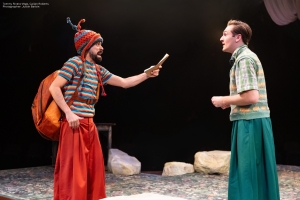
The timeless magic of Arnold Lobel’s beloved children’s book series comes to life in the Marriott Theatre’s delightful production of A Year with Frog and Toad. With book and lyrics by Willie Reale and a score by Robert Reale, this whimsical musical adaptation perfectly captures the endearing spirit that resonates with children young and young-at-heart.
Directed by Elizabeth Romero, the production finds its heart in the friendship between the jovial Frog and the temperamental Toad. Told through a series of lighthearted vignettes, the duo navigates an embarrassing swimsuit mishap, a baking conundrum, a spooky story, and a bumpy sled ride. Despite these ups and downs, the amphibians hold fast to one another, offering a poignant lesson that kindness is the foundation of a lasting relationship.
Callan Roberts is a standout as Frog, serving as the production's steady, joyful anchor. Roberts possesses a fantastic physicality that imbues the character with a fun-loving nature that elevates the role beyond the page. His clever use of inflection and vocal intonation brings the humor to life; with his expressive range and infectious energy, one could easily imagine him as an excellent Willy Wonka.
Opposite him, Karl Hamilton offers a fascinating interpretation of Toad. Rather than leaning into a one-note “grumpy” persona, Hamilton makes the creative choice to play Toad with a sensitive, child-like disposition. He portrays the character as someone easily overwhelmed by confusion or sudden emotional disruption, which adds depth to their dynamic.
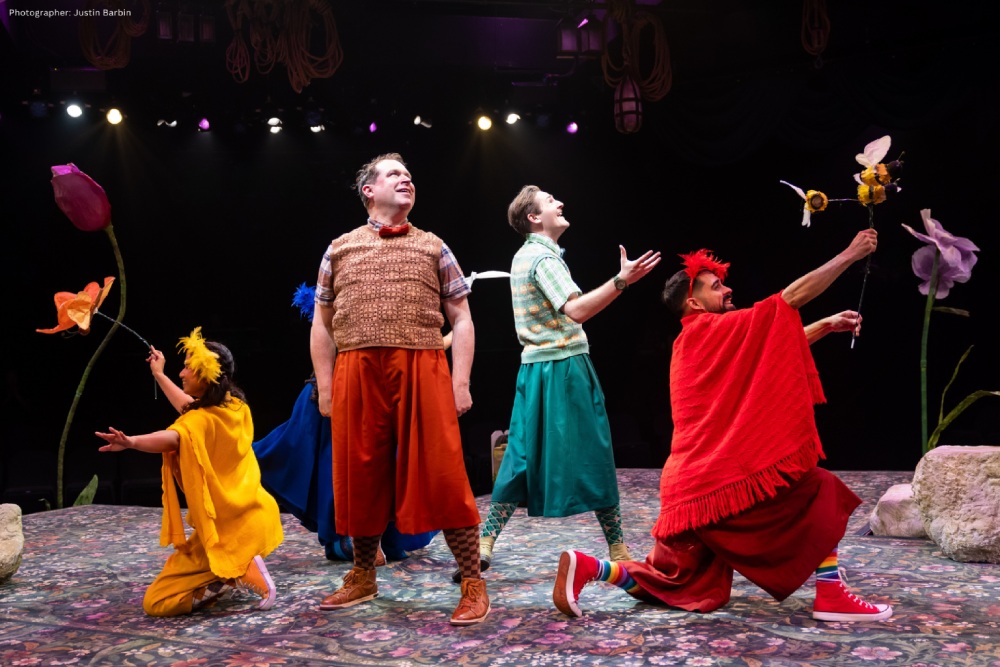
The ensemble cast deserves immense credit for their versatility, seamlessly juggling multiple roles. Their high-energy performances effectively propel the story through the changing seasons, keeping the audience engaged from start to finish.
The vibrant stage design is equally playful, featuring giant flowers, leaves, and bubbles.
The cast portrays various forest animals with costumes that lean into abstraction, transforming bird wings into shawls and turtle shells into backpacks. While these conceptual choices are creative, they occasionally feel slightly underdone. Characters like the mouse and the birds would have benefited from a few additional flourishes to fully accentuate the ensemble’s flair.
For parents bringing their children, this production does an excellent job of being accessible for children. The story provides a gentle exploration of emotions—such as anger, sadness, and loneliness - offering a format for children to see how characters process and overcome negative experiences. The narrative encourages community and kindness, demonstrating the power of working together.
In many ways, Frog assumes a protective, almost parental role toward Toad, calming him during tense circumstances and actively seeking opportunities to encourage him—a touching lesson that young audience members are sure to notice.
The production also features a post-show question-and-answer session. This is a wonderful addition, allowing children to engage directly with the cast and learn about the behind-the-scenes nature of theater, from the mechanics of props to the process of putting a musical together.
Ultimately, A Year with Frog and Toad is a heartwarming reminder of the value of friendship, making it a perfect outing for families. Kids of all ages are sure to enjoy the wholesome entertainment and take away valuable lessons.
Oil Lamp Theater Announces its New Home

Oil Lamp Theater, currently at 1723 Glenview Road, announces its new future home will be at the former Ten Ninety Brewing Co. in Downtown Glenview, 1025 Waukegan Road. The opportunity to move to a larger performance space, that is adjacent to Oil Lamp Academy, became possible due to the founder of the Negaunee Foundation, client of Virginia Trux, who purchased the property as a personal project and looks forward to years of joy with Oil Lamp Theater. This new location pursues the goals of the “Light the Way” fundraising campaign that was announced in September of last year. The campaign included a 2028 opening of the new venue, a $5 Million fundraising goal, the expansion of its arts education, strengthening essential staff and establishing a larger performance venue with the goal of remaining in downtown Glenview. For more information or to support the campaign go to OilLampTheater.org/Light-the-Way or reach out to Oil Lamp at This email address is being protected from spambots. You need JavaScript enabled to view it..
At approximately 11,000 square feet, this new home will feature a warm and welcoming lobby, a flexible theater with seating for up to 150+ guests and thoughtfully designed spaces by Future Firm that will serve Oil Lamp’s artists, students and community.
MORE FROM OIL LAMP THEATER:
I Love You Because
August 14 – September 13, 2026
Book and Lyrics by Ryan Cunningham
Music by Joshua Salzman
Directed by Scott Shallenbarger
Music Directed by Aaron Kahn
Preview Performances: Friday, Aug. 14 at 7:30 p.m. and Saturday Aug. 15 at 3 p.m .
Opening Night: Saturday, Aug. 15 at 7:30 p.m.
Performance schedule: Thursdays and Fridays at 7:30 p.m.; Saturdays at 3 p.m. and 7:30 p.m. and Sundays at 3 p.m. with additional Wednesday performances Wednesday Aug. 19 at 11 a.m. and 3 p.m.; Wednesday, Aug. 26 at 7:30 p.m.; Wednesday September 2 at 11 a.m. and 3 p.m.; and Wednesday September 9 at 7:30 p.m.
Modern dating is a mess. Sometimes to find Mr. Right you need to find Mr. Wrong even if that means seeing someone stuck on their ex, awkward encounters of the intimate kind and lots of horrible coffee dates. Opposites attract in this feel-good musical that will transport audiences into the heart of your favorite guilty pleasure rom-com. Created by acclaimed musical team Ryan Cunningham and Joshua Salzman and inspired by Jane Austen’s gold-standard romance novel “Pride and Prejudice,” this delightful musical will make you fall head over heels.
Dial M for Murder
October 2 – November 1, 2026
Adapted by Jeffrey Hatcher from the original play by Frederick Knott
Directed by Daniel King
Preview Performances: Friday, Oct. 2 at 7:30 p.m. and Saturday, Oct. 3 at 3 p.m.
Opening Night: Saturday, Oct. 3 at 7:30 p.m.
Performance schedule: Thursdays and Fridays at 7:30 p.m.; Saturdays at 3 p.m. and 7:30 p.m. and Sundays at 3 p.m. with additional Wednesday performances Wednesday, Oct. 7 at 11 a.m. and 3 p.m.; Wednesday Oct. 14 at 7:30 p.m. (Understudy Performance); Wednesday Oct. 21 at 11:00 a.m. and 3 p.m. and Wednesday, Oct. 28 at 7:30 p.m.
Alfred Hitchcock’s adored, chilling thriller gets a modern twist that no one will see coming. A murderous misstep begins a high-stakes hunt for the real criminal as time is quickly running out. This captivating, heart-racing play leaves audiences on the edge of their seats while the mystery of the year unravels before their eyes. Will the clues unlock the right person, or will an innocent victim pay the price? The suspense is to die for…
It’s A Wonderful Life: A Live Radio Play
November 20 - December 27, 2026
Adapted by Joe Landry
Directed by Becca Holloway
Preview Performances: Friday, Nov. 20 at 7:30 p.m. and Saturday, Nov. 21 at 3 p.m.
Opening Night: Saturday, Nov. 21 at 7:30 p.m.
Performance schedule: Thursdays and Fridays at 7:30 p.m.; Saturdays at 3 p.m. and 7:30 p.m. and Sundays at 3 p.m. with additional Wednesday performances Wednesday, Dec. 2 at 11 a.m. and 3 p.m.; Wednesday Dec. 9 at 7:30 p.m. (Understudy Performance); Wednesday Dec. 16 at 11:00 a.m. and 3 p.m. and Wednesday, Dec. 23 at 7:30 p.m.
The holiday tradition returns for its 13th year. Audiences may experience unmatched holiday cheer with Frank Capra's beloved classic, “It's a Wonderful Life,” reimagined as a captivating live radio play, complete with foley sound effects and set in our own WBFR radio studio.
Journey to Bedford Falls, where George Bailey's troubles lead him to wish he was never born. Clarence, an angel sent to intervene, steps in to make his wishes come true and George quickly learns just how many lives he has touched and just how blessed he really is.
*All productions, dates, creatives, etc. are subject to change.
ABOUT OIL LAMP THEATER
Oil Lamp Theater is a professional nonprofit performing arts organization in Glenview, Illinois, welcoming over 10,000 patrons annually from more than 225 communities—41% from Glenview and others from across the North Shore and Chicago. Since establishing its intimate 60-seat home in downtown Glenview in 2012, Oil Lamp has grown into a cultural beacon, earning recognition as “Best Live Theatre in the North Shore” for four consecutive years.
With more than 70 productions to date, Oil Lamp is known for its dynamic Mainstage season, special events and its resilience during the pandemic, when it innovated with drive-in performances and outdoor productions. Today, the theatre continues to foster connection, broaden horizons and illuminate the human condition through professional theater and year-round programming.
In addition to its productions, Oil Lamp Theater operates Oil Lamp Academy, its education branch dedicated to “Training for Life Through the Performing Arts.” In 2025 alone, the program served more than 230 students ages three to 97 years old, offering classes that use theater as a pathway to build confidence, creativity and lifelong skills.
No Dogs’ Delivers an Unfamiliar Earnest
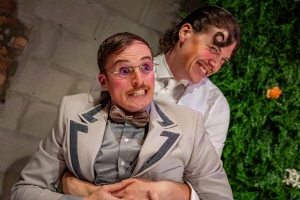
Oscar Wilde’s The Importance of Being Earnest is one of the greatest farces ever written. His wordplay caricatured high society, and clever pay-offs are hilarious when executed properly. The play was first performed on February 14, 1895 (Valentine's Day). The premiere took place at the historic St James's Theatre in London. Wilde famously subtitled the work “A Trivial Comedy for Serious People,” a reminder that its brilliance lies in treating absurdity with absolute sincerity. Unfortunately, No Dogs in the Kitchen Theatre Company’s recent production, directed by Genevieve Corkery, misses the mark when bringing this beloved play to the stage.
For those unfamiliar, the classic comedy follows two high-society bachelors, Jack Worthing and Algernon Moncrieff, who invent secret personas to escape the boredom of everyday life. Trouble arises, however, when Jack (going by the name of “Ernest”) proposes to Gwendolen, who is intent on only marrying a man with that specific name. Matters are complicated further when the carefree, mischievous Algernon also dons the moniker “Ernest” to woo Jack’s ward, Cecily, who shares the exact same romantic obsession with the name. To find happiness, the lovers must quickly untangle a web of ridiculous misunderstandings and mistaken identities. The true brilliance of Wilde’s script lies in its wordplay and sharp societal satire, taking the audience on a wild, hysterical ride where the utterly absurd is treated with the utmost importance.
Founded in 2023, No Dogs in the Kitchen is still a young company, and a certain learning curve is both natural and expected as they continue shaping their artistic identity. Their past work has already shown a clear interest in bold, unconventional staging, often embracing heightened physicality and playful absurdism. That adventurous spirit is a defining part of their aesthetic, and it’s evident the ensemble values experimentation and a willingness to push familiar texts in unexpected directions. While this production didn’t always find harmony between those impulses and Wilde’s finely tuned verbal wit, the company’s enthusiasm, imaginative framework, growing technical confidence, and emerging vision suggest they have the tools to grow into a distinctive and compelling presence within Chicago’s storefront theatre scene.
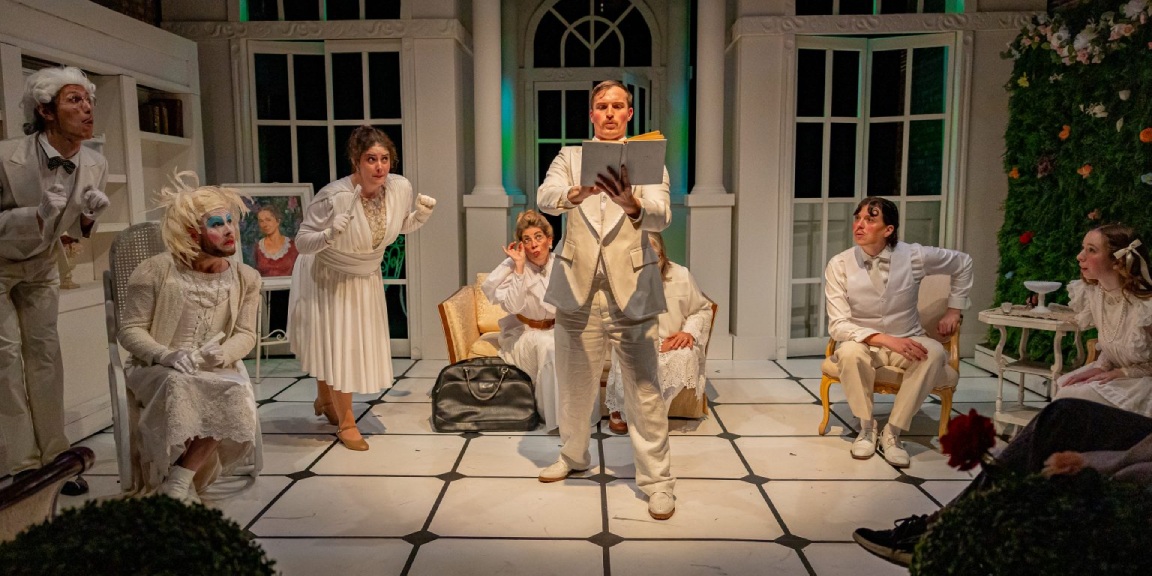
The cast of No Dogs in the Kitchen’s “The Importance of Being Earnest” at Facility Theatre.Photo: Alex Albrecht
That said, where this production struggles is in its apparent distrust of the script, adding jumbled and superfluous elements that only serve to undercut the humor it tries so hard to generate. It is as if the creative team didn't believe the script was funny enough on its own, choosing instead to pile on unnecessary subtext that needlessly deviated from - and was unsupported by - Wilde’s text.
This staging regularly undermines its own comedic timing with added, cartoonish sound effects that reduce wit to silly gags. From boinging springs to breaking plates, it felt as if someone was trying to use every button on a soundboard. Furthermore, a heavy hand of physical humor frequently distracts from the brilliant dialogue. During several monologues, cast members distracted the audience with routines like fighting on a sofa. Another oddity occurred in the final act when multiple cast members broke the fourth wall to deliver lines - a trick they hadn't used up until that point. It’s unclear why there was such distrust in the source material, and why a surplus of additions was believed to be the solution.
The performances also suffered from this same directive, often relying on over-the-top delivery. Mitch Karmis, who played two different butlers, mugged for the audience and utilized an almost cartoon-like physicality. David Lovejoy portrayed Lady Bracknell as a Mommie Dearest caricature instead of the formidable, sophisticated society matriarch who delivers scathing lines with dry, icy wit. The performance moved between widely contrasting vocal registers, creating an uneven tone that often felt out of step with Lady Bracknell’s traditionally controlled presence. It was also unclear why, in the final act, Lady Bracknell suddenly transformed into a flirtatious aggressor who growled at Jack and threw herself at the butler. Another odd decision was to have Dr. Chasuble played by Sara Corkery in a rubber race mask.
Amidst these choices, there was a bright spot in Garret Weigel’s Jack. For the most part, Weigel found the right balance between inventive character choices and a respect for the script. Jack could easily be played as a boring straight-man when up against the whimsical Algernon, but Weigel added a distinct flair to his interpretation without straying too far from the original play.
It is genuinely unfortunate that the production chose to deviate so drastically from the text. When done faithfully, The Importance of Being Earnest is a true theatrical gem. While there were moments that elicited genuine laughter, they occurred when the text was allowed to speak for itself, rather than being buried under extraneous gags.
While this hyper-stylized, over-the-top version might appeal to theatergoers seeking a radical, alternative spin on a classic, those looking for a faithful, witty adaptation of Wilde’s masterpiece will likely find this production is not the one.
The Importance of Being Earnest runs through July 26th at Facility Theatre. For more information and/or tickets, visit https://nodogsinthekitchen.org/.
“A Strange Loop” Lets the Intrusive Thoughts Win at Raven Theatre in partnership with About Face Theatre
17 October 2026 in Theatre in ReviewA musical, but it’s just the voices in your head. Sounds just crazy enough to win the 2020 Pulitzer for…

Announcing Goodman's 22nd New Stages 2026 Festival Line-Up
15 October 2026 in Upcoming TheatreFrom a "Kung Fu rom-com" to a witchy new musical, The Goodman's popular New Stages Festival in its 22nd year continues…

TIMELINE THEATRE’S 100TH PRODUCTION, THE CHICAGO PREMIERE OF LAURA WADE’S HOME, I’M DARLING, DIRECTED BY MECHELLE MOE, SATIRIZES THE SEDUCTIVE FANTASY OF A “SIMPLER PAST,” NOVEMBER 11 - DECEMBER 13
14 October 2026 in Upcoming TheatreTimeLine Theatre’s 30th Anniversary Season at its new home in Uptown rolls merrily along in November with the company’s 100th…

Court Theatre announces America@250 - Now is the Time: Artists Go to Work
14 October 2026 in Theatre BuzzUnder the leadership of Marilyn F. Vitale Artistic Director Avery Willis Hoffman and Executive Director Angel Ysaguirre, Court Theatre proudly…
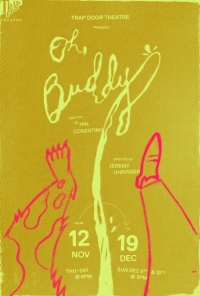
Trap Door Theatre Presents the World Premiere of OH, BUDDY, by Hal Cosentino. Opening November 12th, 2026
14 October 2026 in Upcoming TheatreTrap Door Theatre is thrilled to continue its 33rd season with a Chicago Premiere of Oh, Buddy, written by Hal…

Announcing the Cast of the 49th A CHRISTMAS CAROL
14 October 2026 in Upcoming TheatreTis the season, in spite of today's unseasonable temps, as A Christmas Carol begins rehearsals for The Goodman's 49th annual…

NOVA ENTERTAINMENT CURRENT AND UPCOMING 2026 CIRCA PINTIG UPDATES
14 October 2026 in Now PlayingNova Entertainment is pleased to announce the upcoming performance schedule and updates for CIRCA Pintig, with a visual rebrand and…
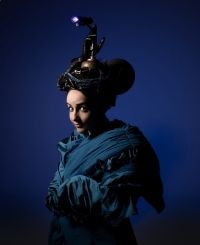
Steppenwolf Theatre Announces "ha ha ha ha ha ha ha" January 13 – February 7, 2027
14 October 2026 in Upcoming TheatreThe blurb is: hahahahahahahahahaha hahahahahahaha hihihi hahahahahahaha hoho hahahhahaha hehe hahahahahahahahahaha. Julia Masli's award-winning solo phenomenon ha ha ha ha…

'Sanctuary Stories' Ventures Into Emotional Drama Behind the News on Immigration
13 October 2026 in Theatre in ReviewSanctuary Stories plumbs the line between theater and journalism, and the powerful human dramas both can depict. Funded by a Northwestern…
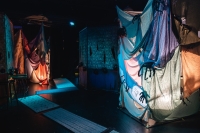
Inside Six Strange Worlds: Exquisite Corpse VI: LULLABIES
13 October 2026 in Theatre in ReviewFor its sixth Halloween season, Rough House Theater Co. has transformed Steppenwolf’s Merle Reskin Garage into a spectacular puppet haunted…
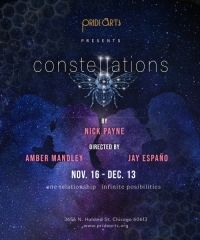
PrideArts announces cast and production teams for Nick Payne's CONSTELLATIONS, performed by alternating same-sex casts, November 13- December 13
12 October 2026 in Upcoming TheatreThursdays – Saturdays at 7:00 pm, Sundays at 3 pm Additional Saturday matinees at 3:00 pm on November 28 and December…
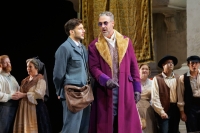
Robert Falls Directs a Sinfully Satisfying Don Giovanni at Lyric Opera of Chicago
11 October 2026 in Theatre in ReviewLet he without sin cast the first stone, Lyric’s “Don Giovanni” seemingly says when they bring up the house lights…

Teatro Vista Productions in collaboration with Audible presents Cafecito & Loops: A Mexodus Listening Tour Headed South Sundays, through November 1st
11 October 2026 in Now PlayingTeatro Vista Productions (TVP), the Midwest's only Latine-led Equity theatre company, in collaboration with Audible, presents Cafecito & Loops: A…
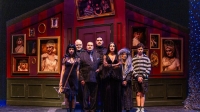
BrightSide’s Addams Family Musical Revives the Wonderfully Weird World of the Addams Clan
10 October 2026 in Theatre in ReviewThey're creepy and they're kooky, Mysterious and spooky, They're altogether ooky, The Addams Family. Yes, ooky. BrightSide Theatre’s production of…
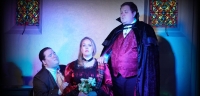
Chicago City Opera Delivers a Rare Operatic Haunting with Der Vampyr
08 October 2026 in Theatre in ReviewWith Halloween creeping closer, there’s something fitting about revisiting one of opera’s earliest flirtations with macabre horror - especially in…

Avalanche Theatre stages the world premiere of They Broke Up by Skyler Tarnas November 6–22, 2026
08 October 2026 in Upcoming TheatreAvalanche Theatre announces the world premiere production of They Broke Up by Chicago playwright Skyler Tarnas, November 6–22, 2026. Opening…

Oil Lamp Theater Announces the cast and creative team for the return of IT'S A WONDERFUL LIFE: A LIVE RADIO PLAY, Nov. 20 - Dec. 27
08 October 2026 in Upcoming TheatreOil Lamp Theater is proud to announce the cast and creative team for its next production and the final production…
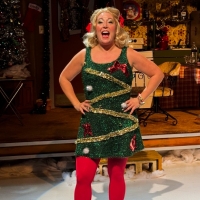
Adults-only holiday fun: Who's Holiday! brings R-rated Cindy-Lou Who back to Theater Wit for her sixth year, Nov. 27-Dec. 27
08 October 2026 in Upcoming TheatreChristmas Day is in our grasp. Why the vodka? Glad you asked! Who's Holiday! brings R-rated Cindy-Lou Who back to…
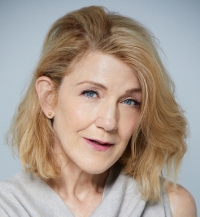
Two-Time Tony Award-Winning Actress Victoria Clark To Receive the Sarah Siddons Society Award at Annual Benefit on Monday, November 9, 2026
08 October 2026 in Theatre BuzzThe Sarah Siddons Society is pleased to present its 2026 Award to actress and director Victoria Clark, who recently starred…
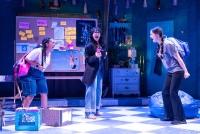
Goodman's Dead Girl’s Quinceañera: When Fifteen Meets the Adult World
07 October 2026 in Theatre in ReviewAt fifteen, the world can feel like a television show you haven't quite figured out how to turn off. For…

Steppenwolf Theatre's ADIRONDACK CHAIR CIRCLE In Rehearsal – Playing October 22 – December 6, 2026 – World Premiere!
07 October 2026 in Upcoming TheatreSteppenwolf Theatre Company, the nation's premier ensemble theater company, is pleased to launch its 51st Season with the world premiere of…
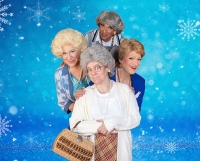
Hell in a Handbag Productions Announces 25th Anniversary Season!
07 October 2026 in Upcoming TheatreHell in a Handbag Productions is thrilled to announce its 25th Anniversary Season, featuring three "camptacular" shows guaranteed to delight lovers of…
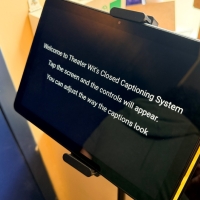
Chicago’s Theater Wit introduces new Watchword closed captioning system, dramatically improving access in all three of its theaters
07 October 2026 in Theatre BuzzChicago’s Theater Wit is now offering new, state-of-the-art closed captioning service, marking a dramatic improvement in making live theater more…

Paramount Theatre’s reimagined A Christmas Carol promises to be a dazzling new, all-ages spectacle for Chicago’s holiday theater season, November 11-January 3
07 October 2026 in Upcoming Theatre“God bless us, everyone,” because there’s a fresh, new, reimagined version of Charles Dickens’ classic tale A Christmas Carol debuting…
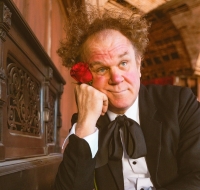
"John C. Reilly is Mister Romantic" Returns to Steppenwolf Theatre - December 10 – 13, 2026
06 October 2026 in Upcoming TheatreFollowing last year's critically acclaimed, sell-out engagement, Steppenwolf Theatre Company is pleased to announce the return of John C. Reilly…

Saint Sebastian Players Open 45th Season With A Murder Is Announced by Agatha Christie Classic Miss Marple Mystery Runs Oct. 23–Nov. 15
06 October 2026 in Upcoming TheatreThe Saint Sebastian Players open their 45th season of travels to different places with A Murder is Announced, a classic Miss Marple mystery…
Announcing "The Goodman, For Good" Campaign
06 October 2026 in Theatre BuzzToday, Goodman Theatre raises the curtain on its future as leadership and artists share a vision for its next century…

Two Edge Theater Company to stage A VIEW FROM THE BRIDGE as its inaugural Chicago production, December 4 through January 10
05 October 2026 in Upcoming TheatreTwo Edge Theater, a reincarnation of the Edge Theater Company that enjoyed eight successful seasons in the Denver, Colorado area,…

Frankenstein at Studebaker Theater adds performances for Halloween run
05 October 2026 in Upcoming TheatreChicago's historic Fine Arts Building and Studebaker Theater are thrilled to announce their Halloween co-production of Manual Cinema's acclaimed Frankenstein…
ANY REBELLION OF WILL - Trap Door Theatre - Through November 1st
05 October 2026 in Now PlayingTrap Door Theatre is thrilled to continue its 33rd season with Any Rebellion of Will, written by S.L. Daniels and…



Latest Articles
-
 “A Strange Loop” Lets the Intrusive Thoughts Win at Raven Theatre in partnership with About Face Theatre
Written by John AccroccoA musical, but it’s just the voices in your head. Sounds just crazy enough to win the 2020 Pulitzer for Drama. “A Strange Loop” by Michael R. Jackson finally makes its Chicago premiere at Raven Theatre in a co-production with…
“A Strange Loop” Lets the Intrusive Thoughts Win at Raven Theatre in partnership with About Face Theatre
Written by John AccroccoA musical, but it’s just the voices in your head. Sounds just crazy enough to win the 2020 Pulitzer for Drama. “A Strange Loop” by Michael R. Jackson finally makes its Chicago premiere at Raven Theatre in a co-production with… -
 Announcing Goodman's 22nd New Stages 2026 Festival Line-Up
Written by Buzz Center StageFrom a "Kung Fu rom-com" to a witchy new musical, The Goodman's popular New Stages Festival in its 22nd year continues to offer a first glimpse at the latest works by a handful of the hottest contemporary playwrights. This year's four-play…
Announcing Goodman's 22nd New Stages 2026 Festival Line-Up
Written by Buzz Center StageFrom a "Kung Fu rom-com" to a witchy new musical, The Goodman's popular New Stages Festival in its 22nd year continues to offer a first glimpse at the latest works by a handful of the hottest contemporary playwrights. This year's four-play… -
Chicago Danztheatre Ensemble Announces 2026-2027 Season
Written by Buzz Center StageChicago Danztheatre Ensemble (CDE) is pleased to announce its 2026 - 2027 season. CDE will open this artistic season with Copestic Vibrations: A Music Festival, Friday, Nov. 13 and Saturday, Nov. 14, followed by a fully staged production of For…
-
Eos Theatre Company Announces Second Production with The Thin Place
Written by Buzz Center StageEos Theatre Company is pleased to announce their second production with Lucas Hnath's horror play The Thin Place, directed by JC Clementz (Steppenwolf's Director of Casting and Artistic Operations), playing February 5 - 28, 2027 in Bramble Arts Loft's Beatrice Theater, 5545 N…


Does your theatre company want to connect with Buzz Center Stage or would you like to reach out and say "hello"? Message us through facebook or shoot us an email at This email address is being protected from spambots. You need JavaScript enabled to view it..
*This disclaimer informs readers that the views, thoughts, and opinions expressed in the text belong solely to the author, and not necessarily to Buzz Center Stage. Buzz Center Stage is a non-profit, volunteer-based platform that enables, and encourages, staff members to post their own honest thoughts on a particular production.