
Displaying items by tag: Steppenwolf Theatre
Review: Amadeus at Steppenwolf Theatre

Safe to say Steppenwolf’s revival of Peter Shaffer’s Amadeus is “fetes and fireworks”. Robert Falls makes his directorial debut at Steppenwolf after recently retiring from his role as Goodman Theatre artistic director. To say his new production of Amadeus makes a splash would be an understatement. Falls brings his signature vision to the still new in-the-round stage at Steppenwolf for a thrilling evening of theatre.
Even in the so-called peak of Broadway attendance, very few straight plays ran for three months let alone three years. Amadeus opened on Broadway in 1980 starring Ian McKellen, Jane Seymour and Tim Curry (as Mozart) where it ran for three years. It went on to win several Tonys and was eventually adapted into an Academy Award winning film in 1984. Since plays don’t last long on Broadway, it begs the question: what about Peter Schaffer’s play resonated with audiences? The film has also attracted a considerable cult following.
Pete Shaffer uses the rivalry between Italian composer Antonio Salieri and young Mozart as an allegory for professional jealousy and intergenerational conflict. The dastardly Salieri is played by Steppenwolf ensemble member Ian Barford while his counterpart is played by David Darrow. Though Shaffer admits to inventing many of the details of his play, his version turns the music world of 1700s Europe into a kind of rock ‘n roll. When we think of the classic composers, we think of them as we think of their music–mild, inoffensive, something to put on in the background to get work done. Amadeus portrays Mozart as an enfant terrible: a womanizer and drunkard. His wild lifestyle is likely what led to his most important operas, even if they were mostly lighthearted comedies. Shaffer makes classical music cool by bending the lore to fit his own artistic agenda.

David Darrow, Jaye Ladymore and ensemble member Ian Barford in Steppenwolf Theatre Company’s production of Amadeus.
Robert Falls’ revival feels as fresh as when it opened over 40 years ago. While the movie is known for lavish sets and costumes, Steppenwolf’s production is somewhat modest. Minimalism only adds to the cool factor here. One of Falls’ innumerable talents as a director is creating visual splendor. Together with longtime scenic collaborator Todd Rosenthal, Falls’ shows audiences countless moments of theatrical magic. Steppenwolf’s choice to present this play in the round is a wise one that affords the cast an opportunity to move in and around the audience.
Falls has gathered a wonderful cast. While the headliner here is Mozart, the real star of the show is Salieri. The villain begins the show as the main character and in his lengthy confession we see he is more often the tormented one even though he’s in the position of power. Barford’s performance is less delicate than how this part has traditionally been approached. His hulking figure in period dress only adds to his threatening persona that feels more masculine than intellectual. Darrow on the other hand plays the clown well in the first act but leaves audiences devastated by the conclusion. His indefatigable energy is a lot of fun to watch.
Steppenwolf’s Amadeus is as exciting as the news that Robert Falls switched houses to direct it. In many ways it feels way less stuffy than some of his most impressive work at Goodman. Though this production is basically perfect, there’s a bit of grit left on it and it’s all the better for it.
*Extended through January 25th
Review: House of the Exquisite Corpse V: Blood & Puppets from Rough House Theater Co. at Steppenwolf's Merle Reskin Garage

More than a haunted house and not quite a play, the House of the Exquisite Corpse series lives somewhere between immersive theater and a live-action episode of Black Mirror.
For the fifth year in a row, Rough House Theater Co. is haunting Steppenwolf's Merle Reskin Garage Theatre with House of the Exquisite Corpse V: BLOOD & PUPPETS. This production-experience hybrid is unsettling, uncanny, and unlike anything else running in Chicago this Halloween season.
The show consists of six puppet performances, each roughly five minutes long, staged in dark, enclosed rooms. Positioned more as voyeurs than viewers, the audience observes each performance through peepholes cut in the room’s walls and listens through headphones. It’s an experience like no other, immersing you in a world entirely, even as you watch it from the outside.

LETTING -Creators Nina D'Angier & Madigan Burke Puppetteer Amandatron 5000.
Although you may be tempted, as I was, to take this year’s blood-and-puppets theme literally, expecting guts and gore, co-directors Felix Mayes and Corey Smith encouraged artists to explore “blood” more metaphorically. The results are striking. Across the six rooms, blood takes many forms: as a symbol of life, decay, lineage, legacy, intimacy, and rupture. Each room also offers a radically different world. One might transport you to the cluttered lab of a deranged scientist, another to a barren, surveilled interior, another to an eerily windswept desert.
The artistry on display is staggering, extending far beyond set design. Each vignette – created by a different team of artists – interprets the theme in personal and provocative ways, resulting in a thrilling range of styles and techniques. The puppetry alone shifts dramatically from room to room, moving from delicate shadow work to oversized, wearable creatures and full-body figures that act like natural extensions of the performer’s body. Some rooms tell tight, plot-driven stories; others are impressionistic and mood-driven, favoring feeling over narrative. Across the board, the performances are intriguing and deeply theatrical – you might come for the scares, but you’ll stay for the craft.
Of course, none of this would be possible without the collective effort of the full production team. The co-directors have built more than a series of puppet shows: they’ve created a platform for experimentation. Puppetry, an art form that’s far too often dismissed and infantilized, takes center stage in House of the Exquisite Corpse, revealing its full expressive range. A space where this kind of work is possible is rare, and Rough House has built one where artists can be unapologetically weird, bold, and free – a testament to what independent theater can be when creators are trusted to follow their wildest ideas.
Whether you're a horror fan, a regular theatergoer, or just looking for something truly unique to do this spooky season, House of the Exquisite Corpse delivers. It may not make you scream, but it will definitely make you squirm.
House of the Exquisite Corpse V: BLOOD & PUPPETS is haunting The Merle at Steppenwolf Thursdays, Fridays, and Saturdays through November 1. Tickets are available at https://roughhousetheater.com/house-of-the-exquisite-corpse
Before you go, please note that the experience requires walking and standing for extended periods, as well as the use of over-ear headphones. Rough House is committed to accessibility and has made detailed information and request forms available at https://roughhousetheater.com/accessibility.
*This review is also shared on https://www.theatreinchicago.com/!
Reassembling the Broken Universe of Mr. Wolf

Rajiv Joseph’s Mr. Wolf is a striking departure from the warmth and humor of his recent King James. Where King James used the comfort of sports as a language of friendship, Mr. Wolf asks us to sit inside the fragile, fractured space of trauma. In Steppenwolf’s intimate production, ensemble member K. Todd Freeman directs with an unflinching precision that refuses to soften the material. His approach creates a space where silence weighs as heavily as dialogue, where each pause presses the audience closer to the raw pulse of grief, survival, and uneasy healing. This is a small play set against a very large world, and its intimacy makes it resonant.
The play centers on Theresa (Emilie Maureen Hanson), a teenager recently rescued after twelve years of captivity. Her abductor, Mr. Wolf (Tim Hopper), is not only a predator but also an astronomy professor who reshaped her entire worldview with cosmic metaphors, rigid theories, and apocalyptic visions. For Theresa, the cosmos—and Mr. Wolf—are inseparable. He does not see the stars as sources of wonder but as proof of his twisted logic.
Mr. Wolf bends the language of science into a doctrine of control. Whereas most scientists keep religion and science in separate spheres, he blurs that boundary, turning the vastness of the universe into a kind of scripture. He declares Theresa a prophetess of the cosmos, teaching her to view the stars not through physics and wonder but through his rigid, apocalyptic framework. Hopper embodies this chilling certainty with unnerving precision, a man who once lectured on the heavens but now orbits entirely within his own delusions.
Now reunited with her parents—Hana (Kate Arrington) and Michael (Namir Smallwood)—Theresa must navigate a world that feels as alien as the galaxies she once studied under his command. Julie (Caroline Neff), Michael’s new wife, hovers between empathy and helplessness, unsure how to reach someone marked by unspeakable experience while quietly grappling with her own grief.
The acting is superb across the board. Hanson captures Theresa’s uneasy balance of fragility and resilience. Arrington and Smallwood embody grief in contrasting shades—Arrington’s sharp-edged regret against Smallwood’s wounded stoicism—while Neff supplies a warmth the others cannot. Hopper, disturbingly calm as Mr. Wolf, delivers control with the cool precision of a man who has transformed astronomy into a theology of delusion.
The design team amplifies this unsettling intimacy. Walt Spangler’s set suggests a world we recognize—rooms, walls, familiar structures—that have splintered into pieces. Watching the play, we feel as though we are tasked with reassembling it, just as the characters try to piece together their broken lives. Dede Ayite’s costumes root the play in ordinariness, and Josh Schmidt’s sound and original music create an undercurrent of wonder. Rasean Davonté Johnson’s projections echo the celestial images that once defined Theresa’s captivity, lingering like ghosts of her indoctrination.
Freeman’s direction sharpens the play’s unease into something inescapable. Rather than offering distance, he compels the audience to witness the jagged rhythms of survival. Where King James thrived on joy and connection, Mr. Wolf strips us down to silence and difficult truths. It is a play less about resolution than endurance, and in Steppenwolf’s hands, it becomes a stark reminder of how trauma ripples outward—and how putting the pieces back together is never simple, but always necessary.
RECOMMENDED
When: Through Nov. 2nd
Where: Steppenwolf Theatre, 1650 N. Halsted St.
Running Time: 90 minutes
Tickets: $20 - $133.50
312-355-1650
*This review is also shared on https://www.theatreinchicago.com/!
Review: You Will Get Sick at Steppenwolf Theatre

If ever given the chance to see Amy Morton on her home stage at Steppenwolf–take it. She stars in the Chicago premiere of Noah Diaz’s ‘You Will Get Sick’ alongside fellow ensemble members Cliff Chamberlain, Namir Smallwood, Jordan Arredondo and Sadieh Rifai. Steppenwolf Theatre Artistic Director Audrey Francis directs this inventive new production with theatricality and compassion.
‘You Will Get Sick’ comes from writer and screenwriter Noah Diaz. It was previously seen at The Roundabout Theatre in which the late Linda Lavin starred to rave reviews. It’s the oddball story of a man with a secret (Namir Smallwood) who pays a woman (Amy Morton) to have uncomfortable conversations with the people in his life. At first the woman seems only motivated by money, but in time she becomes his unlikely confidant. The woman is preoccupied with her own dreams of starring in a local production of ‘The Wizard of Oz’. As his condition worsens, they live under the constant threat of attack from giant birds overhead.
The list of things that make this play unique is much longer than the list of things that make it familiar. On one hand, it’s not hard to draw a connection between the man’s wasting illness and his new friend’s obsession with being Dorothy Gale in ‘The Wizard of Oz’. This a story about a queer man and the illness that he will eventually succumb to. All the while, an off-stage narrator gives the internal stage directions for how the man feels. Each actor embodies several other unnamed characters that revolve around him in some way.
Sadieh Rifai portrays a handful of zany characters from nurses to new age theatre teachers, but as his sister receives bad news from Amy Morton’s character, her fury is electrifying. Rifai makes the most of Diaz’s gallows humor. Amy Morton’s performance is the centerpiece of the play though. As with her co-stars she wears a few unnamed character’s hats throughout the show, but as what’s described as “an older woman” who’s both a profit-driven jerk and a reliable caregiver–she’s complex and utterly realistic.
Diaz makes a point with ‘You Will Get Sick’ that illness in our society is seen as a moral failing. The man is ashamed for people to know he’s ill, but he’s even more embarrassed of his failing limbs. Namir Smallwood is heartbreaking as a man so lonely he has to pay people to be kind. Conversely, Cliff Chamberlain hilariously plays a swirl of toxically positive characters that seem to only exist to annoy those dealing with traumatic reality.
There’s something hard to define about ‘You Will Get Sick’, but instead of wondering what it’s about, perhaps Diaz wants you to feel what it’s about. Between the dreamy dialogue and Audrey Francis’ sumptuous vision for this production, there’s an emotional energy on stage that is quite literally magic in some parts. Even though there is tragedy in life, what this play explores is what can grow out of that and what parts of people do we carry with us after they’re gone?
Through July 20 at Steppenwolf Theatre Company. 1650 N Halsted St. 312-335-1650
*This review is also featured on https://www.theatreinchicago.com/!
Layers Unfold in “The Book of Grace” at Steppenwolf

In a masterful stroke of programming, Steppenwolf Theatre Company presents the Chicago premiere of "The Book of Grace," Suzan-Lori Parks' incendiary companion piece to her Pulitzer Prize-winning "Topdog/Underdog." Director Steve H. Broadnax III has crafted a searing production that peels back the layers of American family dysfunction with surgical precision.
Set in a small Texas border town, the play centers on an explosive triangle: Grace, played with luminous warmth by Zainab Jah, a waitress who fills her notebook with life's quiet moments of beauty, collecting them like precious stones to ward off darker thoughts.; her husband Vet (Brian Marable), a soon-to-be-honored border patrol agent, maintains order with an iron grip that hints at something more dangerous beneath the surface, and Vet's estranged son Buddy (ensemble member Namir Smallwood), whose arrival ignites a powder keg of long-suppressed trauma.
Parks, who won a Pulitzer for "Topdog/Underdog," has crafted something remarkable here - a play that feels both intimately personal and sweepingly political. She uses this family's dysfunction as a lens to examine larger American wounds: the violence we inherit, the borders we create, the ways we fail to protect what we claim to love.
Zainab Jah, bearing an uncanny resemblance to a young Cicely Tyson, delivers a tour de force performance as Grace. Her portrayal is pure magic embodied, infusing the character with an effervescent optimism that makes her eventual disillusionment all the more devastating. As the rigid patriarch Vet, Brian Marable brings a chilling authority to the role, while Namir Smallwood's Buddy simmers with contained rage, his every gesture a loaded gun waiting to go off.
Parks' script continues her exploration of fractured American identity and familial bonds. Where "Topdog" examined the relationship between brothers through the lens of historical reenactment, "Grace" turns its gaze to the combustible dynamics between fathers and sons, set against the backdrop of America's ongoing border crisis.
The circular stage becomes a cage in Broadnax III's hands. With audience members boxing in the action from all sides, the performers have nowhere to hide – much like the fractured family they portray. It's claustrophobic and intense, exactly as it should be. As the drama unfolds in Steppenwolf's intimate arena, you can feel the tension building like a pot about to boil over. The production strips away theatrical artifice to expose the raw nerves of a family—and by extension, a nation—at war with itself.
What emerges is a gothic horror story dressed in kitchen-sink realism, where the monsters aren't supernatural beings but the ghosts of American history itself: racism, violence, and the cyclical nature of trauma. Parks continues to prove herself one of American theater's most vital voices, crafting work that refuses easy answers while demanding we confront our most uncomfortable truths.
"The Book of Grace" may be a companion to "Topdog/Underdog," but it stands as its own testament to Parks' genius—a play that grabs you by the throat and doesn't let go until its devastating final moments. In the hands of this exceptional ensemble, it's not just theater; it's an exorcism of American demons that feels more relevant now than ever.
Some plays entertain. Others leave scars. Suzan-Lori Parks' "The Book of Grace" belongs firmly in the second category, delivering a gut-punch of a production that lingers long after the house lights come up.
Highly Recommended
When: Through May 18
Where: Steppenwolf Theatre 1650 N. Halsted
Running time: 1 hour, 35 minutes
Tickets: $20 - $110 ($15.00 student tickets)
www.steppenwolf.org/tickets--events/
*This review is also featured on https://www.theatreinchicago.com/!
Review: 'Fool for Love' at Steppenwolf Theatre

Love is often jokingly referred to as a socially acceptable form of insanity, but in Sam Shepard’s ‘Fool for Love’ – social acceptability is an afterthought. Steppenwolf is especially known for their revivals of Shepard’s plays, and under Jeremy Herrin’s direction, their revival of ‘Fool for Love’ is as good as you can get.
‘Fool for Love’ is a gripping drama about two unstable lovers battling for control in a seedy, desert motel. The fools, May and Eddie played by Caroline Neff and Nick Gehlfluss are an equal match, dancing over the thin line between love and hate.
The one-act play opens on a hauntingly abandoned motel room somewhere in the Mojave Desert. May and Eddie cling to one another like feral animals. As the play barrels along they reveal the perverse intertwining that led them to this moment. Caroline Neff gives a wrenching and gritty performance that’s nothing short of electrifying. Nick Gehlfuss’ hulking appearance is hard to ignore, but in this version, his character is almost goofier than threatening. For that reason, their desire feels more understandable.
‘Fool for Love’ is said to live in the same universe as Shepard’s ‘True West’ and ‘Buried Child’. This play is certainly the most straightforward of the three. Here Shepard refined his exploration of brutality with a more universal central question: what makes a relationship toxic? And of course, there’s a touch of the mystic. Tim Hopper is nearly unrecognizable as The Old Man but makes for some of the most intense moments of the show.
Steppenwolf’s revival of this erotic thriller feels perfectly timed considering the success of last year’s ‘Babygirl’ and ‘Challengers’. If there’s any truth to the old adage ‘sex sells’ then the current pop culture landscape is only proving it. For years the erotic thriller seemed all but extinct as a genre which once dominated the 80s and 90s. Today there seems to be a renewed hunger for stories with sexual taboos as their subject matter.
Part of what makes this play so engrossing is the production itself. The thoughtfully designed set by Todd Rosenthal paired with Raquel Adorno’s perfect costume styling, achieve Jeremy Herrin’s vision. Every small detail tells part of the story and provides context otherwise not in the short script.
Steppenwolf’s first show of 2025 is going to be hard to top. Between the cast and the shocking script, ‘Fool for Love’ is sure to leave a lasting impression on those who see it. In confident hands, Sam Shepard’s romantic dark comedy continues to unsettle audiences even 40 years later.
Extended through March 23 at Steppenwolf Theatre Co. 1650 N Halsted St. 312-335-1650
Hubbard Street Dance Chicago's 'Season 47 Fall Series' is Sexy Romantic and Powerful

Steppenwolf's cozy downstairs theater provided the ideal setting for an evening of outstanding and expressive dance by the highly acclaimed Season 47 Fall Series by Hubbard Street Dance Company.
The performance began with Aszure Barton's “return to patience,” featuring the entire company uniformly dressed in simple, gray and pale blue loose-fitting attire, defying gravity by leaning into space rather than onto each other. The piece masterfully captures a sense of restless animation striving for contemplative serenity, achieving this balance beautifully. (Set to Caroline Shaw’s “Gustave Le Gray,” an adaptation of Chopin’s gentle “Mazurka in A Minor, Op. 17, No. 4”).
The second piece, a solo performance titled “Show Pony” (2018, HSDC premiere 2023), danced by Shota Miyoshi, stands in stark contrast to “return to patience.” Clad in a formfitting, shiny gold Vegas Elvis jumpsuit, Miyoshi's performance is spectacular. He is literally spotlighted with beautiful lighting by Dan Scully that appears and disappears, as he dominates the stage. The term “Show Pony” perfectly encapsulates Miyoshi's confident and explosive dancing.
Lar Lubovitch’s “Prelude to a Kiss” (2005, HSDC 2023) is a romantic delight, danced superbly by Alexandria Best and Elliot Hammans with palpable chemistry. The couple's dance and flirtation are mesmerizing, with Best sometimes hanging from Hammans' arms like an exquisite butterfly. Their duet is mesmerizing and romantic, culminating in a breathtaking moment as Hammans gently removes the shoulder straps from Best's gown, one at a time, and plants a single, masterful kiss on the exposed nape of her neck.
In “Sweet Gwen Suite”, Cyrie Topete, Dominick Brown, and Aaron Choate dazzle in wildly sexy, bedazzled leather and Mexican-style form-fitting pants and bolero jackets, with costumes designed by Bobby Pearce. This number by Bob Fosse and Gwen Verdon exudes sass, flair, and self-confidence. Brown and Choate support lead dancer Cyrie Topete, who shines in what feels like a near-solo performance. Topete makes every gesture count, from smoking and extinguishing her cigarette with a sexy twist of her leather boot toe, to the defiant lift of her chin and single smile at the end, like a victorious matador. The act was set to Herb Alpert & Tijuana Brass’ “Mexican Shuffle,” Lola Schiffrin’s “Cool Hand Luke,’ and “Mexican Breakfast” by Johnny Mandel.

Hubbard Street Dance Chicago in 'BUSK' by Aszure Barton.
Hubbard Street Dance Chicago’s opening night of the company’s Season 47 Fall Series was graced by the presence of Nicole, the daughter of Bob Fosse and Gwen Verdon. HSDC proudly became the first company to collaborate with the Verdon/Fosse Legacy to showcase Fosse's work. As a longtime admirer of Verdon/Fosse-inspired dance, this collaboration brought their iconic style to life in a thrilling and deeply satisfying way.
In the show’s final act, “Busk” by Aszure Barton opens with Elliot Hammans sleeping on the street, transforming into a character reminiscent of Buster Keaton, complete with hat and cane. Hammans' wonderfully expressive face enhances his dance performance, as he is joined by a cast of street people. Their movements range from defiant leaps to huddled masses, pleading for help with outstretched arms, their faces conveying profound sadness, struggle, and desperation. Random vocalizations are also used by the dancers, which really add to the already stunning piece. The entire dance company is involved in what is the perfect finale.
I highly recommend this incredible and passionate selection of dance performances, including the collaboration with the Gwen Verdon Bob Fosse Legacy, for audiences of all ages. The Hubbard Street Dance Chicago dancers are uniquely gifted and each piece so mesmerizing, making it difficult to pick a favorite number. The company’s Season 47 Fall Series, beautifully staged at Steppenwolf’s Downstairs Theatre, was truly a night of dance you and your family and friends will never forget.
For more information on Hubbard Street Dance Chicago’s current and upcoming performances, visit https://www.hubbardstreetdance.com/.
(*Dancers alternate roles in performaces depending on select dates. This review reflects the dancers performing for the specific performance reviewed.)
A Spell-Binding Reinvention: "Leroy and Lucy" at Steppenwolf

Ngozi Anyanwu’s Leroy and Lucy, in its electrifying world premiere at Steppenwolf Theatre, takes the legendary tale of Robert Johnson’s fateful night at crossroads and infuses it with the powerful mysticism of Yoruba spirituality. Forget the familiar Christian devil—instead, Anyanwu conjures Eshu, a complex Orisha (god) from Yoruba mythology who rules over sin and consequence, fate and chance, life and death. Directed by the fantastic visionary Awoye Timpo, this production doesn’t just retell a story; it transforms it, offering a dynamic cultural perspective that pulses with life and spirit.
Anyanwu’s storytelling is steeped in Yoruba tradition, with each line brimming with lyrical beauty and mythic depth. Lucy, played with fierce magnetism by Brittany Bradford, is Eshu personified—a playful, vain, argumentative trickster whose allure is irresistible. Leroy, played by the exceptional Jon Michael Hill, thinks he’s stumbled upon Lucy by chance, but the truth is far more chilling: Lucy has been waiting, watching, and weaving her magic to ensnare him—and the audience is captivated right along with him. Bradford’s portrayal of Lucy is utterly mesmerizing, casting a hypnotic spell that lingers long after scenes fade.
In one unforgettable scene, Legba—the Orisha known in Yoruba religions as the divine messenger and guardian of roads, paths, fate, and life—possesses Leroy’s body to confront Eshu in a thrilling clash of wills. As the master of destiny, Legba’s challenge to Eshu is charged with intense energy and revelation. The production also weaves in reincarnation, a core belief in Yoruba spirituality, adding a profound layer of spiritual depth making the play as thought-provoking as it is captivating.
Bradford and Hill’s chemistry is electric, their performances so raw and dynamic that they alone would be worth the ticket. Bradford, recently seen in Julia, The Watcher, and Dead Ringers, brings a complexity to Lucy that is fierce and enigmatic, while Hill, a Tony-nominated Steppenwolf ensemble member, infuses Leroy with vulnerability and resolve, torn between his aspirations and the spiritual forces at play.
Under Timpo’s masterful direction, Leroy and Lucy immerses the audience in a world that feels at once familiar and otherworldly. Andrew Boyce’s stunning set design, Heather Gilbert’s evocative lighting, and Conner Wang’s immersive soundscape create an atmospheric crossroads where visions flicker and secrets seem to breathe. Every element blurs the line between the earthly and the supernatural, drawing the audience into a world where they, too, must confront forces beyond comprehension.
Ultimately, Leroy and Lucy is a transcendent theatrical experience that bridges worlds—both cultural and spiritual. Anyanwu, Timpo, and the cast have created something profound and stirring: a play that speaks to ancient truths while challenging Western narratives, leaving its mark as a significant addition to contemporary theater.
Highly Recommended
When: Through Dec. 15
Where: Steppenwolf Theatre, 1650 N. Halsted
Tickets: $20 - $92
Info: steppenwolf.org
A Spooky Good Time: House of the Exquisite Corpse IV: SUPERSTITIONS at Steppenwolf

Do you like scary movies? I do. I blame the origin of this love of scary movies to being tricked into watching The Blair Witch project alone in a glass house in The Hills in Southern California in middle school; I loved the adrenaline rush, the ‘would I have survived that’ thought process that ensues. With spooky season officially upon Chicagoland, do you think I would miss the opportunity to see an Immersive Puppet Haunted House? No chance.
House of the Exquisite Corpse IV: SUPERSTITIONS is an annual themed anthology of puppetry art show. Part haunted house, part puppet show, and part platform for artists to create an immersive, experimental, non-hierarchical art form. The immersive puppet show features six haunted rooms which feature a different puppet show that run about 5-6 minutes a piece. You as a viewer observe the performances through peep-holes, adding to the voyeuristic horror-like setting. Each year, teams of multidisciplinary puppet artists anchor to one particular theme which the artists interpret, prepare, and perform for audiences. This year’s anthology is centered around superstitions, each of the performances, each selecting a different superstition to feature. There’s “Step on a Crack,” by Ken Buckingham and Corey Smith, “Broken Mirror,” by Justin D’Acci and Pablo Monterrubio, “If you lie, the devil’s darning needle will sew your mouth shut,” by Chio Cabrera, Alonso Galue and Brett Swinney, “Through the Looking Glass,” by Felix Mayes and Cam Armstrong Smith, “A White Bird in the House is an Omen of Death,” by Jacky Kelsey, Fletcher Pierson and Kevin Wesson, “Dreams Foretell the Future,” by Sion Silva and Emilie Wingate.
I know what you might be thinking. Horror show? Not for me. But for those perhaps not a fan of scary movies, fear not. There are no jump scares, no gore, only a series of artistic expressions utilizing multiple different puppet mediums. But puppets? Really? Yes! Did you know there are actually six different types of puppetry? There are far more than just those like Lambchop (creepy) or puppets like those in Avenue Q. There are marionettes, hand puppets, rod puppets, shadow figures, and Bunraku-style puppets, and you’ll see many of these artforms on display at House of Exquisite Corpse. The puppets add to that particular spine tingling, skin crawling curiosity that one gets when watching a scary or suspenseful film and it is executed in fascinating ways.
While there are no jump scares that will leave your heart pounding, the shows do feature some visual and auditory elements such as frightening imagery, strobe lights, loud noises, and haze effects. But fear not, those so inclined may soothe any creepy crawly feels with a drink at Front Bar at Steppenwolf Theatre only steps away. You will be on your feet for the majority of the show. The floor is concrete, so you may want to wear comfortable shoes. Audience members with limited mobility will be accommodated, all you need to do is email This email address is being protected from spambots. You need JavaScript enabled to view it. to discuss any accessibility needs. The show is recommended for audiences aged 14 and over.
House of the Exquisite Corpse IV: SUPERSTITIONS runs through spooky season ending its run on November 2nd is conveniently located at the south end of the Steppenwolf complex, 1624 N Halsted, in Chicago's Lincoln Park neighborhood tickets are available at www.tickettailor.com. Don't miss your chance to see SUPERSTITIONS at House of the Exquisite Corpse, you won't regret it, just be sure to throw a pinch of salt over your shoulder, just in case.
,
‘Noises Off’ is Packed with Noise and Ridiculously Funny

I walked into Steppenwolf Theatre not really knowing what to expect when going to see their new play Noises Off. Turns out, admittedly, I have never heard of the comedic art of British Farce or the original 1982 play by English playwright Michael Frayn called Noises Off. My only goal when selecting this play was to laugh and enjoy my time. I can successfully say that I did laugh a lot, and I enjoyed my time, but it took some time to get there.
The comedy show, directed by Anna D. Shapiro is a play-within-a play with a cast acting as actors, backstage crew and the director of the show preparing for an upcoming play called ‘Nothing On’. The show begins with the opening scene of actress Dotty Otley playing Mrs. Clackett, a housekeeper who is answering the phone while the homeowners are away. This takes place during a late night dress rehearsal just hours away from their opening performance. As the rehearsal carries on, many issues arise amongst the actors and the director. Missed cues, wrong lines, broken doors and lost props drives the cast into a mess. Meanwhile, drama unfolds amongst the cast with secret relationships, personal problems, and the mounting pressure of getting the show right.
The beginning of the show feels a bit confusing, having little context as to what is going on. All of the characters enter on and off the stage, while carrying two identities between their actor character and their play character. This constant movement and character changes make it a bit challenging to follow. By the end of the first act, I got the gist of what was happening and who each of the characters were.
Act I of the show is about the horrendous dress rehearsal that sets the stage and gives you an inside look at the drama and affairs amongst the cast. Act II takes you backstage, where chaos erupts during their opening night performance. And Act III brings you back to the front stage with one of the final shows for the cast. Out of the three acts, Act III is by far the best. All of the preparation, failures, and drama reaches a climax with a dizzying final performance with everything that could go wrong in a play. I found myself laughing along with the majority of the crowd during Act III.
The Steppenwolf Theatre stage hosts the set of the ‘Nothing On’ play the actors are preparing for. The set is the inside of an old British home with a staircase and many, many doors waiting to be slammed. The stage smoothly rotates between acts as you move to the front and back stages. The stage design works well for the show and gives enough dimension to keep things interesting.
I am thoroughly impressed by the cast in this show. Each actor seamlessly switches in and out of their play characters without error. Most of them carry the British accents well, while others could finesse it a bit more. By the third act, the actors were flying off and on stage, changing props, exchanging lines and swapping characters rapidly. I felt my head spinning and was shocked by each actor’s ability to carry on at that pace.
Rick Holmes who plays the Director of the play named Lloyd brilliantly captures the God complex a stereotypical play director holds. He’s condescending, pessimistic and truly vain. Holmes is convincing in his role as the director, and he exudes the distasteful personality of a narcissistic director who gets inappropriately involved with his cast. Meanwhile the cast in the ‘Nothing On’ play is a mixed bag of over-confident, lackadaisical, overly emotional, and dramatic personalities. Each character has a unique personality, which is entertaining to watch as the drama unfolds.
One standout cast member is Andrew Leeds who plays Garry Lejeune and his character Roger Tramplemain. Leeds is a quirky actor who is confident in his role and questions the director on a few of his decisions. I found Leeds to be the most exaggerated character with ridiculous behavior and a very convincing fall down the long staircase. He is quick in his character’s actions and is hilarious in his lines. He seems experienced in all things farce comedy and effortlessly switches in and out of his Garry and Roger roles.
Izumi Inaba’s costume design for the show embraces the 70s era style for the ‘Nothing On’ play with bright vibrant patterns. Each costume accurately portrays the characters each of the actors were playing. Some of the costume pieces eventually become props in the show and work as comedy pieces.
This production runs approximately 2 hours and 40 minutes with two short intermissions. The show itself feels a bit long between the first two acts but quickly picks up speed by Act III. I recommend getting to the theatre early and grabbing a drink and a small snack at the front bar.
As mentioned before, this show is based on a British farce comedy and the touring production of a bedroom farce. Farce is a style of comedy that heavily relies on physical and sometimes violent humor and ridiculous highly exaggerated situations. This show is well suited for adults who are into slapstick comedy and find “Monty Python and the Holy Grail” funny. Not to mention this show is loud in parts. There is a lot of door slamming and the play is ironically named Noises Off. I found this show to be pretty funny as I picked up on farce humor. This show is truly chaotic, stressful, a tad confusing and just downright absurd in the best way.
Noises Off, a Co-Production with Geffen Playhouse, is now playing at the Steppenwolf Theatre Company located at 1650 N Halsted Street in Chicago. This show will run from September 12th to November 3rd. Showtimes include 7:30 p.m. Tuesdays-Saturdays and 3:00 p.m. Saturdays and Sundays. Single tickets for the show range from $20-$148 and are now on sale at steppenwolf.org and at the Box Office at (312)-335-1650.
“A Strange Loop” Lets the Intrusive Thoughts Win at Raven Theatre in partnership with About Face Theatre
17 October 2026 in Theatre in ReviewA musical, but it’s just the voices in your head. Sounds just crazy enough to win the 2020 Pulitzer for…

Announcing Goodman's 22nd New Stages 2026 Festival Line-Up
15 October 2026 in Upcoming TheatreFrom a "Kung Fu rom-com" to a witchy new musical, The Goodman's popular New Stages Festival in its 22nd year continues…

TIMELINE THEATRE’S 100TH PRODUCTION, THE CHICAGO PREMIERE OF LAURA WADE’S HOME, I’M DARLING, DIRECTED BY MECHELLE MOE, SATIRIZES THE SEDUCTIVE FANTASY OF A “SIMPLER PAST,” NOVEMBER 11 - DECEMBER 13
14 October 2026 in Upcoming TheatreTimeLine Theatre’s 30th Anniversary Season at its new home in Uptown rolls merrily along in November with the company’s 100th…

Court Theatre announces America@250 - Now is the Time: Artists Go to Work
14 October 2026 in Theatre BuzzUnder the leadership of Marilyn F. Vitale Artistic Director Avery Willis Hoffman and Executive Director Angel Ysaguirre, Court Theatre proudly…
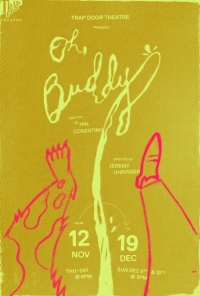
Trap Door Theatre Presents the World Premiere of OH, BUDDY, by Hal Cosentino. Opening November 12th, 2026
14 October 2026 in Upcoming TheatreTrap Door Theatre is thrilled to continue its 33rd season with a Chicago Premiere of Oh, Buddy, written by Hal…

Announcing the Cast of the 49th A CHRISTMAS CAROL
14 October 2026 in Upcoming TheatreTis the season, in spite of today's unseasonable temps, as A Christmas Carol begins rehearsals for The Goodman's 49th annual…

NOVA ENTERTAINMENT CURRENT AND UPCOMING 2026 CIRCA PINTIG UPDATES
14 October 2026 in Now PlayingNova Entertainment is pleased to announce the upcoming performance schedule and updates for CIRCA Pintig, with a visual rebrand and…

Steppenwolf Theatre Announces "ha ha ha ha ha ha ha" January 13 – February 7, 2027
14 October 2026 in Upcoming TheatreThe blurb is: hahahahahahahahahaha hahahahahahaha hihihi hahahahahahaha hoho hahahhahaha hehe hahahahahahahahahaha. Julia Masli's award-winning solo phenomenon ha ha ha ha…

'Sanctuary Stories' Ventures Into Emotional Drama Behind the News on Immigration
13 October 2026 in Theatre in ReviewSanctuary Stories plumbs the line between theater and journalism, and the powerful human dramas both can depict. Funded by a Northwestern…
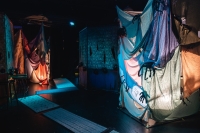
Inside Six Strange Worlds: Exquisite Corpse VI: LULLABIES
13 October 2026 in Theatre in ReviewFor its sixth Halloween season, Rough House Theater Co. has transformed Steppenwolf’s Merle Reskin Garage into a spectacular puppet haunted…
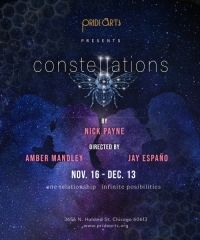
PrideArts announces cast and production teams for Nick Payne's CONSTELLATIONS, performed by alternating same-sex casts, November 13- December 13
12 October 2026 in Upcoming TheatreThursdays – Saturdays at 7:00 pm, Sundays at 3 pm Additional Saturday matinees at 3:00 pm on November 28 and December…
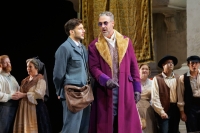
Robert Falls Directs a Sinfully Satisfying Don Giovanni at Lyric Opera of Chicago
11 October 2026 in Theatre in ReviewLet he without sin cast the first stone, Lyric’s “Don Giovanni” seemingly says when they bring up the house lights…

Teatro Vista Productions in collaboration with Audible presents Cafecito & Loops: A Mexodus Listening Tour Headed South Sundays, through November 1st
11 October 2026 in Now PlayingTeatro Vista Productions (TVP), the Midwest's only Latine-led Equity theatre company, in collaboration with Audible, presents Cafecito & Loops: A…
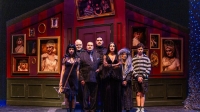
BrightSide’s Addams Family Musical Revives the Wonderfully Weird World of the Addams Clan
10 October 2026 in Theatre in ReviewThey're creepy and they're kooky, Mysterious and spooky, They're altogether ooky, The Addams Family. Yes, ooky. BrightSide Theatre’s production of…
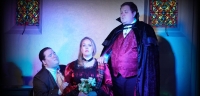
Chicago City Opera Delivers a Rare Operatic Haunting with Der Vampyr
08 October 2026 in Theatre in ReviewWith Halloween creeping closer, there’s something fitting about revisiting one of opera’s earliest flirtations with macabre horror - especially in…

Avalanche Theatre stages the world premiere of They Broke Up by Skyler Tarnas November 6–22, 2026
08 October 2026 in Upcoming TheatreAvalanche Theatre announces the world premiere production of They Broke Up by Chicago playwright Skyler Tarnas, November 6–22, 2026. Opening…

Oil Lamp Theater Announces the cast and creative team for the return of IT'S A WONDERFUL LIFE: A LIVE RADIO PLAY, Nov. 20 - Dec. 27
08 October 2026 in Upcoming TheatreOil Lamp Theater is proud to announce the cast and creative team for its next production and the final production…
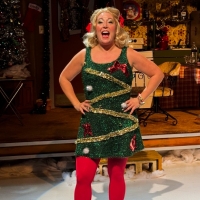
Adults-only holiday fun: Who's Holiday! brings R-rated Cindy-Lou Who back to Theater Wit for her sixth year, Nov. 27-Dec. 27
08 October 2026 in Upcoming TheatreChristmas Day is in our grasp. Why the vodka? Glad you asked! Who's Holiday! brings R-rated Cindy-Lou Who back to…

Two-Time Tony Award-Winning Actress Victoria Clark To Receive the Sarah Siddons Society Award at Annual Benefit on Monday, November 9, 2026
08 October 2026 in Theatre BuzzThe Sarah Siddons Society is pleased to present its 2026 Award to actress and director Victoria Clark, who recently starred…
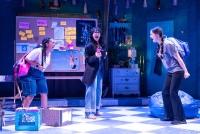
Goodman's Dead Girl’s Quinceañera: When Fifteen Meets the Adult World
07 October 2026 in Theatre in ReviewAt fifteen, the world can feel like a television show you haven't quite figured out how to turn off. For…

Steppenwolf Theatre's ADIRONDACK CHAIR CIRCLE In Rehearsal – Playing October 22 – December 6, 2026 – World Premiere!
07 October 2026 in Upcoming TheatreSteppenwolf Theatre Company, the nation's premier ensemble theater company, is pleased to launch its 51st Season with the world premiere of…
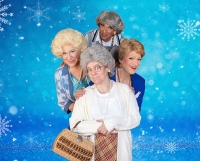
Hell in a Handbag Productions Announces 25th Anniversary Season!
07 October 2026 in Upcoming TheatreHell in a Handbag Productions is thrilled to announce its 25th Anniversary Season, featuring three "camptacular" shows guaranteed to delight lovers of…
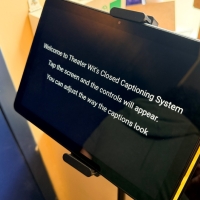
Chicago’s Theater Wit introduces new Watchword closed captioning system, dramatically improving access in all three of its theaters
07 October 2026 in Theatre BuzzChicago’s Theater Wit is now offering new, state-of-the-art closed captioning service, marking a dramatic improvement in making live theater more…

Paramount Theatre’s reimagined A Christmas Carol promises to be a dazzling new, all-ages spectacle for Chicago’s holiday theater season, November 11-January 3
07 October 2026 in Upcoming Theatre“God bless us, everyone,” because there’s a fresh, new, reimagined version of Charles Dickens’ classic tale A Christmas Carol debuting…
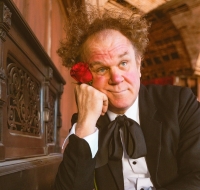
"John C. Reilly is Mister Romantic" Returns to Steppenwolf Theatre - December 10 – 13, 2026
06 October 2026 in Upcoming TheatreFollowing last year's critically acclaimed, sell-out engagement, Steppenwolf Theatre Company is pleased to announce the return of John C. Reilly…

Saint Sebastian Players Open 45th Season With A Murder Is Announced by Agatha Christie Classic Miss Marple Mystery Runs Oct. 23–Nov. 15
06 October 2026 in Upcoming TheatreThe Saint Sebastian Players open their 45th season of travels to different places with A Murder is Announced, a classic Miss Marple mystery…

Announcing "The Goodman, For Good" Campaign
06 October 2026 in Theatre BuzzToday, Goodman Theatre raises the curtain on its future as leadership and artists share a vision for its next century…

Two Edge Theater Company to stage A VIEW FROM THE BRIDGE as its inaugural Chicago production, December 4 through January 10
05 October 2026 in Upcoming TheatreTwo Edge Theater, a reincarnation of the Edge Theater Company that enjoyed eight successful seasons in the Denver, Colorado area,…
Frankenstein at Studebaker Theater adds performances for Halloween run
05 October 2026 in Upcoming TheatreChicago's historic Fine Arts Building and Studebaker Theater are thrilled to announce their Halloween co-production of Manual Cinema's acclaimed Frankenstein…
ANY REBELLION OF WILL - Trap Door Theatre - Through November 1st
05 October 2026 in Now PlayingTrap Door Theatre is thrilled to continue its 33rd season with Any Rebellion of Will, written by S.L. Daniels and…



Latest Articles
-
 “A Strange Loop” Lets the Intrusive Thoughts Win at Raven Theatre in partnership with About Face Theatre
Written by John AccroccoA musical, but it’s just the voices in your head. Sounds just crazy enough to win the 2020 Pulitzer for Drama. “A Strange Loop” by Michael R. Jackson finally makes its Chicago premiere at Raven Theatre in a co-production with…
“A Strange Loop” Lets the Intrusive Thoughts Win at Raven Theatre in partnership with About Face Theatre
Written by John AccroccoA musical, but it’s just the voices in your head. Sounds just crazy enough to win the 2020 Pulitzer for Drama. “A Strange Loop” by Michael R. Jackson finally makes its Chicago premiere at Raven Theatre in a co-production with… -
 Announcing Goodman's 22nd New Stages 2026 Festival Line-Up
Written by Buzz Center StageFrom a "Kung Fu rom-com" to a witchy new musical, The Goodman's popular New Stages Festival in its 22nd year continues to offer a first glimpse at the latest works by a handful of the hottest contemporary playwrights. This year's four-play…
Announcing Goodman's 22nd New Stages 2026 Festival Line-Up
Written by Buzz Center StageFrom a "Kung Fu rom-com" to a witchy new musical, The Goodman's popular New Stages Festival in its 22nd year continues to offer a first glimpse at the latest works by a handful of the hottest contemporary playwrights. This year's four-play… -
Chicago Danztheatre Ensemble Announces 2026-2027 Season
Written by Buzz Center StageChicago Danztheatre Ensemble (CDE) is pleased to announce its 2026 - 2027 season. CDE will open this artistic season with Copestic Vibrations: A Music Festival, Friday, Nov. 13 and Saturday, Nov. 14, followed by a fully staged production of For…
-
Eos Theatre Company Announces Second Production with The Thin Place
Written by Buzz Center StageEos Theatre Company is pleased to announce their second production with Lucas Hnath's horror play The Thin Place, directed by JC Clementz (Steppenwolf's Director of Casting and Artistic Operations), playing February 5 - 28, 2027 in Bramble Arts Loft's Beatrice Theater, 5545 N…


Does your theatre company want to connect with Buzz Center Stage or would you like to reach out and say "hello"? Message us through facebook or shoot us an email at This email address is being protected from spambots. You need JavaScript enabled to view it..
*This disclaimer informs readers that the views, thoughts, and opinions expressed in the text belong solely to the author, and not necessarily to Buzz Center Stage. Buzz Center Stage is a non-profit, volunteer-based platform that enables, and encourages, staff members to post their own honest thoughts on a particular production.