
Displaying items by tag: La Boheme
Opera Festival of Chicago Delivers an Assured, Full‑Hearted La Bohème

Opera Festival of Chicago continues its season with two mainstage productions - La Bohème and Adriana Lecouvreur - each featuring the Opera Festival of Chicago Orchestra and Chorus and performed at the George Van Dusen Theatre at the North Shore Center for the Performing Arts in Skokie.
I had the chance to see Giacomo Puccini’s La Bohème, directed by Festival General Director Sasha Gerritson and conducted by Sir Emanuele Adrizzi, and it proved to be an outstanding, deeply felt evening of music and drama.
Giacomo Puccini’s La Bohème unfolds in the chilly garrets and bustling cafés of 1830s Paris, where a group of young artists survive on charm, wit, and the fragile hope that beauty might be enough to sustain them. The opera begins in a drafty attic shared by the poet Rodolfo and the painter Marcello, whose playful banter masks the hunger and hardship of their bohemian life. Everything shifts when Mimì, a shy, dreamy seamstress with a failing candle and failing health, knocks on their door. Her tender connection with Rodolfo ignites instantly, carrying them into the vibrant chaos of Café Momus, where Marcello’s fiery former lover Musetta steals the spotlight with her flirtations and razor‑sharp instincts.
But as winter settles in, the opera’s warmth gives way to harsher truths. Only the rich are safe and well fed in this cold bleak landscape of artistic poverty. Mimì’s illness worsens, and Rodolfo’s fear of losing her fractures their love, even as they cling to moments of sweetness. Both Mimì and Rodolfo are swept up in the sudden, poetic rush of feeling that sparks between them during their first meeting over her extinguished candle, a moment Puccini shapes with irresistible warmth. Their ensuing duet, “O soave fanciulla,” is written as a rush of idealized, almost dreamlike love - sung here with such radiance that it feels too perfect to endure, and tragically it doesn’t, as the briefness of their time together becomes one of the opera’s most heartbreaking truths.
By the final act, the bohemians reunite in their attic, trying to conjure laughter out of scarcity, until Musetta arrives with the gravely weakened Mimì. What follows is one of opera’s most devastating endings: a quiet, intimate vigil as Rodolfo realizes too late that the love he tried to protect has slipped beyond saving. Puccini shapes this world with music that aches, soars, and ultimately reminds us how fiercely we hold on to joy, even as life insists on its fragility. Puccini also paints a world in which artists of every stripe are routinely exploited by the comfortable classes - the dull rich, who commission work and then pay only sporadically, as if deprivation were somehow a necessary ingredient of genius. In reality, it is the indifference of these wealthy patrons that forces the bohemians into constant hardship, driving them to beg, borrow, and even steal simply to keep food on the table and have their housing bills covered.

(L to R) Alexandra Razskazoff, “Mimi” and Nathan Granner, “Rodolfo” in LA BOHÈME. Photos by A.Deran Photography.
This La Bohème features a cast whose vocal and dramatic instincts sharpen Puccini’s world into something immediate and deeply felt. Alexandra Razskazoff’s Mimì is nothing short of luminous - her soprano glowing with warmth yet edged with delicacy, embodying a young woman whose softness hides a life lived perilously close to the margins. A rising artist with an increasingly international footprint, Razskazoff traces Mimì’s arc with such emotional transparency that her final moments land with quiet, devastating force. Opposite her, tenor Nathan Granner brings a beautifully burnished tone and an instinctive musicality to Rodolfo. Long admired for his expressive phrasing and crossover versatility, Granner sings with a poet’s sensitivity; his Rodolfo is impulsive, romantic, and heartbreakingly human, especially as love and fear begin to pull him apart.
Catherine Antonia Samartin lights up the stage as Musetta, her bright, agile soprano and irresistible charisma making every entrance feel like a spark catching fire. Musetta is also the victim of this us versus them world where her beauty and charms are commodified on the older wealthy man she is forced to keep company with in order to receive her beautiful wardrobe and warm home to live in. Her scenes with Kenneth Stavert’s Marcello are especially electric. Stavert, with his rich, grounded baritone and wonderfully lived‑in ease, brings both humor and heart to the painter whose bravado barely conceals his vulnerability. Anthony Reed’s Colline provides a beautifully resonant counterweight to the lovers’ volatility - his “Vecchia zimarra” delivered with a quiet, dignified ache that speaks volumes about loyalty and sacrifice. Jonathan Wilson brings quicksilver energy and crisp comedic timing to Schaunard, shaping the role with warmth and buoyancy, while veteran bass William Powers steals scenes with effortless charm as both Benoit and Alcindoro, reminding audiences why he remains one of American opera’s most reliable character treasures. David Greene adds a welcome burst of color as Parpignol, enriching the Act II bustle with a touch of whimsy. This ensemble shapes a Bohème that feels vividly inhabited and emotionally true, a testament to what Puccini’s world becomes when every performer contributes with such specificity, generosity, and heart.
One of the production’s most striking assets is its massive, 50‑plus‑member chorus, whose sheer presence reshapes the entire world of La Bohème. Their sound adds a thrilling sweep to Puccini’s score, amplifying the emotional stakes and giving the bustling Parisian scenes a vivid, lived‑in texture. In Act II especially, the sheer size and vocal richness of the ensemble create a sense of overwhelming festivity, making the Christmas Eve Café Momus tableau feel like a city bursting with life. But the chorus also deepens the opera’s more intimate moments, surrounding the central lovers with a sonic landscape that underscores both the joy and the fragility of their world. It’s a rare gift to hear a chorus of this scale in a production of Bohème, and here it elevates the performance into something grander, more immersive, and undeniably unforgettable.

(L to R) Kenneth Stavert, “Marcello;” Anthony Reed, “Colline;” William Powers, “Benoit;” Nathan Granner, “Rodolfo” and Jonathan Wilson, “Schaunard” in LA BOHÈME from Opera Festival of Chicago. Photos by A.Deran Photography.
The set itself is perfectly workable and the large video boards truly animate the space, supplying shifting imagery of snowfall and other atmospheric touches throughout the evening. Because the opera is sung in Italian, overhead supertitles - crisply projected and easy to follow - add a modern presentational layer that supports the storytelling without ever competing with Puccini’s world.
This La Bohème resonates with honesty, heart, and thrilling musicality, carried by a cast and chorus performing at the height of their powers. It’s a standout achievement for Opera Festival of Chicago - and a compelling reason to experience not only this production but also their Adriana Lecouvreur, by Francesco Cilea, directed by Shifra Werch and also conducted by Sir Emanuele Andrizzi, which promises its own dramatic and musical rewards.
Recommended.
Performances are held at the North Shore Center for the Performing Arts in Skokie.
La Bohème - Friday, June 26 at 7:30 p.m., Wednesday, July 1 at 7:30 p.m., and Sunday, July 5 at 2 p.m.
Adriana Lecouvreur - Sunday, June 28 at 2 p.m. and Friday, July 3 at 7:30 p.m.
Tickets range from $25 to $150 and are available at www.OperaFestivalChicago.org.
Reaching New Heights: Radvanovsky is Radiant at the Lyric Opera

Do not believe the hype. AI will not replace the arts. By its very definition it is artificial, the antithesis of reality; false, an illusion, an imitator. Every day we are inundated with the advent of AI, how it will not only automate manual tasks, but how it will soon write our new favorite screenplays, comic strips, news articles and fantasy novels. But mark me: AI will never be able to imitate the feeling one gets by walking into a historic opera house and seeing the grandness and majesty of the venue. AI cannot replicate the incredible resonance of an aria or replace the crescendo of a live orchestra of talented musicians. Said succinctly, AI can never encapsulate the arts, the human experience personified. Don’t believe the hype. It’s just a buzzword. And since 2025 airport rules are in effect, let’s rebrand AI to what we should all seek and be lucky enough to be in our lives: AI=Awe Inspiring. Because those are the only words that could possibly come close to describing the experience that was Sandra Radvanovsky’s incredible performance of Puccini heroines at the Lyric Opera.

Soprano Sondra Radvanovsky is a globally celebrated artist. The depth and exquisite color of her voice are matched by her dramatic acting ability and versatility. She is widely regarded as one of the premiere Verdi sopranos alive today, as well as the leading interpreter of Bel Canto, Verismo, and many others. This February, the Lyric Opera welcomed Radvanovsky back to Chicagoland with open arms as she performed several arias from Puccini’s operas. In this tour-de-force premiere, the world-renowned diva brought her magnificent voice, stylistic command, and incandescent dramatic powers to arias that spanned Puccini’s vast repertoire; favorite leading lady moments from Tosca, La Bohème, Madama Butterfly, and Turandot, interspersed with gorgeous melodies from Puccini's more rarely performed works, all supported by the magnificent sound of the Lyric Opera Orchestra led by Music Director Enrique Mazzola.
The moment the lights of the theatre dimmed and the conductor, Mazzola, took his place before the orchestra calling forth the first notes of classic operas, the audience was transported to another time, another world. Unhurried and unbothered by the outside world, for the briefest moment in time we were simply existing in this beautiful theatre, surrounded by lovers of music and the arts. History and art melded together and traveled to every corner of the historic opera house so not a single guest was denied the grandeur of the music. As the Chicago native took the stage, the audience was enraptured by the enchantress, captivated by Radvanovsky’s vocal prowess, and awestruck at the sheer magnitude of her performance. With light banter from the singer to segue between sets, beautiful interludes led by Mazzola, and a double-encore that left audiences wanting more, the Lyric Opera had truly set the tone for what its 2025 season promises to be, nothing short of awe-inspiring, the only true AI we should pursue in the world.

During her final performance in the limited run of Puccini’s Heroines, Radvanovsky alluded of her connection to the arias she chose to perform, remarking on the need for the arts, for love, for kindness and beauty, all the values the Lyric Opera represents through its performances, outreach, and inclusivity. In a year that attempts to erase history, eliminate the arts, and deny the exquisite pleasure of the humanities, let 2025 be the year to double down and embrace all that Chicago has to offer. With performances that celebrate poetry, music, history, and art, the Lyric Opera, located at 20 N. Wacker Dr., Chicago, promises an incredible 2025 year and a reprieve from this fast-paced world. For details and tickets to future performances, please visit www.lyricopera.org with your AI (Awe-Inspiring) heart today.
Overlit 'Boheme' fails to illuminate

Lyric Opera of Chicago opened its 2018-19 season with Puccini’s beloved “La Boheme” last Saturday evening. Essential to any Puccini production, more than most other composers, is a faithful rendition of the specific intentions of the composer, whose theatrical instincts were equal to if not better than his musical gifts. This production succeeded musically, but utterly failed dramatically to bring out the humanity in this work that makes it so well loved.
Thankfully, Conductor Domingo Hindoyan, in his Lyric Opera debut, understands how Puccini goes. In his comments in the program, he states clearly that, “The word ‘freedom’ is relative, because it should be a sensation within a rigorous respect for the score”. If only opera administrators would hold stage directors to the same standard as the conductors. This production, shared with the Royal Opera House Covent Garden and Teatro Real Madrid, directed by Richard Jones, designed by Stewart Laing, with lighting design by Mimi Jordan Sherin, disappointed over and over again in so many ways, large and small.
It was a shame, since there was much to appreciate. The Lyric Opera Orchestra sounded marvelous under the idiomatic and nuanced baton of Maestro Hindoyan. His sensitive support of the singers brought out the treasures in the score, revealing the joie de vivre of the Bohemians, supplying tight crispness to the opening of Act Two, poignant desperation in Act Three, and ephemeral orchestral textures underlying Mimi’s last moments.
Zachary Nelson’s full and velvety baritone was unfailingly well projected. As the painter Marcello, he came very close to a sense of who the character was, but never expressed the depth of pain caused by his obsessive love of Musetta, or the tenderness of his friendship with Rodolfo. As the poet Rodolfo, tenor Michael Fabbiano’s brilliant and warm voice was expressive and a joy to hear. However, perhaps due to opening night jitters, or a lack of meaningful stage direction, his highest notes were tentative and the softer passages were weak. Maria Agresta looked the part of the fragile seamstress. Her piano singing in the Act One aria bloomed as beautifully as the flowers she described. Yet, later in the opera, her voice was less attractive, her vowels lost color and sounded flat, not in pitch, but as if she came from Italy via Wisconsin. The talented and charismatic Danielle de Niese tossed off the role of Musetta with aplomb, despite the directorial excesses imposed upon her. De Niese is a tremendously gifted comic actress; with a lesser artist, Musetta’s staging would have been a travesty. Ryan Center Artist Riccardo Jose Rivera possesses a fine lyric baritone voice, but seemed uncomfortable with the physicality of the role of Schaunard. He was allowed to wander aimlessly and flail about. The monkeying around at the end of Act Two with the on-stage band was absurd. Blame should fall on the director though, not on this promising singer. Bass Adrien Sâmpetrean’s lower range lacked the depth and color expected for Colline. His interpretation of the cynical philosopher also seemed somewhat shallow and ordinary. By hanging his beloved overcoat on a nail to sing his touching farewell aria, he separated himself from it, and the tenderness of the moment was lost. Well known for his finely crafted characterizations, Jake Gardner was the class act of the evening, in fine voice, finding humor, but never resorting to buffoonery in the dual roles of the landlord Benoit, and Musetta’s sugar-daddy, Alcindoro. However, he was not done any favors as Benoit by being staged facing directly up stage, forcing him to turn around to face the audience every time he had to sing. Similarly, as Alcindoro, Mr. Gardner was buried by Mr. Jones’ staging in a melee of waiters and patrons in the Café Momus, obscuring the ironic humor of the moment.
The costumes by Stewart Laing were quirkily adequate. His set was horrible. Act One did not resemble a quaint Parisian garret apartment, but rather a newly constructed barn in Dixon, Illinois. The lighting in Acts One, Two and Four, was stark and bleakly colorless, evocative of neither the time of year, time of day, nor the congenial poverty in which the four Bohemians lived, laughed, and loved. In the relentless intensity of the lighting, the singers’ faces were either washed out or hidden in shadows created by the barn rafters. In Act Two, the supertitles were nearly unreadable due to the glaring lighting. However, in Act Three, the lighting was so gloomy that it had the same obscuring effect on the singers. It didn’t matter much, though. There really wasn’t anything to see.
Good translations are a blessing, and the accurately natural supertitles by Kenneth Chalmers were truly excellent. However, these titles also served to highlight the director’s many mistakes, too numerous to detail in full. After Mimi’s fake looking faint, and even more fake looking recovery (she popped up like a jack-in-the-box), when she drops her key, Rodolfo says, “Buio pesto” (“it’s pitch dark”) in the glaring light. The lost key is picked up by Rodolfo who, instead of hiding it, shows it to Mimi and plays keep-away, although he later says, “Al buio non si trova” (“In the dark we won’t find it”). Huh? Standing in brilliant white light, he inexplicably tells her that soon there will be moonlight, and then they will have enough light to look for the key again. This touching scene in which Mimi and Rodolfo fall in love was diminished by this directorial sloppiness, but is unfailingly right when it is done the way Puccini intended.
The set changes in the pauses between acts with the curtain up were extremely awkward. If you are going to change the set before our eyes, it should provide a magical transition from one setting to another which enhances the pace of the drama. These bumbling and ponderous changes felt more like a first walk-through rehearsal in a warehouse where the sets were still under construction and the technical demands haven’t been entirely resolved.
The Act Two set, with a suddenly faithful representation of the beautiful covered passages in Paris, was attractive and could have worked, but it was so far down stage, it cramped everyone, soloists and chorus, into a nineteenth century mosh pit. The jolly chaos of Christmas Eve never settled down enough to be able to find the main characters among the crowd, and since there was no room for the children to cavort, they formed a formal chorus line. Consequently, their mother’s anger at their unruliness made no sense. Typical of directors who don’t trust the material or understand the music, the stage was filled with frenetic and meaningless carrying-on. Oh sure, that may be more true to life, but it was distracting. It might be forgiven, but when things needed to be real, they usually weren’t.
Segue in another awkward transition from the street scene to the interior of the Café Momus, full of distracting and upstaging patrons and waiters. When the audience can’t find the principal singers in this scene, something is rotten in Paris.
Enter Musetta. She sees her former lover Marcello at the adjoining table and, being bored with her current old and stuffy patron, decides to win Marcello back. This can be played a lot of ways, but sloppy drunk isn’t one of them. The famous waltz song is already sexy and provocative. Musetta definitely does not become sexier by making her drunk, and the goofy-happy-dance when singing “Felice mi fa” was like a scene from a sit-com. Throw in a few cheap tricks for laughs and shock value and the reunion of the two lovers, which normally is so warmly welcomed that the music is covered up for a page or so by applause, was a messy let-down.
The snow which fell almost all night long was pretty, but other than that, the Third Act was ugly. The tavern looked more like the guard house at the Barrièr d’Enfer, which must have been off stage, as it could not be seen. But the back of the garret/barn apartment was strangely visible, as were overhead lights which shined in the audience’s eyes, again making the production look as though it was still in rehearsal. Every touching moment in this act was sabotaged by the stage direction, such as when Mimi and Rodolfo agree they must break-up, but that they will wait for spring. Mimi sings, “Vorrei che eterno durasse il verno” (“I wish winter would last forever”) in a moment which is often more heart-rending than Mimi’s death in Act Four. Inexplicably, Mimi aimlessly walked away from Rodolfo while singing this. No matter, they were upstaged anyway by Musetta, pondering her next move after having been thrown out by Marcello.
Back in the barn - err - garret for the final act, it is supposed to be a bright sunny day outside, so the blazing light didn’t seem quite so out of place. Rodolfo and Marcello’s duet reminiscing about their lost loves was almost touching. The two sounded good together, and taking places at opposite sides of the barn underscored their feelings of loss and loneliness. For once, by not imposing his “concept”, Mr. Jones managed not to ruin a beautifully sung moment.
However, Mr. Jones couldn’t resist keeping his hands off that which followed. Puccini specifies a spoof of classical dancing and a mock sword fight among the four Bohemians. It is almost always hilariously funny, but if you have a better idea than the always entertaining dancing and mock sword fight, bring it on! Doodling undecipherable graffiti on the walls was not one. Similarly, swinging around on the stove pipe of a wood burning stove is never a good idea. If you’ve ever seen one, you’d know that the pipe would be likely to fall into pieces, you would be covered in soot and it might even be dangerously hot, especially if it had just contained a fire, as in Act I. Propping a pillow against the sharp corner of the stove to serve as Mimi’s deathbed in Act IV was the limit. Maybe the director was making some sort of statement. Who cares? Get a bed or a chaise up there so that Mimi and Rodolfo don’t have to flop and flail about on the floor like a couple of fish out of water. The scene was just plain ugly.
The heart of any opera is when the music tells the story more plainly than the words. This must never be ignored. At the moment when Rodolfo and Mimi are finally left alone together and the tender reprise of “O soave funciulla” swells to the sweet cadence, “Ah! tu sol comandi amor”, this director had the lovers on opposite sides of the stage and absolutely nothing was going on between them. Yes, most directors do it very traditionally, but that’s because it works, and Mimi and Rodolfo hold each other again, just as they did the night they first met.
Similarly, the exact moment when Mimi dies is clearly expressed in the music. Mr. Jones decided that this was completely unnecessary and then chose to ignore Puccini’s following directions. Schaunard was nowhere near Mimi to notice that she was dead, so how could he tell Marcello? Yet Rodolfo was seated on the stove right next to her head and didn’t notice. It is possible that there are people in the world that can’t handle the death of a friend, or of a friend’s lover, but when Rodolfo discovered that Mimi is dead, it is beyond imagination why Schaunard and Colline bolted out the room in terror.
There wasn’t a moist eye in the house.
Performances continue through October 20, 2018, and again January 10 through 25, 2019. Call the Lyric at 312.827.5600 or visit www.lyricopera.org for tickets, if you are curious about this strange production. But please don’t bring your friends who have never seen an opera before.
“A Strange Loop” Lets the Intrusive Thoughts Win at Raven Theatre in partnership with About Face Theatre
17 October 2026 in Theatre in ReviewA musical, but it’s just the voices in your head. Sounds just crazy enough to win the 2020 Pulitzer for…

Announcing Goodman's 22nd New Stages 2026 Festival Line-Up
15 October 2026 in Upcoming TheatreFrom a "Kung Fu rom-com" to a witchy new musical, The Goodman's popular New Stages Festival in its 22nd year continues…

TIMELINE THEATRE’S 100TH PRODUCTION, THE CHICAGO PREMIERE OF LAURA WADE’S HOME, I’M DARLING, DIRECTED BY MECHELLE MOE, SATIRIZES THE SEDUCTIVE FANTASY OF A “SIMPLER PAST,” NOVEMBER 11 - DECEMBER 13
14 October 2026 in Upcoming TheatreTimeLine Theatre’s 30th Anniversary Season at its new home in Uptown rolls merrily along in November with the company’s 100th…

Court Theatre announces America@250 - Now is the Time: Artists Go to Work
14 October 2026 in Theatre BuzzUnder the leadership of Marilyn F. Vitale Artistic Director Avery Willis Hoffman and Executive Director Angel Ysaguirre, Court Theatre proudly…
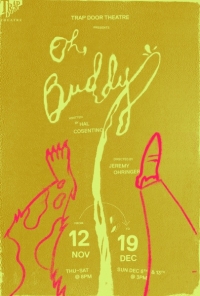
Trap Door Theatre Presents the World Premiere of OH, BUDDY, by Hal Cosentino. Opening November 12th, 2026
14 October 2026 in Upcoming TheatreTrap Door Theatre is thrilled to continue its 33rd season with a Chicago Premiere of Oh, Buddy, written by Hal…
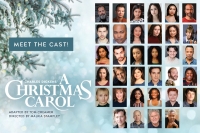
Announcing the Cast of the 49th A CHRISTMAS CAROL
14 October 2026 in Upcoming TheatreTis the season, in spite of today's unseasonable temps, as A Christmas Carol begins rehearsals for The Goodman's 49th annual…

NOVA ENTERTAINMENT CURRENT AND UPCOMING 2026 CIRCA PINTIG UPDATES
14 October 2026 in Now PlayingNova Entertainment is pleased to announce the upcoming performance schedule and updates for CIRCA Pintig, with a visual rebrand and…
Steppenwolf Theatre Announces "ha ha ha ha ha ha ha" January 13 – February 7, 2027
14 October 2026 in Upcoming TheatreThe blurb is: hahahahahahahahahaha hahahahahahaha hihihi hahahahahahaha hoho hahahhahaha hehe hahahahahahahahahaha. Julia Masli's award-winning solo phenomenon ha ha ha ha…

'Sanctuary Stories' Ventures Into Emotional Drama Behind the News on Immigration
13 October 2026 in Theatre in ReviewSanctuary Stories plumbs the line between theater and journalism, and the powerful human dramas both can depict. Funded by a Northwestern…
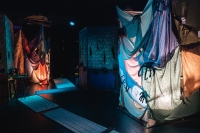
Inside Six Strange Worlds: Exquisite Corpse VI: LULLABIES
13 October 2026 in Theatre in ReviewFor its sixth Halloween season, Rough House Theater Co. has transformed Steppenwolf’s Merle Reskin Garage into a spectacular puppet haunted…
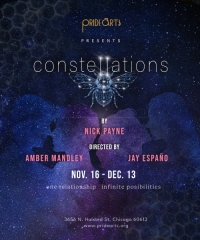
PrideArts announces cast and production teams for Nick Payne's CONSTELLATIONS, performed by alternating same-sex casts, November 13- December 13
12 October 2026 in Upcoming TheatreThursdays – Saturdays at 7:00 pm, Sundays at 3 pm Additional Saturday matinees at 3:00 pm on November 28 and December…
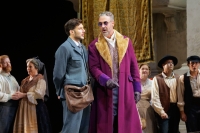
Robert Falls Directs a Sinfully Satisfying Don Giovanni at Lyric Opera of Chicago
11 October 2026 in Theatre in ReviewLet he without sin cast the first stone, Lyric’s “Don Giovanni” seemingly says when they bring up the house lights…

Teatro Vista Productions in collaboration with Audible presents Cafecito & Loops: A Mexodus Listening Tour Headed South Sundays, through November 1st
11 October 2026 in Now PlayingTeatro Vista Productions (TVP), the Midwest's only Latine-led Equity theatre company, in collaboration with Audible, presents Cafecito & Loops: A…
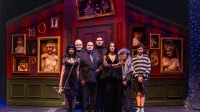
BrightSide’s Addams Family Musical Revives the Wonderfully Weird World of the Addams Clan
10 October 2026 in Theatre in ReviewThey're creepy and they're kooky, Mysterious and spooky, They're altogether ooky, The Addams Family. Yes, ooky. BrightSide Theatre’s production of…
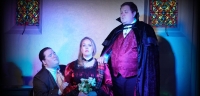
Chicago City Opera Delivers a Rare Operatic Haunting with Der Vampyr
08 October 2026 in Theatre in ReviewWith Halloween creeping closer, there’s something fitting about revisiting one of opera’s earliest flirtations with macabre horror - especially in…

Avalanche Theatre stages the world premiere of They Broke Up by Skyler Tarnas November 6–22, 2026
08 October 2026 in Upcoming TheatreAvalanche Theatre announces the world premiere production of They Broke Up by Chicago playwright Skyler Tarnas, November 6–22, 2026. Opening…

Oil Lamp Theater Announces the cast and creative team for the return of IT'S A WONDERFUL LIFE: A LIVE RADIO PLAY, Nov. 20 - Dec. 27
08 October 2026 in Upcoming TheatreOil Lamp Theater is proud to announce the cast and creative team for its next production and the final production…
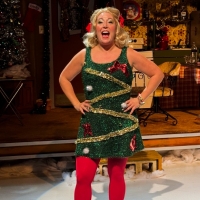
Adults-only holiday fun: Who's Holiday! brings R-rated Cindy-Lou Who back to Theater Wit for her sixth year, Nov. 27-Dec. 27
08 October 2026 in Upcoming TheatreChristmas Day is in our grasp. Why the vodka? Glad you asked! Who's Holiday! brings R-rated Cindy-Lou Who back to…

Two-Time Tony Award-Winning Actress Victoria Clark To Receive the Sarah Siddons Society Award at Annual Benefit on Monday, November 9, 2026
08 October 2026 in Theatre BuzzThe Sarah Siddons Society is pleased to present its 2026 Award to actress and director Victoria Clark, who recently starred…
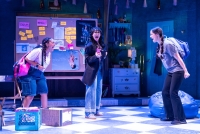
Goodman's Dead Girl’s Quinceañera: When Fifteen Meets the Adult World
07 October 2026 in Theatre in ReviewAt fifteen, the world can feel like a television show you haven't quite figured out how to turn off. For…

Steppenwolf Theatre's ADIRONDACK CHAIR CIRCLE In Rehearsal – Playing October 22 – December 6, 2026 – World Premiere!
07 October 2026 in Upcoming TheatreSteppenwolf Theatre Company, the nation's premier ensemble theater company, is pleased to launch its 51st Season with the world premiere of…
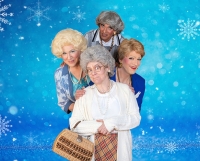
Hell in a Handbag Productions Announces 25th Anniversary Season!
07 October 2026 in Upcoming TheatreHell in a Handbag Productions is thrilled to announce its 25th Anniversary Season, featuring three "camptacular" shows guaranteed to delight lovers of…
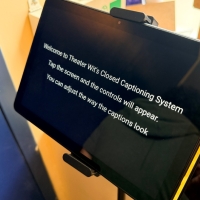
Chicago’s Theater Wit introduces new Watchword closed captioning system, dramatically improving access in all three of its theaters
07 October 2026 in Theatre BuzzChicago’s Theater Wit is now offering new, state-of-the-art closed captioning service, marking a dramatic improvement in making live theater more…

Paramount Theatre’s reimagined A Christmas Carol promises to be a dazzling new, all-ages spectacle for Chicago’s holiday theater season, November 11-January 3
07 October 2026 in Upcoming Theatre“God bless us, everyone,” because there’s a fresh, new, reimagined version of Charles Dickens’ classic tale A Christmas Carol debuting…
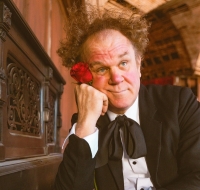
"John C. Reilly is Mister Romantic" Returns to Steppenwolf Theatre - December 10 – 13, 2026
06 October 2026 in Upcoming TheatreFollowing last year's critically acclaimed, sell-out engagement, Steppenwolf Theatre Company is pleased to announce the return of John C. Reilly…

Saint Sebastian Players Open 45th Season With A Murder Is Announced by Agatha Christie Classic Miss Marple Mystery Runs Oct. 23–Nov. 15
06 October 2026 in Upcoming TheatreThe Saint Sebastian Players open their 45th season of travels to different places with A Murder is Announced, a classic Miss Marple mystery…
Announcing "The Goodman, For Good" Campaign
06 October 2026 in Theatre BuzzToday, Goodman Theatre raises the curtain on its future as leadership and artists share a vision for its next century…

Two Edge Theater Company to stage A VIEW FROM THE BRIDGE as its inaugural Chicago production, December 4 through January 10
05 October 2026 in Upcoming TheatreTwo Edge Theater, a reincarnation of the Edge Theater Company that enjoyed eight successful seasons in the Denver, Colorado area,…
Frankenstein at Studebaker Theater adds performances for Halloween run
05 October 2026 in Upcoming TheatreChicago's historic Fine Arts Building and Studebaker Theater are thrilled to announce their Halloween co-production of Manual Cinema's acclaimed Frankenstein…
ANY REBELLION OF WILL - Trap Door Theatre - Through November 1st
05 October 2026 in Now PlayingTrap Door Theatre is thrilled to continue its 33rd season with Any Rebellion of Will, written by S.L. Daniels and…



Latest Articles
-
 “A Strange Loop” Lets the Intrusive Thoughts Win at Raven Theatre in partnership with About Face Theatre
Written by John AccroccoA musical, but it’s just the voices in your head. Sounds just crazy enough to win the 2020 Pulitzer for Drama. “A Strange Loop” by Michael R. Jackson finally makes its Chicago premiere at Raven Theatre in a co-production with…
-
 Announcing Goodman's 22nd New Stages 2026 Festival Line-Up
Written by Buzz Center StageFrom a "Kung Fu rom-com" to a witchy new musical, The Goodman's popular New Stages Festival in its 22nd year continues to offer a first glimpse at the latest works by a handful of the hottest contemporary playwrights. This year's four-play…
-
Chicago Danztheatre Ensemble Announces 2026-2027 Season
Written by Buzz Center StageChicago Danztheatre Ensemble (CDE) is pleased to announce its 2026 - 2027 season. CDE will open this artistic season with Copestic Vibrations: A Music Festival, Friday, Nov. 13 and Saturday, Nov. 14, followed by a fully staged production of For…
-
Eos Theatre Company Announces Second Production with The Thin Place
Written by Buzz Center StageEos Theatre Company is pleased to announce their second production with Lucas Hnath's horror play The Thin Place, directed by JC Clementz (Steppenwolf's Director of Casting and Artistic Operations), playing February 5 - 28, 2027 in Bramble Arts Loft's Beatrice Theater, 5545 N…


Does your theatre company want to connect with Buzz Center Stage or would you like to reach out and say "hello"? Message us through facebook or shoot us an email at This email address is being protected from spambots. You need JavaScript enabled to view it..
*This disclaimer informs readers that the views, thoughts, and opinions expressed in the text belong solely to the author, and not necessarily to Buzz Center Stage. Buzz Center Stage is a non-profit, volunteer-based platform that enables, and encourages, staff members to post their own honest thoughts on a particular production.