
Displaying items by tag: Goodman Theatre
Goodman’s Iceboy! Is a Full‑Tilt Blast of Comic Mayhem
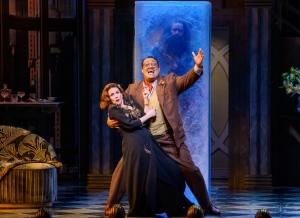
Goodman Theatre’s Iceboy! arrives as a gleefully off the rails musical that blends Broadway glamour, Neanderthal chaos, and theatrical myth making into one of the most delightfully strange premises to hit Chicago in years. It’s a satire, a love letter to showbiz, and a playful reimagining of how Eugene O’Neill might have found inspiration for The Iceman Cometh - if history had taken a wildly different turn.
Set in 1939, Iceboy! or The Completely Untrue Story of How Eugene O’Neill Came to Write “The Iceman Cometh” follows Broadway superstar Vera Vimm, who purchases the newly thawed 40,000‑year‑old Neanderthal after he’s discovered in the Arctic. An orphan herself, Vera risks the last of her money because she sees in Iceboy not just a curiosity, but the possibility of a son. Once he thaws, “Iceboy” unexpectedly becomes a theatrical sensation, charming Manhattan and quickly rising to stardom. His meteoric fame threatens Vera’s own spotlight, creating a comic rivalry as she scrambles to maintain her status.
Meanwhile, playwright Eugene O’Neill - stuck in a bout of severe writer’s block - becomes fascinated by Iceboy’s sudden cultural impact. In this fictionalized retelling, Iceboy’s presence and persona inspire O’Neill to write The Iceman Cometh, intertwining the Neanderthal’s improbable celebrity with one of American theatre’s most iconic works. The musical plays as a satirical backstage romp - part showbiz fable, part absurdist comedy - where ambition, ego, and theatrical legend collide, all delivered with a cheerful, madcap sensibility that feels straight out of the Mel Brooks playbook. The tone is broad, cheeky, and joyfully irreverent, embracing the kind of anything goes comic mayhem Brooks perfected in The Producers and Young Frankenstein.
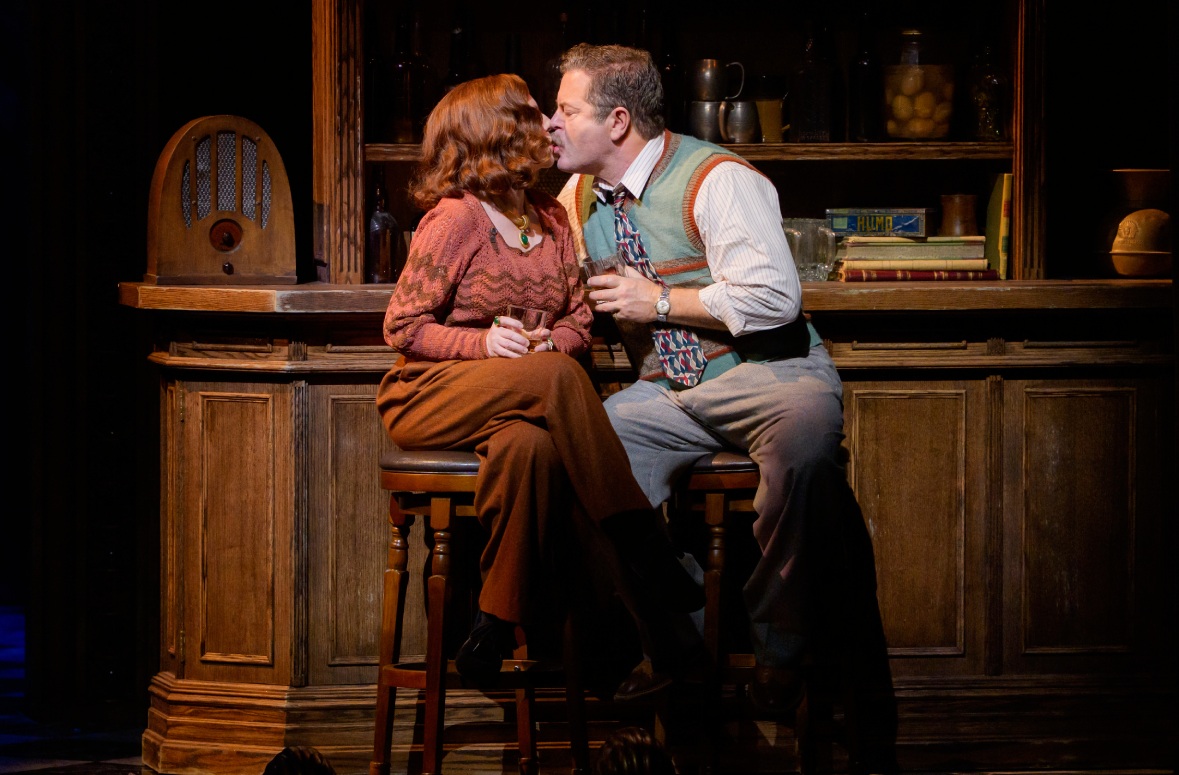
Megan Mullally as Vera Vimm and Nick Offerman as Eugene O'Neill in Iceboy! at Goodman Theatre. Photos by Todd Rosenberg.
To appreciate just how boldly Iceboy! reframes O’Neill’s legacy, it helps to remember what The Iceman Cometh actually is.
O’Neill’s future Pulitzer Prize offering inspired a four-hour film that’s essentially a parade of drunks in a dim bar, each clinging to dreams they’ll never pursue - the bar itself a metaphor for their inability to move forward, trapped in the same place both physically and emotionally. The 1973 film adaptation centers on the down and out patrons of Harry Hope’s saloon in 1912 Greenwich Village. These men - alcoholics, former revolutionaries, disgraced professionals - spend their days drowning in booze and clinging to “pipe dreams” of future redemption.
Their routine is disrupted when charismatic salesman Theodore “Hickey” Hickman arrives - sober, zealous, and determined to force everyone to abandon their illusions. Hickey’s mission to strip the barflies of their comforting fantasies leads to emotional unraveling, bitter confrontations, and ultimately a chilling confession about his own past. The story is a tragic, philosophical exploration of hope, delusion, and the brutal cost of facing reality.
All of that brooding, booze-soaked existentialism makes Iceboy!’s approach even more refreshing. Where O’Neill’s world traps its characters, this musical unleashes its own with joyful abandon - led by an ensemble so charismatic and so sharply funny that the show vibrates with life.
Guiding the production is director Marc Bruni, who shapes the show with crisp timing and a clear sense of comic architecture, keeping its wild premise buoyant without letting it unravel. The music by Mark Hollmann gives the story a light, upbeat foundation, and the lyrics by Hollmann and Jay Reiss add steady humor throughout. The book by Erin Quinn Purcell and Reiss keeps the tone approachable, offering just enough structure for the characters to play within. Joann M. Hunter’s choreography provides simple, well‑placed movement that supports the show’s comic rhythm without calling attention to itself.
It certainly helps that Iceboy! is powered by an outrageously talented and instantly likeable ensemble. Husband and wife duo Nick Offerman and Megan Mullally make a dynamite team - Offerman is superb, bringing his signature deadpan charm to Eugene O’Neill, the same understated precision and dry, unflappable humor that’s made him beloved in Parks and Recreation, Devs, and The Last of Us. Mullally, best known for her Emmy winning turn as Karen Walker on Will & Grace, her unforgettable Tammy II opposite husband Nick Offerman on Parks and Recreation, and her Broadway run in How to Succeed in Business Without Really Trying, delivers a riotously funny, razor sharp performance as Broadway titan Vera Vimm. She tears into the role with fearless comic bravado and vocal firepower that reminds you she’s a true musical theatre pro - her belt is thrilling, her phrasing wickedly playful, and her comedic musicality is a show in itself. Few performers can time a sharp aside with Mullally’s precision.
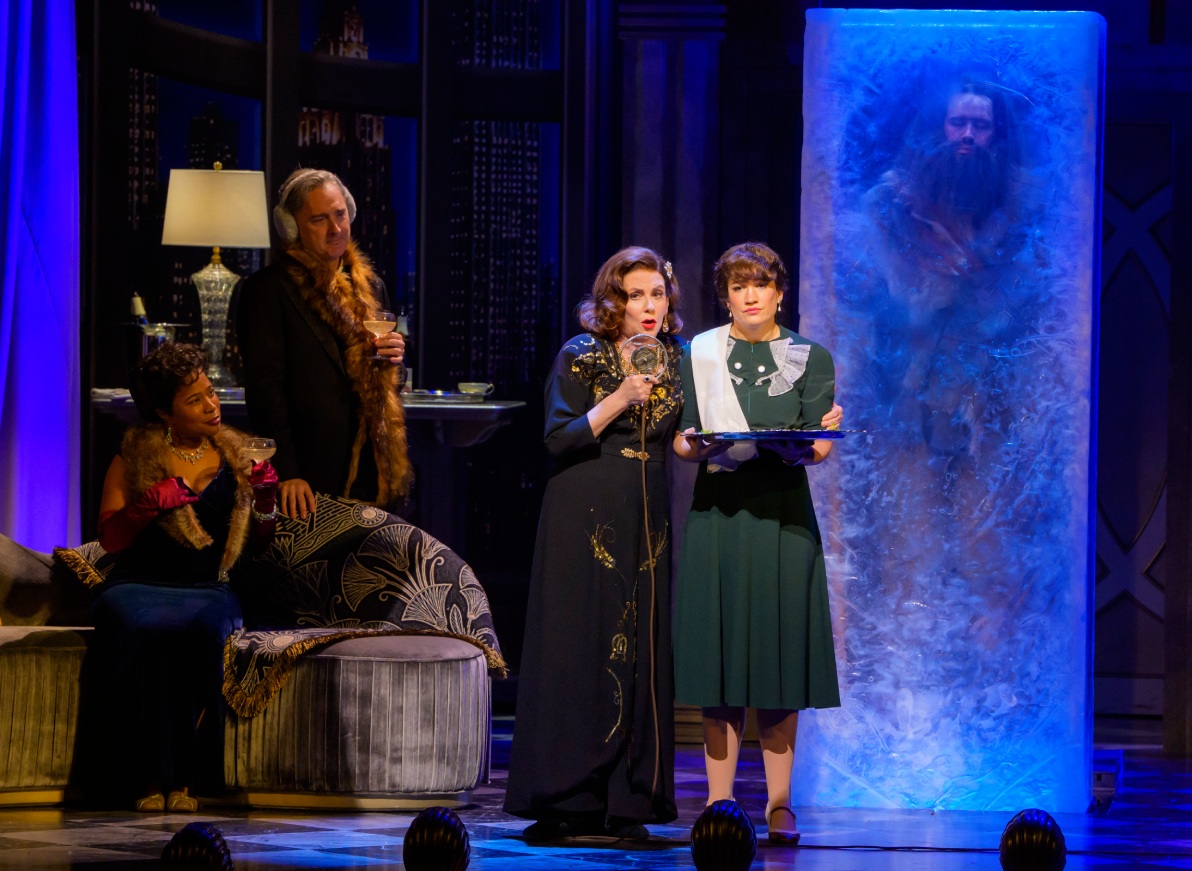
(L-R) Melanie Brezill, Shawn Pfautsch, Megan Mullally, SarahStiles and Grey Henson in Iceboy!
Cedric Yarbrough, best known for Reno 911! and Speechless, is terrific as Floyd Richards, Vera’s devoted lover and perpetually stressed playwright. He brings a warm, rumpled charm to the role, layering Floyd’s desperation with impeccable timing, sly vocal humor, and a steady stream of perfectly landed one-liners. His presence gives the show a grounded comic pulse that keeps the chaos humming - and his baritone is impressive.
Chicago favorite Alex Goodrich is a delight as Frankenstein, one of Vera’s long-suffering caretakers, layering the role with buoyant physical comedy and a wonderfully off-kilter energy that fits the show’s boisterous comic verve.
As Iceboy or “Jeff,” Grey Henson is a revelation - wide eyed, instinctive, and musically explosive. He plays the Neanderthal with such innocence and uninhibited theatrical gusto that the audience can’t help but root for him. He’s a genuine surprise as well, offering several scene-stealing moments that deepen the show’s comic momentum and give its wild energy an extra spark.
And Sarah Stiles, as Lambert, Vera’s whip‑smart, perpetually overwhelmed assistant, makes every appearance count with her explosive comedic instincts and razor‑precise delivery. Her timing is immaculate - every flustered aside, every clipped retort, every moment of mounting panic lands with such clarity and control that she elevates even the smallest beat. Stiles has a way of shaping a line so it hits with both intelligence and impact, turning Lambert’s exasperation into one of the show’s most consistently funny throughlines.
Together, this ensemble - Offerman, Mullally, Yarbrough, Henson, Stiles, Goodrich, and a bench of other strong players rounding out the cast - forms an ecstatically silly comedy machine, a group so talented and irresistibly likeable that the laughs never let up and every performer feels essential to the show’s delirious momentum.
The musical numbers are wonderfully fun. Songs like the opening number “Historic Find,” the gloriously unhinged “Can You Call Me ‘Mama’?,” and the full company showstopper “Hooray for Iceboy!” set the tone for the musical’s raucous spirit. Each one is packed with sharp wit, big Broadway energy, and the kind of gleeful absurdity that keeps the audience laughing long after the button. “Historic Find” opens the show with a clean burst of discovery‑driven momentum, “Can You Call Me ‘Mama’?” makes full use of Mullally and Henson's sharp comic instincts, and “Hooray for Iceboy!” brings the full company together for a lighthearted, good‑natured celebration. This sample size of songs highlights how musically nimble and consistently funny Iceboy! is - a score that shifts easily between cleverness, silliness, and moments of heightened theatrical play.
One of the funniest musical numbers in the show is “Marry Me,” sung with perfect comic contrast by Grey Henson and Sarah Stiles. In it, Iceboy proposes to Lambert with disarming sincerity, offering what he believes are tender declarations of affection - only to fold in a series of prehistoric “courtship traditions” drawn from his caveman understanding of romance. Throughout the song Iceboy sings to her, “I want to take you from behind,” his way of saying he'd like to marry her. The result is a wonderfully off‑balance duet that lands as one of the show’s most genuinely hilarious moments.
Adding to the show’s irresistible charm is the fantastic Art Deco set designed by Paul Tate Depoo, which instantly places us inside Vera Vimm’s lavish living room - all gleaming lines, bold geometry, and glamorous period detail. Depoo’s design captures the theatrical excess of 1939 Broadway while giving the actors a playground of visual delight. On each side of the stage, Eugene O’Neill’s writing desks sit like dueling stations of inspiration and frustration, a clever touch that keeps his presence woven into the action. And, true to O’Neill’s legacy, there’s always a bottle within reach, a sly nod that becomes both a running joke and a thematic anchor. It’s a smart, stylish environment that supports the comedy while grounding the show in a richly imagined world.
Iceboy! or The Completely Untrue Story of How Eugene O’Neill Came to Write “The Iceman Cometh” is an outrageously inventive, joy-charged burst of musical comedy that proves Goodman Theatre can still surprise us in the best possible ways. With its fearless cast, sharp writing, and deliriously fun score, it’s the kind of show that sends you out grinning and grateful for the sheer imagination on display. Iceboy! runs through August 9th at Goodman Theatre and stands as one of the most riotously entertaining nights out you’ll find this summer.
Very highly recommended.
Now extended through August 16th. For tickets and/or more show information, click here.
Announcing the 26/27 Season at Goodman Theatre

On the heels of an unprecedented Centennial Season, Goodman Theatre sets a bold stage for its second century. Walter Artistic Director Susan V. Booth and Executive Director John Collins announce the 2026/2027 Season line-up of world-class talent and first-rate artistry here at home, beginning this fall. With 12 productions—five world or Chicago premieres, a reinvestigated classic, a major musical revival of a generation-defining sensation, three long-running productions, plus two new plays for our youngest audiences (ages 0-5)—there is something for everyone, from longtime patrons to those discovering Chicago's largest not-for-profit resident theater for the first time.
"We are living in a moment of enormous catalysts. And while our self-preservation instincts tells us we ought to go numb, it's actually the most necessary time to feel big feelings. To be awake. To care deeply. To laugh loud and to cry hard so we stay fully human. We've strived to put together a season that evokes all of that—and more," said Walter Artistic Director Susan V. Booth.
Added Executive Director John Collins, "We launch our second century with a lineup of theatrical experiences celebrating Goodman's unparalleled scope and scale. We are excited to bring our 101st season of boundary-pushing theater to our beloved Chicago audiences."
Opening the 26/27 Season in the 856-seat Albert Theatre is the world premiere of The 7 Fingers' The Attic; Things I've Seen While Lying on My Back created and directed by Shana Carroll; next, Kimberly Belflower's Broadway smash sensation John Proctor is The Villain makes its Chicago debut, directed by Marti Lyons, produced in partnership with The Guthrie Theater; then, Marsha Norman's 'Night Mother appears in a major revival starring stage and screen actor S. Epatha Merkerson, directed by Michael Pressman; and Susan V. Booth directs a major musical revival of Green Day's American Idiot, music by Green Day, lyrics by Billie Joe Armstrong, book by Billie Joe Armstrong and Michael Mayer. The three-production series in the 400-seat flexible Owen Theatre begins with two world premieres: Dead Girl's Quinceañera by Phanésia Pharel, directed by Melia Bensussen, produced in partnership with Barrington Stage and Hartford Stage, followed by Calamity West's FEAST!, directed by Susan V. Booth; the Chicago premiere of Kemp Powers' The XIXth (The Nineteenth) directed by Carl Cofield rounds out the series.
The 49th annual production of A Christmas Carol, directed by Malkia Stampley, sees a new Scrooge: Chicago titan Tim Hopper assumes the role for the first time. Building on its success, Theater for the Very Young will debut two new productions—created by Marisa Carr, Ellie Levine and Jamal Howard; and the New Stages Festival returns for its 22nd year, offering the first look at the newest plays. In addition, The Goodman proudly continues two highly acclaimed off-shoot enterprises—David Byrne and Mala Gaonkar's immersive Theater of the Mind, directed by Andrew Scoville (333 N. LaSalle), and Dennis Watkins' The Magic Parlour, heading into its 4th year in partnership with Petterino's (50 W. Randolph).
The 2026/2027 Season begins September 2026 and continues through August 2027. Memberships, including flexible packages, are now available for purchase starting at just $54. Call 312.443.3800 or visit GoodmanTheatre.org/2627. Single tickets go on sale for select productions beginning next month.
About the Productions in Goodman Theatre's 2026/2027 Season
Plays are listed in chronological order by venue
The Goodman is grateful to Allstate, JPMorgan Chase & Co., The Elizabeth Morse Charitable Trust, Northern Trust, Abbott Fund, Katten, PNC and Winston & Strawn LLP for their support of the 26/27 Season.
IN THE ALBERT THEATRE (856-SEAT PROSCENIUM STAGE)
The Goodman premieres The 7 Fingers'
The Attic; Things I've Seen While Lying on My Back
Written, Directed and Choreographed by Shana Carroll
September 5 – October 4 | A World Premiere
The 7 Fingers is "pulse-raising magic" (The New York Times).
From the primal vista of her childhood bedroom springs Shana Carroll's wildly imaginative, ground-breaking memoir that takes theater to new heights. Inspired by the Tony Award-nominated former trapezist's mesmerizing life story, a company of fearless performers transforms memory into daring aerial feats that are as moving as they are breathtaking. In the air, on the floor and from the heart, Montreal's multidisciplinary creative collective, The 7 Fingers, brings its "thrillingly modern brand of circus" (Time Out New York) to The Goodman in this moving new work that embraces the fear and courage of being human.
49th Annual A Christmas Carol
Adapted by Tom Creamer
Directed by Malkia Stampley
November 13 – December 31 | Starring Tim Hopper as Ebenezer Scrooge
"I will honor Christmas in my heart, and try to keep it all the year."
Millions have rediscovered Dickens' classic at The Goodman over the past five decades—and know why it's "the best Christmas story ever told!" (Time Out Chicago). Follow the miserly Ebenezer Scrooge as ghostly intervention transforms his holiday disdain into delight one fateful Christmas night. Chicago favorite Tim Hopper—"for whom a furrowed brow and serious visage comes easily" (Chicago Tribune)—makes his debut as Scrooge. This timeless production, long heralded for its "first-rate cast and marvelous staging" (Chicago Sun-Times), is not to be missed.
John Proctor is the Villain
By Kimberly Belflower
Directed by Marti Lyons
January 23 – February 21, 2027 | A Chicago Premiere
The kids are not only all right, they're on fire.
Fueled by pop music, optimism and fury, five young women are about to light up some of the darkest secrets of their one-stoplight town. The Chicago premiere of the Tony Award nominated Broadway smash sensation—hailed as "the new era of cool-girl theater" (BrooklynRail.org) "igniting its own cultural moment" (Variety)—pulses with humor and energy. Heroes, villains and who gets blamed when the hysteria starts are up for debate in this "vital, hilarious, thrilling and urgently necessary" (The New York Times) unflinching perspective of a generation staking its claim. A co-production with Guthrie Theater.
'night, Mother
By Marsha Norman
Directed by Michael Pressman
March 27 – April 25, 2027
How well do we know the ones we love most?
Four decades after its astonishing debut, Marsha Norman's Pulitzer Prize-winning darkly comic landmark drama returns in a new, of-the-moment production—starring Emmy- and Golden Globe-award winner S. Epatha Merkerson (Law and Order, Chicago Med, the HBO film Lakawanna Blues, Broadway's Come Back Little Sheba). When a daughter makes a life-altering confession to her mother, their ordinary evening exchange gives way to a breathtaking roller coaster ride—gripping, profoundly relevant and "more harrowing than even its plot suggests" (The New York Times). With unblinking honesty, Emmy Award-winner Michael Pressman directs this profound reckoning about choice, care and what it means to be truly heard.
Green Day's
American Idiot
Music by Green Day
Lyrics by Billie Joe Armstrong
Book by Billie Joe Armstrong and Michael Mayer
Directed by Susan V. Booth
June 18 – July 25, 2027
"A global knockout" (Rolling Stone).
Tune in, wake up, fight back! With urgent new creative force, Green Day's two-time Tony Award-winning smash sensation that defined a generation roars back to the stage—for the first time in Chicago in more than a decade—in Susan V. Booth's major new production. Three lifelong friends search for meaning in a world that never stops demanding it, each pulled deeper into chaos—of war, of responsibility, of escape. Every song from the band's eponymous Grammy Award-winning, multi-platinum album and hits from 21st Century Breakdown punctuate this high-octane, adrenaline-fueled experience about the ever-elusive promise of the American dream.
IN THE OWEN THEATRE (400-SEAT FLEXIBLE STAGE)
Dead Girl's Quinceañera
By Phanésia Pharel
Directed by Melia Bensussen
September 26 – November 1, 2026 | A World Premiere
Detective skills: unverified. Determination: unmatched.
FACT: Maria was last seen at her Quinceañera. FACT: The party ended early due to an unknown emergency. FACT: Maria has not responded to any messages in 36 hours. Now, her three best friends—armed with confidence, questionable clues, and zero adult supervision—are on the case, racing against the clock to find out what happened. Half-baked theories, big feelings and the pressures of Latine girlhood punctuate this joy ride through the power and pleasure of adolescent friendships—a comic thriller of secrets, sisterhood and solving crime. A Collective World Premiere with Barrington Stage Company and Hartford Stage.
FEAST!
By Calamity West
Directed by Susan V. Booth
February 27 – March 28, 2027 | A World Premiere
Nothing spoils faster than pride.
Carol has just been fired. Meantime, her husband Michael has bought and paid for her company's $12,000 dinner. Instead of canceling, they decide to go through with it to prove they still have a place at the table. But when no guests arrive, the evening unravels into a darkly funny collision of money and marriage that asks what we are prepared to normalize in exchange for belonging. Susan V. Booth directs this smart, searing new satire that serves up a slice of privilege and power from "one of the best playwrights in Chicago. Or maybe the country. Or the universe" (Chicago Reader). FEAST! is the recipient of the 2026 Laurents / Hatcher Foundation Award.
The XIXth (The Nineteenth)
By Kemp Powers
Directed by Carl Cofield
April 17 – May 16, 2027 | A Chicago Premiere
"Visual pop, fleet pacing, muscular energy, welcome humor" (San Diego Union Tribune).
In Mexico City, 1968, courage comes with a price. When two Black American sprinters deliver a protest seen around the world, what followed was more complex—and far more dangerous. With a blend of sharp wit and searing emotion, Academy Award-nominee Kemp Powers explores what it truly costs to speak out when everyone is watching in this gripping Chicago-premiere production.
22nd Annual New Stages Festival
December 5 – 13
Offered free of charge, the annual New Stages Festival is designed to give playwrights an opportunity to experience their work in front of an audience. New Stages offers Chicago theatergoers a first look at dozens of plays, many of which have gone on to become successful full productions—including three plays featured in the Centennial season, Ashland Avenue, Revolution(s) and The Brief Wondrous Life of Oscar Wao—as well as Noah Haidle's Smokefall, Lynn Nottage's Pulitzer Prize-winning Ruined and more.
HERE, AROUND THE CORNER AND IN THE COMMUNITY
Theater for the Very Young Productions
In the Loop
Created and Directed by Jamal Howard and Ellie Levine
Co-Produced by The Wirtz Center for the Performing Arts, Northwestern University
January 30 – February 28, 2027 | Performed in the Alice Center and at locations citywide
Set aboard Chicago's trains and buses, In the Loop invites audiences on a playful journey across the city celebrating the sights, sounds and communities that connect our city's neighborhoods. In the Loop will also include a multi-week tour to classrooms and early childhood spaces across the city. On the heels of their successful collaboration with Splish Splash: A Day on the Lake, Jamal Howard and Ellie Levine reunite to create and direct this interactive production, developed in collaboration with Northwestern undergraduate students and 2- to 5-year-olds from Total Child Preschool in Evanston.
A World Premiere "Theater for the Very Young" production
By Marisa Carr
Summer 2027 dates TBA
Next summer, The Goodman expands its investment in "Theater for the Very Young" with its first direct commission—a new production by award-winning playwright Marisa Carr, alum of The Goodman's 2020/2021 Playwrights Unit.
Theater for the Very Young (TVY) programming offers immersive theatrical experiences—produced and performed by professional artists—designed for children ages 0–5 years old to experience alongside the grown-ups in their lives. Created in 2023 by Goodman Walter Artistic Director Susan V. Booth in response to research demonstrating the profound impact the arts can have on early childhood development and long-term learning outcomes, TVY introduces Chicagoland's youngest audiences to live theater through storytelling, music, movement and sensory-rich play produced and performed by professional artsts. Curated by Clifford Director of Education and Engagement Jared Bellot, TVY productions support early literacy, creativity and social-emotional learning while aiming to initiate a lifelong love of the arts. Over the past three years, TVY has served thousands of children and families in Chicago parks, theaters, schools and community spaces with productions of the plays Splish Splash: A Day on the Lake (2026); Book Up! (2025); The Lizard y El Sol (2024); and Pearl Cleage's In My Granny's Garden (2023). Schools, daycares and community organizations interested in bringing "Theater for the Very Young" programming to their spaces are invited to contact This email address is being protected from spambots. You need JavaScript enabled to view it. for pricing, scheduling and more information.
Theater of the Mind
Created by David Byrne and Mala Gaonkar
Directed by Andrew Scoville
Produced by Goodman Theatre at the Reid Murdoch Building (333 N. LaSalle)
TheaterOfTheMindChicago.com
Co-created by Academy, Grammy, and Tony Award-winning artist David Byrne and writer Mala Gaonkar, Theater of the Mind is an only-in-Chicago theatrical experience you'll see, feel, taste and hear. Already a hit cultural attraction, Theater of the Mind is a 75-minute mind-bending sensory journey for 16 audience members at a time. Led by a Guide whose stories are inspired by the creators' lives, audiences explore how they perceive the world through sensory experiments derived from both historical and current neuroscience research that reveal the inner mysteries of the brain. Theater of the Mind debuted in March 2026 as a centerpiece of The Goodman's Centennial 25/26 Season and continues to amaze audiences at its River North location in the Reid Murdoch Building.
Dennis Watkins' The Magic Parlour
Produced by Goodman Theatre and Petterino's (50 W. Randolph)
TheMagicParlourChicago.com
Step into The Magic Parlour, where the impossible becomes reality, right before your eyes—and sometimes in your own hands. Join award-winning magician Dennis Watkins as he delivers his signature blend of sharp sleight-of-hand, sophisticated mind-reading and personal storytelling to rekindle your sense of wonder. Now in year three at our cozy speakeasy theater, the premiere show offers brand new magic along with the return of Watkins' The Spirit Cabinet Halloween event, and some of the nation's greatest magicians as guest artists-in-residence.
ABOUT THE GOODMAN
Since 1925, The Goodman has been a theatrical home for artists and a gathering space for Chicagoland, where bold stories spark connection, conversation and change. Now, as it enters its second century, The Goodman builds on that legacy with an eye toward the future. Under the leadership of Walter Artistic Director Susan V. Booth and Executive Director John Collins, the theater continues to champion new work—following hundreds of plays developed and a national reputation for commissioning and premiering original stories by living writers—while reimagining classics and produce large-scale musicals.
But The Goodman's reach today extends beyond its home in the heart of the Loop. From the intimate magic of The Magic Parlour, now in its third year, to the boundary-pushing world of Theater of the Mind—an immersive experience that blurs the lines between science, storytelling and sensation—and from citywide initiatives like 100 Free Acts of Theater to partnerships with artists and companies across Chicago and around the world, The Goodman is expanding what theater can be, and where it can live.
At its core, The Goodman is driven by a belief that a more empathetic, more connected city is built one story at a time. Generation-spanning productions and programs offer theater for a lifetime—from babies and young children to teens, adults and seniors—including Theater for the Very Young (ages 0–5) and the beloved annual A Christmas Carol, which has welcomed audiences for five decades. Education and Engagement programs, led by Clifford Director Jared Bellot and based in the Alice Rapoport Center, use the tools of theater to spark imagination, reflection and belonging—reaching thousands each year, the majority from underserved communities.
With nearly 200 world or American premieres, two Pulitzer Prizes, 22 Tony Awards and nearly 200 Joseph Jefferson Awards, The Goodman remains a defining force in American theater—and the first to produce all 10 plays of August Wilson's American Century Cycle. The theater also frequently serves as a production partner—from national and international companies to Chicago's Off-Loop theaters—to help amplify a wide range of theatrical voices.
Founded by William O. Goodman and his family in memory of playwright Kenneth Sawyer Goodman, the theater carries forward a legacy of artistic ambition and civic generosity. With the help of Mr. Goodman's descendants—Albert Ivar Goodman and his late mother, Edith-Marie Appleton—that spirit continues to shape its future as The Goodman expands its impact across Chicago and beyond. Marsha Cruzan is Chair of the Goodman Theatre Board of Trustees; Diane Landgren is Women's Board President; and Kelli Garcia is president of the Scenemakers Board for Young Professionals.
The Goodman stands on the unceded homelands of the Council of the Three Fires—the Ojibwe, Odawa, and Potawatomi Nations—and acknowledges the many other Nations for whom this land now called Chicago has long been home, including the Myaamia, Ho-Chunk, Menominee, Sac and Fox, Peoria, Kaskaskia, Wea, Kickapoo, and Mascouten. The Goodman is proud to partner with the Gichigamiin Indigenous Nations Museum (Gichigamiin-Museum.org) and the Center for Native Futures (CenterForNativeFutures.org)—organizations devoted to honoring Indigenous stories, preserving cultural memory, and deepening public understanding.
Everybody Got a Secret: York Walker’s Covenant Haunts The Goodman

The Goodman Theatre’s Covenant announces York Walker as a playwright ascending rapidly into the highest tier of American theater. This is not simply an impressive new work; it is the kind of play that reminds audiences why live theater remains uniquely capable of unsettling the spirit. Walker has written something rare: a Southern Gothic thriller steeped equally in folklore, faith, desire, and dread. Under the extraordinary direction of Malkia Stampley - arguably some of the finest work of her already remarkable career - the production unfolds with hypnotic control and devastating emotional precision.
Set in 1936 Georgia, Covenant begins with Ruthie’s haunting declaration: “Everybody got a secret.” That line becomes the pulse beneath the entire production. Secrets saturate every corner of Walker’s world. Desire hides beneath scripture. Fear hides beneath righteousness. Love hides beneath suspicion. And every revelation threatens to crack the play wide open.
Walker’s writing is lyrical without becoming self-conscious, poetic without sacrificing danger. His dialogue moves like music - earthy, funny, intimate, and increasingly ominous. The play’s supernatural undertones never overpower its humanity. Instead, Walker roots every eerie moment in emotional truth. The result is a suspenseful theatrical experience that genuinely keeps the audience on edge. Spooky, suspenseful plays this good are rare. Even rarer are ones disciplined enough not to betray themselves too early. The less one knows going in, the better. This production rewards surrender.
Stampley directs with astonishing confidence. She understands that terror often lives in silence, stillness, and suggestion. The production breathes with tension. Every pause feels loaded. Every gesture seems to carry spiritual consequence. The prayer sequences become almost ritualistic choreography, while scenes of intimacy hum with equal parts longing and danger. Stampley masterfully balances the play’s realism and its creeping nightmare logic without allowing either to overpower the other.
The production’s technical elements are equally exceptional. Set designer Ryan Emens creates a sparse wooden structure dominated by a cross front and center, a deceptively simple design that transforms effortlessly, with the addition of a few pieces of furniture, into both a humble church and a family home. Costume designer Evelyn M. Danner has clearly done her homework; the costumes feel authentically rooted in the period without ever appearing overly theatrical. The lighting design by Gina Patterson becomes an entirely new character in the production. Patterson’s work shapes mood and terror with remarkable precision, particularly during a stunning sequence involving thunder, lightning, and pouring rain that sends a chill through the audience. Complementing it beautifully is Dee Etti-Williams’ sound design, which works in haunting tandem with the lighting to create an atmosphere of gathering doom.

Ashli René Funches in Covenant at Goodman Theatre. Photo by Hugo Hentoff.
The all-Chicago cast is exceptional from top to bottom.
Debo Balogun delivers magnetic work as Johnny “Honeycomb” James, a wandering blues musician whose charm conceals depths the audience is never fully certain it understands. Balogun’s performance is seductive, wounded, and quietly terrifying all at once. He understands the danger of charisma.
As Ruthie, Ashli Renè Funches gives the production its emotional anchor. Her narration draws us into the story with heartbreaking vulnerability, and her slow awakening to the darkness surrounding her becomes deeply affecting.
Jaeda Lavonne is luminous as Avery, a young woman desperate to escape the suffocating boundaries of her world. Lavonne beautifully captures Avery’s hunger for freedom while allowing fear and spiritual confusion to shadow every choice she makes.
As Violet, Felicia Oduh brings sharp intelligence, humor, and emotional volatility to the stage. Violet often functions as the play’s skeptic and truth-teller, and Oduh gives her a raw immediacy that keeps the character from becoming merely symbolic.
Then there is Anji White as Mama. White disappears entirely into the role. Her performance is extraordinary in its complexity - unyielding, terrifying, wounded, and deeply tragic. Mama could easily become a caricature of religious severity, but White reveals the grief and horror buried underneath her righteousness. Her monologues land like thunderclaps.
What makes Covenant especially impressive is how fully it trusts the audience. Walker refuses easy answers. The play constantly asks whether evil is supernatural, inherited, psychological, or self-created. Is the devil real in this world? Or do people simply need something external to blame for the violence they carry inside themselves? The play never simplifies those questions.
And then comes the ending.
Do not spoil it for yourself. Do not let anyone spoil it for you. The audience will not see it coming.
Covenant is beautifully written, beautifully acted, and beautifully told. It lingers long after the lights go down, like a whispered warning you cannot quite forget.
HIGHLY RECOMMENDED
When: Through May 31 *Now extended though June 7th
Where: Goodman Theatre, 170 N. Dearborn St.
Runtime: 140 minutes (no intermission)
Tickets: $24-$44
Info: www.goodmantheatre.org
Box Office: 312-443-3800
This review is proudly shared with our friends at www.TheatreInChicago.com.
A Final Bow: Chicago Theatre Mourns Matt DeCaro

The Chicago theater community is grappling with the sudden loss of Matt DeCaro, whose death early Saturday came as a shock to colleagues and audiences alike. A cause of death has not been made public. Only hours before, he had taken the stage at the Goodman Theatre, performing the role of Sturdyvant in Ma Rainey’s Black Bottom during Friday night’s show. His unexpected passing led to the cancellation of Saturday’s matinee, while the evening performance moved forward as a tribute to his decades of work and the impact he left on the city’s artistic landscape.
DeCaro’s career stretched across more than four decades and reached nearly every major stage in Chicago. His long association with the Goodman Theatre included roles in Heartbreak House, The White Snake, The Cherry Orchard, Night of the Iguana, Boy Gets Girl, Camino Real, Romance, Richard II, Spinning into Butter, and The Play About the Baby. He moved fluidly between companies and styles, portraying Winston Churchill in Drury Lane’s The Audience, stepping into Doc’s role in Marriott Theatre’s West Side Story, and earning a Jeff Award for his performance in Cat on a Hot Tin Roof. His work extended across the region as well, with appearances at Chicago Shakespeare Theater, Victory Gardens, Licoln Center, the Guthrie, and Asolo Rep. Beyond his extensive Goodman history, DeCaro built a substantial body of work across the city, including a standout turn in Steppenwolf’s Men of Tortuga - recognized by the Chicago Tribune as one of 2005’s most memorable performances - and a role in Victory Gardens’ Symmetry, further underscoring his versatility and command as a character actor.
His screen résumé was equally wide-ranging, with roles in Prison Break, The Office, Curb Your Enthusiasm, Chicago P.D., ER, U.S. Marshals, and Richie Rich. Yet for many, it was his presence on Chicago stages that defined him - steady, generous, and deeply rooted in the craft. Among the roles that left a lasting mark on those who followed his work, DeCaro’s Big Daddy in Cat on a Hot Tin Roof at Drury Lane stands out as a personal favorite. The mix of authority and raw vulnerability he brought to the character made the performance unforgettable - the kind that lingers in your mind long after the production has ended.
As tributes continue to emerge, the sense of loss is felt not only by those who worked beside him, but by audiences who witnessed his final performance just one night before his passing - a testament to how fully he remained devoted to the work until the very end.
In losing Matt DeCaro, Chicago loses one of the quiet forces that helped shape its stages for decades. His work was never about spotlight or spectacle - it was about craft, commitment, and the kind of presence that made every production stronger simply because he was in it. Even as the community mourns, the stories he told and the characters he embodied continue to resonate, a lasting reminder of an artist who gave everything he had to the world he loved.
Goodman’s Ma Rainey’s Black Bottom Delivers a Powerful Revival

Goodman Theatre’s production of Ma Rainey's Black Bottom arrives with the weight of expectation - and under the dual direction of Chuck Smith and Harry Lennix, it does not merely meet that weight, it reshapes it. This is not a revival of August Wilson’s searing text; it is a precise, muscular excavation of its tensions, its music, and its truths.
From the outset, the production leans into what makes Ma Rainey distinct within Wilson’s canon: its compression. There is no sprawling Hill District, no generational sweep - only a room, a day, and a reckoning. Smith and Lennix understand this pressure-cooker structure and allows it to simmer deliberately. The pacing is patient but never indulgent, each pause and eruption calibrated to expose the fractures between the woman, the men and the system that contains them.
At the center stands E. Faye Butler’s Ma Rainey, and “center” is not metaphorical - it is gravitational. Butler embodies what makes Ma singular among Wilson’s women: she is not surviving the system, she is making the system bend to her will. Where characters like Rose in Fences or Bertha in Joe Turner’s Come and Gone endure with moral resilience, Ma operates with economic and performative authority. Butler’s Ma is unapologetically self-possessed, openly sensual in her relationship with Dussie Mae, and fiercely aware of her value. Every demand - a Coca-Cola, a delay, a correction - is less eccentricity than strategy. She dictates the terms, and the room adjusts.
Surrounding her is a cast that functions both as ensemble and as volatile elements in a dramatic equation. Al’Jaleel McGhee’s Levee is electric, restless, and dangerously unmoored. He captures the tragic duality of the character: brilliance tethered to illusion. His performance builds like a slow burn until it detonates, revealing the unresolved trauma and misplaced faith in a system that will never reward him. In contrast, David Alan Anderson’s Cutler is grounded, pragmatic, a man who has learned the cost of survival. Kelvin Roston, Jr.’s Toledo brings intellectual weight, his reflections on Black identity landing with quiet force, while Cedric Young’s Slow Drag occupies the margins with understated authenticity.
The white power structure—embodied by Matt DeCaro’s Sturdyvant and Marc Grapey’s Irvin - is rendered with chilling subtlety. There is no overt villainy here, only the smooth machinery of exploitation. Irvin’s politeness is the point; it is the veneer that makes the system function.

Ma Rainey’s Black Bottom at Goodman Theatre. (L-R) Jabari Khaliq, E. Faye Butler, Kelvin Roston Jr.
Visually, the production is nothing short of exquisite. Linda Buchanan’s set design transforms the stage into a 1920s Chicago recording studio that feels both expansive and suffocating. The inclusion of distinct spaces - the recording area, control room, rehearsal room, even a suggestion of the street - creates a dynamic environment while maintaining the play’s essential confinement. This is a world built for observation and control.
Jared Gooding’s lighting design elevates this world into something almost cinematic. The suggestion of the Chicago Loop’s overhead train is particularly striking, its presence looming like an industrial heartbeat. Gooding uses light not just for visibility but for composition - creating tableaus, isolating tensions, and guiding the audience’s eye with precision.
And then there are Evelyn M. Danner’s costumes, which operate as visual dramaturgy. The color palette tells its own story: Irvin and Sturdyvant in stark black and white, embodiments of rigid power; the band in various shades of brown, signaling labor, reliability, and earthbound existence; and Ma Rainey in a commanding money-green dress, a walking declaration of her worth. Dussie Mae’s yellow flapper dress, accented with green, subtly marks her proximity to that wealth and power. Even Sylvester’s patterned brown attire hints at his connection to Ma’s orbit. Every choice is intentional, every color a statement.
What ultimately distinguishes this production is its understanding of language - not just Wilson’s text, but the music within it. The scenes among the band members crackle with rhythm and lyricism, their banter and arguments forming a kind of blues composition. It is beautiful, but volatile - a powder keg of masculinity, frustration, and deferred dreams.
What Chuck Smith and Harry Lennix achieve is extraordinary. They do not merely stage Ma Rainey's Black Bottom; they orchestrate it, allowing every performance, every design element, every silence to resonate with intention. Nowhere is that more evident than in Levee’s arc, where Al’Jaleel McGhee delivers a performance that simmers with ambition and barely contained rage, his volatility carefully shaped into a slow, inevitable unraveling.
This is direction of the highest order - precise, unflinching, and deeply attuned to the rhythms of Wilson’s language and the weight of his themes. What emerges is not just unforgettable theatre, but necessary theatre: a production that insists we listen more closely, look more deeply, and reckon more honestly with the truths it lays before us.
HIGHLY RECOMMENDED
When: Through May 3
Where: Goodman Theatre, 170 N. Dearborn St.
Tickets: $44-$84
Info: www.goodmantheatre.org
Box Office: 312-443-3800
This review is proudly shared with our friends at www.TheatreInChicago.com.
A Wondrous Production of Oscar Wao at The Goodman Theatre

Based on the novel by Junot Díaz, The Brief Wondrous Life of Oscar Wao follows neurodivergent and perpetually lovelorn college student Oscar as he fixates on the fukú – a generational curse he believes has haunted his family’s love lives for decades. Oscar’s college roommate and his sister Lola by his side, the trio journeys to Santo Domingo, uncovering more about Oscar and Lola’s family history and the fukú than none of them bargained for.
At the heart of the story is the trio of Oscar (Lenin D’Anthony Izquierdo), Yunior (Kelvin Grullon), and Lola (Julissa Calderon), who are as messy, spirited, and loving as three college kids can be. Their chemistry feels genuinely lived-in: the easy humor, the sharp edges, the quiet loyalties. Their dynamic perfectly captures the complexities of chosen family, blurred boundaries, and sibling devotion, all while keeping the audience constantly laughing.
While often sharp and funny, Oscar and Lola’s mother, Beli (Yohanna Florentino), delivers the production’s most devastating performance. She embodies the tension of someone trying – fiercely, desperately – to do right by her children, yet repeatedly falling short. Florentino’s performance is astonishingly intimate; even in a full theatre, she makes it feel as though her pain is being shared one-on-one with each audience member.
The show – especially in its first act – is funny, self-aware, and unabashedly camp. Although set among college-aged characters in the 1990s, Director Wendy Mateo has made the show feel timeless and accessible to audiences of all ages. The script incorporates a significant amount of Spanish, most often through colloquial phrases and biting insults, yet the cast’s physicality and clarity ensure that no translation is required to follow the emotional stakes. It’s a compelling reminder that audiences don’t need to speak Spanish to fully appreciate bilingual storytelling when the performances are this grounded.
Where the production occasionally stumbles is in its visual storytelling, particularly once the setting shifts to Santo Domingo. The scenic design’s abstract, college-forward aesthetic serves the first half well, but meshes less cohesively with the production’s second act shift into heightened spiritual and video game-inspired imagery. This evolution also introduces more disruptive set transitions – unlike the fluid, almost invisible shifts of Act One, several Act Two changes require full stops in the action, interrupting momentum and dampening the pacing. At its best, the projections and gaming motifs cleverly mirror Oscar’s inner grasp of reality and the story’s mythic foundation. At their weakest, however, they overtake the truly human stakes at the center of the narrative.
One moment in particular – a key story from Beli’s past – is partially rendered through animation and projection rather than live performance. Given the emotional precision already established onstage, the stylistic shift feels jarring and unintentionally distances the audience from what should be an intimate revelation. The production’s reliance on heightened, game-like aesthetics resurfaces in later confrontations as well, occasionally pushing character choices toward exaggeration at moments that call for gravity. The result is a tonal imbalance that slightly undercuts the weight of the story’s final turns.
While the stage adaptation diverges in notable ways from the novel, the production stands strongest when viewed as its own interpretation rather than a strict retelling. That said, the emotional core of Oscar’s story remains intact and, by the final moments, the theatre is silent enough to hear a pin drop – a testament to the emotional weight the cast ultimately earns.
The Brief Wondrous Life of Oscar Wao is running in The Goodman’s Owen Theatre through April 12th. Tickets are available at https://www.goodmantheatre.org/show/the-brief-wondrous-life-of-oscar-wao/.
This review is proudly shared with our friends at www.TheatreInChicago.com.
Goodman's HOLIDAY – A Modern Take on a Dramedy About the True Price of Wealth

Holiday is a play written by Philip Barry in 1928 before the tragic stock market crash of 1929. It has been made into two movies, most notably in 1938 starring Cary Grant and Katherine Hepburn. This adaptation, artfully authored by Richard Greenberg, has brought a case study in the class system and its relationship with money and assets is not only thought-provoking but clever. The use of modern idioms mixed with classic patter delivery of movies of the thirties and forties keeps the audience rapt awaiting the next joke or witticism to land. The direction by Robert Falls is a translation of reticence and underlying suppressed emotion of a family possessing generational wealth on the upper east side of New York City. Falls delivers Greenberg’s words in a manner so true that the piece has a voyeuristic tone.
The play opens in the main modernized parlor of a Manhattan mansion so beautifully appointed that audible gasps could be heard throughout the audience. The scenic design by Walt Spangler is so spot on in depicting “Old Money” right down to the mallard decoys on the mantel that it transports everyone into the Seton family fortunes. Lighting designer Amith Chandrashaker’s work baths the Seton family like a beautifully seated family portrait. When the curtains are parted to allow daylight to seep into the parlor, it makes one question what time they arrived at the theatre. It is in this opening scene that we meet the Seton family and guests. Julia Seton (played by Molly Griggs) the compliant entitled daughter and her new beau, Johnny Case played with great range by Luigi Sottile. Linda Seton, the defiant sibling seeking to change the world and identify with the residents and children of Red Hook played with just the right mixture of outrage and vulnerability by Bryce Gangel and Ned Seton (Wesley Taylor), the youngest namesake brother who has failed to measure up. And, the scion of the fortune, Edward Seton played with steely reserve by Jordan Lage who ensures “the equilibrium of the house is not disrupted” as one scene tells us.
The story unfolds as Julia is besotted with Johnny Case, a new beau met in a “spa”, and we watch her try to mold him into a man to join the family business after first making his own millions. Case ended up in the “spa” through an intervention by friends who realized he was working himself to misery. Being around the family and relations of Julia Johnny begins to reexamine his life’s purpose and path. With a healthy dose of sarcasm from Linda and Ned we see wealth and privilege scoffed at as much as it is valued and revered by Julia. Johnny is a ping pong ball in the family’s game of emotions and parlayed witticisms. We travel in time through a season of proposal and an engagement announcement to other reasons to celebrate. We visit the childhood traumas of a mother dying young of cancer with her dreams of being a prima ballerina dashed by Edward Seton and his insistence on the importance of an heir. Each child is a character study in the privilege and travails of the very wealthy. Johnny Case, who is first viewed as a pawn in their family games goes through his own evolution and the realism of wealth, money and power. Wesley Taylor is the standout of a well guided and directed ensemble. He plays Ned with such mirth, hilarity and tragic pain that one moment he has you laughing and the next on the verge of tears. Every scene he is in becomes pivotal.
The other unexpected “star” of this show is the scenic design and transition. One moment you are in the parlor and then next act transported to the childhood nursery/playroom of memories styled by their mother. It hardly seems possible but in almost a magical fable like scene change we end up in the parlor. It’s a feat rarely seen on stage and every member of the design and stage management team needs to be aware that their contribution to this piece is pivotal, both literally and figuratively. The scenic design alone is a reason not to miss this show but go for the laughs and beautiful line delivery such as “Alexa stop the joy”. Modern, relatable and beautifully delivered.
There’s nothing not to love about Cary Grant and Katherine Hepburn but Robert Fall’s direction of these talents honor this beautifully written adaptation which is a mini-Holiday for anyone who attends.
HOLIDAY, now playing at the Goodman’s Albert Theatre in Chicago through March 1, 2026.
https://www.goodmantheatre.org for ticket and performance time information.
Mary Beth Euker is a founding director of Cricket Theatre Company in Lake Zurich, Illinois, has appeared in shows at Devonshire Theatre in Skokie and Woodstock Opera House and directs in Lake Zurich at various schools and for Cricket.
*UPDATE - Extended through March 8th
This review is proudly shared with our friends at www.TheatreInChicago.com.
Holiday magic has arrived! Goodman Theatre's 'A Christmas Carol' is a triumph!

Goodman Theatre’s 2025 production of A Christmas Carol delivers a reimagined yet reverently faithful vision of Charles Dickens’ enduring holiday masterpiece. Directed by BOLD Artistic Producer Malkia Stampley, the staging infuses fresh energy into the familiar tale, striking a delicate balance between honoring tradition and embracing innovation.
Charles Dickens’ A Christmas Carol follows Ebenezer Scrooge, a cold-hearted miser who scorns Christmas and human kindness. On Christmas Eve, he is confronted by the ghost of his former partner, Jacob Marley, and guided by three spectral visitors - the Ghosts of Christmas Past, Present, and Yet to Come. Their haunting revelations force Scrooge to witness his own failings, the hardships of others, and the bleak destiny awaiting him. Awakened to the power of compassion and generosity, he greets Christmas morning as a transformed man - joyful, benevolent, and fully embracing the spirit of the season.
At the center of this transformation is Christopher Donahue, returning to the role of Ebenezer Scrooge with a performance that brims with nuance. Donahue embodies the character’s frosty detachment and biting cynicism with precision, while gradually revealing the vulnerability and humanity that make Scrooge’s redemption so powerful. His portrayal anchors the production, ensuring that audiences experience not only the spectacle of Dickens’ ghosts and festive scenes, but also the emotional depth of one man’s journey from isolation to generosity.
Surrounding him is an ensemble that blends the wisdom of seasoned Goodman veterans with the energy of exciting newcomers, forging a dynamic interplay that keeps the production alive and ever-evolving. Their chemistry, paired with imaginative staging and subtle special effects, ensures that longtime patrons experience the story anew while first-time audiences are swept into its magic.
Beyond the performances, the production dazzles with fresh choreography, inventive musical direction, revitalized design elements and special effects that elevate the performance. The stage becomes a canvas of contrasts: the eerie, otherworldly visitations of Marley and the Ghosts unfold with haunting theatricality, while the warmth and intimacy of the Cratchit household radiate joy and tenderness.
Every moment is meticulously layered with detail, reminding us that Dickens’ tale is more than a seasonal tradition—it is a living parable of generosity, compassion, and the enduring bonds of community.

(L-R) Jon Hudson Odom, Ella Boparai, Carmelo Kelly, Viva Boresi, Bethany Thomas, A’mia Imani, Henry Lombardo, Sól Fuller and Helen Joo Lee.
For close to fifty years, Goodman Theatre’s A Christmas Carol has stood as a defining ritual of Chicago’s holiday season—a theatrical gathering place where generations of families, friends, and theatergoers return year after year. More than just a retelling of Dickens’ classic, the production has become a civic tradition, woven into the fabric of the city’s winter celebrations.
This year’s staging carries that legacy forward with renewed vitality, reminding audiences why the story continues to resonate across centuries. At its core, A Christmas Carol is not simply the tale of Ebenezer Scrooge’s redemption; it is a parable about the power of empathy, generosity, and human connection. Goodman’s production magnifies those themes by transforming the theatre itself into a communal space - where laughter, music, and the haunting presence of Dickens’ ghosts converge to awaken the spirit of compassion.
The endurance of this holiday cornerstone lies in its dual nature: it is both deeply personal, charting one man’s journey from isolation to belonging, and profoundly collective, celebrating the bonds that unite a community. Each performance becomes a reminder that the true gift of the season is not material wealth, but the shared warmth of kindness and fellowship.
The cast assembled for Goodman Theatre’s A Christmas Carol is nothing short of outstanding. Christopher Donahue, stepping into the role of Ebenezer Scrooge after Larry Yando’s celebrated tenure, delivers a performance that is both commanding and deeply human. His portrayal captures the character’s sharp edges and biting cynicism, yet gradually reveals the warmth and vulnerability that make Scrooge’s transformation so moving - you can’t help but be won over by him. Donahue was nothing short of electrifying, also bringing a masterful sense of graceful physical comedy to the role. He embodied the rakish, childlike exuberance and sheer JOY that floods Scrooge when he discovers it’s not too late to transform his life.
One of the evening’s biggest laughs came as Donahue realized that only a single night had passed with the spirits—despite their showing him years of missteps and warning that he must change his ways immediately or face a hated death and generations of sorrow. The audience roared, and I’ve never heard such sustained laughter in this production before. It was pure delight.
Ella Boparai brings a radiant charm to Tiny Tim, embodying the innocence and hope that anchor the story’s emotional core. The ensemble as a whole is vibrant and cohesive, each member contributing to the production’s energy and richness.
Among the spirits, Bethany Thomas shines with grandeur and generosity as the Ghost of Christmas Present, while Daniel José Molina delivers a chilling, spectral presence as the Ghost of Christmas Future. Lucky Stiff rounds out the trio with a compelling and evocative Ghost of Christmas Past, guiding Scrooge through memories with both tenderness and gravity.

(L-R) Christopher Donahue and Daniel José Molina.
Jon Hudson Odom brings remarkable depth to Bob Cratchit, embodying Dickens’ humble clerk with a warmth and sincerity that make him the beating heart of the production. His performance captures Cratchit’s quiet resilience and steadfast kindness, elevating the role from supporting character to emotional cornerstone. Odom’s nuanced portrayal balances gentle humor with the weight of hardship, reflecting the struggles of working families while never losing sight of Cratchit’s unwavering optimism.
In scenes with the Cratchit family, Odom radiates tenderness and devotion, particularly in his interactions with Tiny Tim. The father-son bond he conveys is both poignant and inspiring, a reminder of the fragile yet enduring hope that sustains the family through adversity. His presence underscores the stark contrast between Scrooge’s cold isolation and the Cratchits’ warmth, amplifying the play’s central themes of compassion, perseverance, and the transformative power of love.
Together, this company breathes fresh life into Dickens’ timeless tale, ensuring that every scene resonates with theatrical magic and emotional depth.
I wholeheartedly encourage audiences to experience this beloved Goodman holiday tradition - an annual production that never fails to capture the true spirit of the season. For anyone eager to embrace the warmth, wonder, and festive magic of Christmastime, A Christmas Carol at Goodman Theatre is the perfect way to step into the holiday “spirit.”
A Christmas Carol is being performed at Goodman Theatre through December 31st. For tickets and/or more show information, visit https://www.goodmantheatre.org/show/a-christmas-carol/.
David Byrne's 'Theater of the Mind' - Goodman Theatre - Through November 1st

Goodman Theatre announced today that its highly-anticipated presentation of Theater of the Mind, by Academy, Grammy and Tony Award-winning artist David Byrne (Broadway’s Here Lies Love with Fatboy Slim, American Utopia and the renowned group Talking Heads) with writer Mala Gaonkar, will make its Chicago debut March 11 – May 31, 2026 (opening night is March 25, 2026) at the Reid Murdoch Building, 333 N. LaSalle. Tickets ($66-$96, subject to change) will be available for sale starting Friday, November 7 at 10 am, at the Goodman Theatre Box Office (170 N. Dearborn), by calling 312.443.3800 or by purchasing online at TheaterOfTheMindChicago.com. The Goodman is grateful for the support of the Alfred P. Sloan Foundation, Illinois Office of Tourism, Northern Trust, and Friedman Properties.
“The Goodman is thrilled to introduce Theater of the Mind to Chicago audiences and to showcase the singular creativity of David Byrne and Mala Gaonkar,” said Goodman Theatre Walter Artistic Director Susan V. Booth. “Our Centennial Season welcomes audiences to experience all of the ‘feels’ and Theater of the Mind engages all of the senses, making it a perfect addition to our landmark season. We hope for this production to be an ongoing attraction that sparks joy, conversation and community.”
A one-of-a-kind theatrical experience audiences will see, feel, taste, and hear, this intimate and immersive journey of how we perceive and create our worlds is inspired by both historical and current neuroscience research. Under Director Andrew Scoville and Technology Director Heidi Boisvert, PhD, Theater of the Mind is a 15,000-square-foot immersive experience taking just sixteen audience members at a time through a 75-minute journey of self-reflection, discovery, and imagination, inspired by and grounded in neuroscience.
"Mala and I have long been fascinated by the science behind these experiences; though reading about the phenomena involved is exciting, it’s quite something else to actually experience it,” said co-creator David Byrne. “It’s a different level of understanding, a different kind of knowledge—visceral, immediate, and profound. The film and theater adage ‘show, don’t tell’ became a guiding principle in discovering a way to include these experiences in an entertaining and engaging show. A show in which the audience makes many of the inferences for themselves, without being told by us what it means. For me, the broader implications that these phenomena have in our lives, our sense of the world, and our sense of self is key.”
“For a few years, David and I partnered with several cognitive neuroscience labs to see how some of the most basic human intuitions determine how humans react," said co-creator Mala Gaonkar. "What we concluded was that the experiments and ideas of the labs we partnered with, several of which we embedded in our narrative, seemed as engaging as any piece of theater. We began referring to this project as a ‘Neuro Funhouse,’ but as we worked on it, we came to realize that it was evolving to be something more than that. It has made us rethink some of our own beliefs and assumptions, to see ourselves and the world in a different way. We hope that it might have a similar effect on our audience—and think of science and theater in a new way."
Led by a Guide whose stories are inspired from the creators' lives, audiences will explore how they perceive the world through sensory experiments that reveal the inner mysteries of the brain. Casting for the multiple roles of the Guide will be announced after the new year.
Caution: the brain may wander! Side effects may include a distrust of your own senses, a disorientation of self, and a mild to severely good time. You may not be who you think you are. But we're all in it together.
Theater of the Mind had its World Premiere on August 31, 2022, at the Denver Center for the Performing Arts.
PERFORMANCE SCHEDULE
Starting March 11, Theater of the Mind will be staged Tuesday evenings starting at 6 pm; Wednesday afternoons starting at 2 pm and evenings starting at 6 pm; Thursday evenings starting at 6 pm; Friday evenings starting at 5 pm; Saturday afternoons starting at noon and evenings at 6 pm; and Sunday afternoons starting at 12:30 pm. Performances begin every 15 minutes, and each includes 16 audience members. A complete schedule can be found at theaterofthemindchicago.com.
ABOUT THE CREATORS
David Byrne (Co-Creator) is a musician, performer, writer, and multidisciplinary artist whose creative ventures have captivated audiences since 1975, when he co-founded the renowned group Talking Heads. In addition to Theater of the Mind, recent works include Here Lies Love, a musical with music by Byrne and Fatboy Slim (2023), SOCIAL! at The Park Avenue Armory, the Broadway production of Byrne’s American Utopia (2019) as well as the Spike Lee-directed film version (2020), the launch of his Reasons to be Cheerful online magazine (2019), and the solo album American Utopia (2018). To date, Byrne has published five books including How Music Works (2012).
Mala Gaonkar (Co-Creator) has more than 20 years of experience investing behind technology trends. She was a founding partner of the investment management firm Lone Pine Capital in 1998. In 2022, Gaonkar launched her own firm, SurgoCap Partners, focused on the disruptive effects of technology within broad industry categories. Gaonkar’s focus is on multi-disciplinary thinking, including using the tools of data science, artificial intelligence, and behavioral science to solve problems. She has embraced this approach both through her investing career as well as through Surgo Ventures, a foundation that she co-founded in 2015. Gaonkar is a graduate of Harvard University and Harvard Business School.
ABOUT THE DIRECTORS
Andrew Scoville (Director), a native of west suburban Elmhurst, is a New York-based theater director specializing in immersive layouts, technological landscapes, and hybrid-genre theater-making with an emphasis on integrating science ideas into theatrical experiences. Credits include The Brobot Johnson Experience (Bushwick Starr, The New York Times Critics' Pick), Escape the Planet (NY Hall of Science commission with astronomer Moiya McTier), People Doing Math podcast and, as Associate director: Here Lies Love (dir. Alex Timbers, Public Theater, National Theater UK, Seattle Rep), Sweeney Todd (dir Bill Buckhurst, Barrow Street Theater), Bloody Bloody Andrew Jackson (dir Alex Timbers, Broadway).
Heidi Boisvert, PhD (Technology Director) is an interdisciplinary artist, experience designer, creative technologist, and researcher investigating the neurobiological and socio-cultural impacts of media and technology. Her work focuses on how the body, senses, and emotions influence perception and social change. She is currently mapping the world’s first media genome with careful attention to its ethical implications. She founded future Perfect lab, a creative agency and think tank that works with social justice organizations to design playful emerging media campaigns to transform the public imagination. She also co-founded XTH, a company developing novel forms of expression through biotechnology and the human body.
ABOUT GOODMAN THEATRE
As previously announced, Theater of the Mind makes its Midwest debut during The Goodman’s Centennial 25/26 Season. Since 1925, The Goodman has been a theatrical home for artists and a gathering space for community. It’s where stories come to life—bold in artistry and rich in history, deeply rooted in the city it serves. Led by Walter Artistic Director Susan V. Booth and Executive Director John Collins, The Goodman sparks conversation, connection, and change through new plays, reimagined classics, and large-scale musicals. With distinctions including world and American premieres, Pulitzer Prizes, Tony Awards, and Joseph Jefferson Awards, The Goodman is proud to be the first theater to produce all 10 plays of August Wilson’s “American Century Cycle.” But The Goodman believes a more empathetic, more connected Chicago is created one story at a time and counts as its greatest legacy the community it’s built. The Goodman was founded by William O. Goodman and his family to honor the memory of Kenneth Sawyer Goodman—a visionary playwright whose bold ideas helped shape Chicago’s early cultural renaissance. That spirit of creativity and generosity endures today.
“Revolution(s)” – Rage, Reflection, and the Cost of Change at Goodman Theatre

Goodman Theatre launches its 2025/26 season at the Owen with Revolution(s), a world premiere musical that thunders with urgency and defiance. Written by Zayd Ayers Dohrn—2016 Horton Foote New American Play Prize winner and son of Bill Ayers, co-founder of the Weather Underground—the play carries the weight of history and the pulse of rebellion. With music by Tom Morello of Rage Against the Machine and Audioslave fame and direction by Steve H. Broadnax III, Revolution(s) explodes onto the stage as both a call to arms and a meditation on generational resistance.
Dohrn’s daring script weaves two timelines into one charged narrative. In 1989, African-American veteran Leon (Al’Jaleel McGhee) and his quick-thinking, idealistic wife Emma (Jackie Burns) find themselves fugitives, forced to flee with their newborn twin sons. Their flight captures the uneasy tension of a generation torn between paranoia and hope—a time when the dream of revolution still felt urgent and within reach. Fast forward to 2016, and those twins, now adults, grapple with the legacy their parents left behind. Hampton (Aaron James McKenzie), scarred by his service in Afghanistan, abandons his post and returns to Chicago’s South Side and to Lucia (Alysia Velez), his undocumented girlfriend who anchors him to a fragile sense of home. His brother Ernie (Jakiem Hart), once a prodigy on the guitar, has withdrawn from both his talent and the world—until Hampton’s unraveling forces him to confront the very past he’s been avoiding.
Broadnax directs with a ferocity that mirrors the play’s title, blending moments of tenderness and chaos with cinematic precision. He builds scenes that combust with tension and intimate ache, often within the same breath. The design work—gritty projections, steel scaffolding, and stark, rhythmic lighting—evokes both the bunker of a warehouse and the battlefield. There’s an immediacy here: revolution is not a metaphor, but a lived inheritance.

(L-R) Jakeim Hart and Aaron James McKenzie in Revolution(s).
Then there’s the music—pure Morello. The score, straight from the Rage Against the Machine playbook, fuses electric rebellion with spiritual yearning. Songs like “Battle Sirens,” “Hold the Line,” and “Whatever It Takes” roar as anthems of resistance, while “Rise to Power” and “Promenade” reveal unexpected warmth and vulnerability. The songs don’t so much advance the narrative as expand it, offering philosophical texture instead of plot propulsion. In Revolution(s), music is both protest and prayer—an act of survival.
What happens when the spirit of rebellion is passed down like trauma? What does it mean to inherit both resistance and loss? Revolution(s) suggests that revolution isn’t merely an act—it’s a legacy, coded into the body like memory or pain. Leon and Emma’s defiance becomes both a beacon and a burden for their sons, who carry the scars of a fight they didn’t choose but can’t escape. For Hampton, rebellion manifests as a restless need to confront authority—even when the war he’s fighting is within himself. For Ernie, it’s the refusal to participate, a quieter but no less radical protest against expectation. The play’s most haunting insight is that revolution reshapes generations; its victories inspire, but its wounds linger.
Dohrn’s writing captures this duality with compassion and fury, showing that to inherit rebellion is to inherit a question—how do you keep fighting without becoming consumed by the fire your parents lit?
Revolution(s) is a work of conviction—raw, restless, and unapologetically alive. It asks hard questions about legacy, freedom, and what we’re willing to sacrifice for change. In a cultural moment of complacency by our elected representatives, Revolution(s) doesn’t just remind us of what rebellion sounds like—it dares us to remember why it matters.
Highly Recommended
When: Through Nov. 16th
Where: Goodman Theater (170 N. Dearborn)
Tickets: $34-$104
Info: goodmantheatre.org
*This review is also shared on https://www.theatreinchicago.com/!
“A Strange Loop” Lets the Intrusive Thoughts Win at Raven Theatre in partnership with About Face Theatre
17 October 2026 in Theatre in ReviewA musical, but it’s just the voices in your head. Sounds just crazy enough to win the 2020 Pulitzer for…

Announcing Goodman's 22nd New Stages 2026 Festival Line-Up
15 October 2026 in Upcoming TheatreFrom a "Kung Fu rom-com" to a witchy new musical, The Goodman's popular New Stages Festival in its 22nd year continues…

TIMELINE THEATRE’S 100TH PRODUCTION, THE CHICAGO PREMIERE OF LAURA WADE’S HOME, I’M DARLING, DIRECTED BY MECHELLE MOE, SATIRIZES THE SEDUCTIVE FANTASY OF A “SIMPLER PAST,” NOVEMBER 11 - DECEMBER 13
14 October 2026 in Upcoming TheatreTimeLine Theatre’s 30th Anniversary Season at its new home in Uptown rolls merrily along in November with the company’s 100th…

Court Theatre announces America@250 - Now is the Time: Artists Go to Work
14 October 2026 in Theatre BuzzUnder the leadership of Marilyn F. Vitale Artistic Director Avery Willis Hoffman and Executive Director Angel Ysaguirre, Court Theatre proudly…
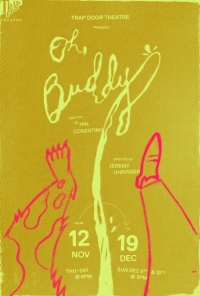
Trap Door Theatre Presents the World Premiere of OH, BUDDY, by Hal Cosentino. Opening November 12th, 2026
14 October 2026 in Upcoming TheatreTrap Door Theatre is thrilled to continue its 33rd season with a Chicago Premiere of Oh, Buddy, written by Hal…

Announcing the Cast of the 49th A CHRISTMAS CAROL
14 October 2026 in Upcoming TheatreTis the season, in spite of today's unseasonable temps, as A Christmas Carol begins rehearsals for The Goodman's 49th annual…

NOVA ENTERTAINMENT CURRENT AND UPCOMING 2026 CIRCA PINTIG UPDATES
14 October 2026 in Now PlayingNova Entertainment is pleased to announce the upcoming performance schedule and updates for CIRCA Pintig, with a visual rebrand and…
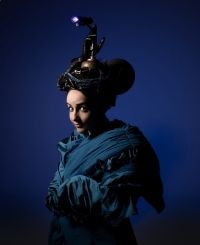
Steppenwolf Theatre Announces "ha ha ha ha ha ha ha" January 13 – February 7, 2027
14 October 2026 in Upcoming TheatreThe blurb is: hahahahahahahahahaha hahahahahahaha hihihi hahahahahahaha hoho hahahhahaha hehe hahahahahahahahahaha. Julia Masli's award-winning solo phenomenon ha ha ha ha…

'Sanctuary Stories' Ventures Into Emotional Drama Behind the News on Immigration
13 October 2026 in Theatre in ReviewSanctuary Stories plumbs the line between theater and journalism, and the powerful human dramas both can depict. Funded by a Northwestern…
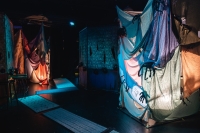
Inside Six Strange Worlds: Exquisite Corpse VI: LULLABIES
13 October 2026 in Theatre in ReviewFor its sixth Halloween season, Rough House Theater Co. has transformed Steppenwolf’s Merle Reskin Garage into a spectacular puppet haunted…
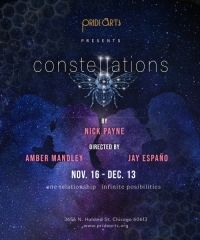
PrideArts announces cast and production teams for Nick Payne's CONSTELLATIONS, performed by alternating same-sex casts, November 13- December 13
12 October 2026 in Upcoming TheatreThursdays – Saturdays at 7:00 pm, Sundays at 3 pm Additional Saturday matinees at 3:00 pm on November 28 and December…
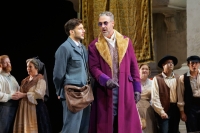
Robert Falls Directs a Sinfully Satisfying Don Giovanni at Lyric Opera of Chicago
11 October 2026 in Theatre in ReviewLet he without sin cast the first stone, Lyric’s “Don Giovanni” seemingly says when they bring up the house lights…

Teatro Vista Productions in collaboration with Audible presents Cafecito & Loops: A Mexodus Listening Tour Headed South Sundays, through November 1st
11 October 2026 in Now PlayingTeatro Vista Productions (TVP), the Midwest's only Latine-led Equity theatre company, in collaboration with Audible, presents Cafecito & Loops: A…
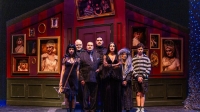
BrightSide’s Addams Family Musical Revives the Wonderfully Weird World of the Addams Clan
10 October 2026 in Theatre in ReviewThey're creepy and they're kooky, Mysterious and spooky, They're altogether ooky, The Addams Family. Yes, ooky. BrightSide Theatre’s production of…
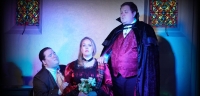
Chicago City Opera Delivers a Rare Operatic Haunting with Der Vampyr
08 October 2026 in Theatre in ReviewWith Halloween creeping closer, there’s something fitting about revisiting one of opera’s earliest flirtations with macabre horror - especially in…

Avalanche Theatre stages the world premiere of They Broke Up by Skyler Tarnas November 6–22, 2026
08 October 2026 in Upcoming TheatreAvalanche Theatre announces the world premiere production of They Broke Up by Chicago playwright Skyler Tarnas, November 6–22, 2026. Opening…

Oil Lamp Theater Announces the cast and creative team for the return of IT'S A WONDERFUL LIFE: A LIVE RADIO PLAY, Nov. 20 - Dec. 27
08 October 2026 in Upcoming TheatreOil Lamp Theater is proud to announce the cast and creative team for its next production and the final production…
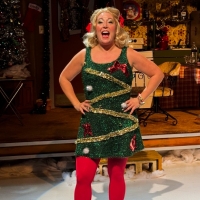
Adults-only holiday fun: Who's Holiday! brings R-rated Cindy-Lou Who back to Theater Wit for her sixth year, Nov. 27-Dec. 27
08 October 2026 in Upcoming TheatreChristmas Day is in our grasp. Why the vodka? Glad you asked! Who's Holiday! brings R-rated Cindy-Lou Who back to…
Two-Time Tony Award-Winning Actress Victoria Clark To Receive the Sarah Siddons Society Award at Annual Benefit on Monday, November 9, 2026
08 October 2026 in Theatre BuzzThe Sarah Siddons Society is pleased to present its 2026 Award to actress and director Victoria Clark, who recently starred…
Goodman's Dead Girl’s Quinceañera: When Fifteen Meets the Adult World
07 October 2026 in Theatre in ReviewAt fifteen, the world can feel like a television show you haven't quite figured out how to turn off. For…

Steppenwolf Theatre's ADIRONDACK CHAIR CIRCLE In Rehearsal – Playing October 22 – December 6, 2026 – World Premiere!
07 October 2026 in Upcoming TheatreSteppenwolf Theatre Company, the nation's premier ensemble theater company, is pleased to launch its 51st Season with the world premiere of…
Hell in a Handbag Productions Announces 25th Anniversary Season!
07 October 2026 in Upcoming TheatreHell in a Handbag Productions is thrilled to announce its 25th Anniversary Season, featuring three "camptacular" shows guaranteed to delight lovers of…
Chicago’s Theater Wit introduces new Watchword closed captioning system, dramatically improving access in all three of its theaters
07 October 2026 in Theatre BuzzChicago’s Theater Wit is now offering new, state-of-the-art closed captioning service, marking a dramatic improvement in making live theater more…

Paramount Theatre’s reimagined A Christmas Carol promises to be a dazzling new, all-ages spectacle for Chicago’s holiday theater season, November 11-January 3
07 October 2026 in Upcoming Theatre“God bless us, everyone,” because there’s a fresh, new, reimagined version of Charles Dickens’ classic tale A Christmas Carol debuting…
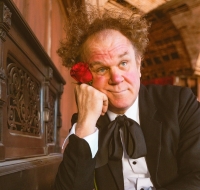
"John C. Reilly is Mister Romantic" Returns to Steppenwolf Theatre - December 10 – 13, 2026
06 October 2026 in Upcoming TheatreFollowing last year's critically acclaimed, sell-out engagement, Steppenwolf Theatre Company is pleased to announce the return of John C. Reilly…

Saint Sebastian Players Open 45th Season With A Murder Is Announced by Agatha Christie Classic Miss Marple Mystery Runs Oct. 23–Nov. 15
06 October 2026 in Upcoming TheatreThe Saint Sebastian Players open their 45th season of travels to different places with A Murder is Announced, a classic Miss Marple mystery…
Announcing "The Goodman, For Good" Campaign
06 October 2026 in Theatre BuzzToday, Goodman Theatre raises the curtain on its future as leadership and artists share a vision for its next century…

Two Edge Theater Company to stage A VIEW FROM THE BRIDGE as its inaugural Chicago production, December 4 through January 10
05 October 2026 in Upcoming TheatreTwo Edge Theater, a reincarnation of the Edge Theater Company that enjoyed eight successful seasons in the Denver, Colorado area,…
Frankenstein at Studebaker Theater adds performances for Halloween run
05 October 2026 in Upcoming TheatreChicago's historic Fine Arts Building and Studebaker Theater are thrilled to announce their Halloween co-production of Manual Cinema's acclaimed Frankenstein…
ANY REBELLION OF WILL - Trap Door Theatre - Through November 1st
05 October 2026 in Now PlayingTrap Door Theatre is thrilled to continue its 33rd season with Any Rebellion of Will, written by S.L. Daniels and…



Latest Articles
-
 “A Strange Loop” Lets the Intrusive Thoughts Win at Raven Theatre in partnership with About Face Theatre
Written by John AccroccoA musical, but it’s just the voices in your head. Sounds just crazy enough to win the 2020 Pulitzer for Drama. “A Strange Loop” by Michael R. Jackson finally makes its Chicago premiere at Raven Theatre in a co-production with…
“A Strange Loop” Lets the Intrusive Thoughts Win at Raven Theatre in partnership with About Face Theatre
Written by John AccroccoA musical, but it’s just the voices in your head. Sounds just crazy enough to win the 2020 Pulitzer for Drama. “A Strange Loop” by Michael R. Jackson finally makes its Chicago premiere at Raven Theatre in a co-production with… -
 Announcing Goodman's 22nd New Stages 2026 Festival Line-Up
Written by Buzz Center StageFrom a "Kung Fu rom-com" to a witchy new musical, The Goodman's popular New Stages Festival in its 22nd year continues to offer a first glimpse at the latest works by a handful of the hottest contemporary playwrights. This year's four-play…
Announcing Goodman's 22nd New Stages 2026 Festival Line-Up
Written by Buzz Center StageFrom a "Kung Fu rom-com" to a witchy new musical, The Goodman's popular New Stages Festival in its 22nd year continues to offer a first glimpse at the latest works by a handful of the hottest contemporary playwrights. This year's four-play… -
Chicago Danztheatre Ensemble Announces 2026-2027 Season
Written by Buzz Center StageChicago Danztheatre Ensemble (CDE) is pleased to announce its 2026 - 2027 season. CDE will open this artistic season with Copestic Vibrations: A Music Festival, Friday, Nov. 13 and Saturday, Nov. 14, followed by a fully staged production of For…
-
Eos Theatre Company Announces Second Production with The Thin Place
Written by Buzz Center StageEos Theatre Company is pleased to announce their second production with Lucas Hnath's horror play The Thin Place, directed by JC Clementz (Steppenwolf's Director of Casting and Artistic Operations), playing February 5 - 28, 2027 in Bramble Arts Loft's Beatrice Theater, 5545 N…


Does your theatre company want to connect with Buzz Center Stage or would you like to reach out and say "hello"? Message us through facebook or shoot us an email at This email address is being protected from spambots. You need JavaScript enabled to view it..
*This disclaimer informs readers that the views, thoughts, and opinions expressed in the text belong solely to the author, and not necessarily to Buzz Center Stage. Buzz Center Stage is a non-profit, volunteer-based platform that enables, and encourages, staff members to post their own honest thoughts on a particular production.