
Displaying items by tag: Georgette Verdin
Finally, A Fresh and Fitting Take on Louisa May Alcott’s Little Women

Like a lot of people, Louisa May Alcott’s Little Women has been mostly a cultural curiosity for much of my life. I know it’s perennially referenced when talking about women and their struggle to achieve personal agency and autonomy. Since it was published in 1868, shortly after the Civil War, Alcott’s quasi-autobiographical novel about a close knit family with its quartet of sisters has never gone out of print. It’s been adapted to stage dozens of times, turned into an opera and Hollywood seems to have made a habit of rediscovering it and presenting a new interpretation of this undisputed American classic every generation or so. Most recently, Greta Gerwig’s 2019 film version of Little Women drew a deluge of praise for the way it reimagined Alcott’s novel for a new era. Still, since it wasn’t required reading in my downstate high school, I never quite understood the magnitude of the story’s import until the other night at a world premiere. Northlight Theatre, together with three other prominent regional theaters across the country, commissioned one of the nation’s most prolific and produced playwright’s, Lauren Gunderson, to develop her own vision of Alcott’s signature creation. Gunderson’s adaptation, now premiering in Skokie before making its way across the country to the other sponsoring companies, has made the blind me see.
Over her career, the San Francisco playwright has developed a reputation for many laudable abilities. Chief among them is the way she can tap into the essence of her characters and turn them into people we easily recognize, empathize with or see startling resemblances to ourselves. She’s also a brilliant architect who can construct a story framework that’s as sturdy as a fortress, is wonderfully meticulous in its detailing and is usually flawless in plot continuity. Those attributes and more run rampant in this production. Joined by an elite creative team, Gunderson turns a 150-year-old classic into an unexpected revelation whose positive messages extolling character, resilience and determination shine with freshly burnished clarity.
A progressive family whose parents fostered the pursuit of any interest their daughters found stimulating, the March’s in Little Women is a mirror image of Alcott’s own family. The four sisters were all modeled after the author and her three sisters. The second oldest, Louisa, or Lou as she was known to family and friends, was the driven one. Independent, ambitious and literally gifted, she chafed at the constraints imposed on women in the 19th century; just as women today are dismayed about similar career and societal constraints present in the 21st.
That Little Women’s Jo is in fact Alcott’s fictional self has long been well established. But aspects in this account go further to draw attention to the similarities between the real and imagined person. In this iteration, the author and her alter ego become so enmeshed that the actor playing lead, Tyler Meredith, occasionally slips into portraying Alcott in addition to Jo March. Dressed in trousers that resemble pantaloons under her period dress, her attire becomes one more feature that distinguishes her. Playing Jo with forceful confidence, Meredith fills her character with an unshakable will that’s fed by the encouragement of her family. She writes spirited plays that she and her sisters enact. And the responses she gets from her writing submissions tell her the aspiration of becoming a self-sustaining writer is conceivably within her grasp.
While we’re admiring her tenacity and preternatural intelligence, we also take in the rest of the family and marvel at how quickly and distinctly their own personalities emerge. Her older sister Meg (Janyce Caraballo); traditional, beautiful and pragmatic, is a stabilizing figure in the family modeled after their mother, Marmee (Lucy Carapetyan), the family’s true anchor and moral touchstone. Quiet and reserved, Beth (Demetra Dee), just below Jo in age, is musical and plays piano. Her profile rises in this effort to the point we have a much stronger understanding of how pivotal her place in this family is. When she contracts scarlet fever after caring for an ill infant, the slow demise she endures gives us time to see how essential her presence is to the family. Dee is demurely marvelous in a role that highlights how diverse families can be within themselves and how that diversity is a secret strength.
The youngest sister, Amy, played with all the petulant entitlement of the baby in the family by Yourtana Sulaiman, is only slightly spoiled and enjoys painting. Her real-life counterpart went on to become an accomplished and recognized painter.
Alcott would live out her life just as she imagined and hoped, unmarried and successful in her craft. Neither her publishers nor her public wanted the first of those two things for Jo, however. The friendship she strikes up with the parentless boy across the street who’s living with his rich grandfather seems as if it might lead to romance. Immediately infatuated by his spunky neighbor, Laurie (John Drea) can’t, and doesn’t want to hide his attraction to this dynamic young girl with the invincible spirit. They both exude so much energy and potential on stage that their power seemed to pulse through the theater. Add to that the purity of Laurie’s guilelessness as he tries to make his friend more than a friend, and you’re virtually convinced this intrigue will lead to the altar. Jo’s too committed to her dream to jeopardize it with marriage. Especially since she doesn’t love her friend in the same way he does her. Watching their friendship take flight, mature and endure after Jo rejects him for a final time; causing him to go on to marry one of her sisters, is a masterclass in how to live. Only exceptional writing and equally adept directing could present it with such compassionate coherence. Along with the playwright, Georgette Verdin as director strives to bring the fullness of what Alcott achieved in Little Women to the fore. There are countless lessons on the potency of familial love and the capacities of the human spirit to prevail despite discouraging odds. Bracketing the effort with novel approaches in directing and generous splashes of humor made this project as exciting and entertaining as it was enlightening. Placing it in the hands of such able and gifted actors simply added to its appeal. Watching Erik Hellman’s inspired transformation from Laurie’s self-effacing tutor to the German professor Jo meets in New York and eventually marries was a particular delight. It was also emblematic of the fine acting that filled this delightful experience.
Louisa May Alcott's Little Women
Through January 5, 2025
Venue: Northlight Theatre at Northshore Center for The Performing Arts
9501 Skokie Blvd. Skokie, IL 60077
A Night of Intrigue in a Top Flight Production of ‘Dial M for Murder’

There’s no mystery to “whodunit” in Northlight Theatre’s current production of “Dial M for Murder.” The audience watches a murder planned, while also being privy to the motivations of all the major characters. But there is plenty of suspense and intrigue as we watch Inspector Hubbard (Nick Sandys is spectacular) determine what happened. The suspense rests on whether his detective skills and penetrating questions will unravel the events the audience has witnessed, allowing the perpetrator to be caught.
Among perennial stage favorites, “Dial M for Murder” has seen multiple live and film versions - perhaps most notably Alfred Hitchcock’s noirish 1954 version - and always keeps audiences enthralled. It originated as a 1952 BBC teleplay. The Northlight Theatre production represents a well-written update, from a 2022 adaptation by Jeffrey Hatcher (endorsed by the estate of the original author, Frederick Knott).
Set in Britain, the story centers around wealthy heiress Margot (Lucy Carapetyan) and her fortune-hunting husband Tony (Ryan Hallahan is excellent) who freely admits to his grifter confidant Lesgate (Felipe Carrasco is suitably sleazy) that he married not for love, but money. Tony lives the highlife courtesy of his wife Margot, far beyond his means as a lowly book editor.
Enter Maxine (Elizabeth Laidlaw in a perfect performance), a murder mystery author, and Tony’s client at the publishing house. We soon learn something more about her relationship with Margot, the condition around which the plot turns.
Directed by Georgette Verdin, who maintains precise timing so necessary for the action, “Dial M for Murder receives the high production values that Northlight Theatre reliably delivers. The mid-century modern furnishings (Mara Zinky for set design) are exquisite, as are the couturier gowns (Raquel Adorno for costume design) in which women of Margot’s station dress for cocktails before dinner.
There were just a couple rough edges in the production. Overall, the adopted English accents weren’t finely honed, and our Midwest nasal overtones came through in most characters. This was all the more evident when the redeeming exception of Sandys’s Detective Hubbard, on whose role the play’s power rests. His British English was flawless (Sandys was born in Coventry, England), and his trained voice seemed to fill the theater space effortlessly. Sandys also seemed to be wearing his natural hair, which fit the part; the other hairstyles looked like they had a little too much help from the make-up department, and were distracting.
Those minor quibbles aside, this is an excellent staging of an intriguing and suspenseful murder saga, and “Dial M for Murder” is certain to leave you satisfied. Its run has already been extended through January 7 at Northlight Theatre in Skokie.
'The Writer' Attempts to Flip the Script

The Writer by Ella Hickson, now in its U.S. premiere at Steep Theatre under the sure direction of Georgette Verdin, is a maddening yet compelling exploration of art, power, commerce, and gender. It is messy, incisive, and brashly frustrating. It is the anti-Barbie, exploring patriarchy, empowerment, and self-determination in a world without a hint of pink. People in this world must earn a living, which really gets in the way of idealism. The Writer is full of unwinnable arguments, plus a few that where the victories are the opposite of what one would like them to be. In a loosely defined series of scenes and rebuttals, the eponymous Writer reveals herself through excerpts from her plays and scenes from her life, though the lines between these are deliberately blurry. Both in the fictionalized versions of herself, and in the real (but are they? —our narrator seems a little unreliable), the Writer spends much of the play defending herself and her work, with only limited success.
Verdin has assembled a fine cast of both Steep Theatre regulars and guest artists willing to throw themselves into the melee that is this play. Lucy Carapetyan plays the Writer with an edgy and anxious self-righteousness that invites sympathy but not empathy, and occasionally veers into unpleasant self-absorption. As her fictional doppelganger and sometime lover, Krystal Ortiz’s grounded presence often makes the Writer’s points more effectively than the Writer herself, while also showing the pitfalls of the Writerly vision. Peter Moore as the Director is tasked with representing the Patriarchy and does so with the right amount of creeping condescension tempered with a pragmatic humanism that allows his arguments to resonate more than Hickson may like—or exactly how much she would like. Nate Faust makes one want to like his characters, bringing a guileless charm to his roles as the character of the Director and the real-life boyfriend of the Writer; he plays the former with a disarming openness that makes his over-bearing attitude more grating, and the latter with a weirdly imperious lack of self-esteem. Jodi Gage and Allyce Torres take on multiple roles throughout, but especially in a second act scene that breaks both the conventions of the play and the urban setting, embodying a mythological world where women are freed from the constraints of patriarchal norms in a piece that seeks to surmount conflict and tension in a modern, tribal ritual dance (Successful? No... but it requires commitment from its performers nevertheless).
The design elements also reflect the ephemeral nature of the theatre experience and the idea that reality itself is an extension of this experience. The “staged” scenes are stripped to their essentials—performer and text, with occasional projections to amplify this relationship and break away from the more concrete spaces of the rest of the play. The scenes that presumably show the Writer’s real life are played on precariously assembled sets that only partially define the spaces that they create. Scenic designer Sotirios Livaditis has created deliberately artificial stage sets with visual counterpoints that reinforce the spaces’ connections to the Writer, though the many moving parts make for some clunky scene changes. As the Writer’s perception of reality shifts into the metaphorical—writing being a calling and a life—the lighting (by Brandon Wardell) and sound (by Thomas Dixon) reflect the increasingly tenuous scenic elements, and occasionally mirror the darkness and self-doubt of the characters’ thoughts. Costume designer Gregory Graham conveys the practical concerns of the characters (and creates the modern tribal costume—accessorized athleisure: why not?) and clearly defines the difference between those who need to project a certain image and those who are privileged not to do so. Movement director Claire Bauman creates a plausible performance art ritual dance. Intimacy Director Gaby Labotka struggles with the reality of the more intensely sexual moments as far as pacing and masking (there is a lot more blanket work than there probably would be if the characters were as alone as they are meant to be), and the beats of the intimate scenes feel both awkwardly slow and rushed.
Director Verdin mostly allows the ambiguities of The Writer to be as frustrating as Ella Hickson most likely intended. She also leans into the bracing humor and combativeness of the dialogue, which is often laugh-out-loud-funny, even as the characters struggle to find common ground or solid answers. Having been written at the beginning of the #MeToo movement, the play mostly deals with the power of institutional patriarchies to shape attitudes, tastes, social hierarchies, age (what happens when an angry young woman grows older?), art, and, yes, sex. There are brief nods to intersectionality and economic class, and Verdin’s production acknowledges that these nods leave several elephants waiting in the wings in order to focus on feminism. The play and production are smart enough to understand that this two-hour dialectic is premised on the privilege of being part of a world where art provides a living for some and is affordable to others. Most people will find something to nod in agreement with, and that may not always be what the person next to them is nodding about. Hickson has written a metatheatrical puzzle box of polemical arguments, but fortunately she has also created characters that go beyond their arguments, especially in the hands of a sensitive director and a talented and empathetic cast. The Writer offers an opportunity to question what makes good Art (theater specifically, but as a metaphor for capital-A Art), the role and responsibility of the artist in society, and whether art is an extension of patriarchy or a tool to fight it. It does not offer any answers, which may have some echoing the words of one of the characters, who demands in vain that the Writer “write an ending.” But then they would miss out on the opportunity to do so over drinks after the show.
The Writer runs through September 16 at The Edge Theater 5451 North Broadway, with performances Thursday, Friday, and Saturday nights at 7:30 pm, and Sunday matinees at 3pm. For tickets and more information contact the box office at (773) 649-3186 or www.steeptheatre.com.
Out of Love: Is This What Friends Are For?

Out of Love by Elinor Cook examines the dynamics of a close, at times even unhealthy and overly enmeshed relationship, between two women friends. Cook artfully displays that elusive quality of intimacy that courses between people who are too close – an almost inexpressible aspect of the attraction that keeps even an improbable pair of friends inseparable their whole life long.
Since they were little, Grace (Laura Berner Taylor) and Lorna (Sarah Gise) have been like twin suns in an unstable orbit. That metaphor is apt in many ways. Drawn inexorably into each other’s lives, their needs and dependencies vary as they grow up, and they circle each other in a wobbly trajectory.
The two pledge to leave town and go away to college. As humans mature, their emotional needs vary, and so Grace and Lorna’s dependence and co-dependence continuously changes. The gravity of their emotional attraction and needs vary in intensity with age and their stage in life, as we meet these girls at all different points in their adulthoods, adolescences, and childhoods.

Grace is more neurotic and has suffered more emotional deficits growing up in a violent and poorer household, while Lorna seems to have had a more supportive home life and more stable upbringing. During teen years and early adulthood, Grace - perhaps responding to jealousy - seduces Lorna’s boyfriend, and ends up pregnant. Grace consigns herself to motherhood, and almost too quickly abandons her aspirations, while Lorna moves ahead. But we suspect the path of life must inevitably have divided for these two – leaving was too much of a reach for Grace.
Out of Love jumps around in time and place in a brisk series of vignettes, opening with a scene in adulthood, and jumping back to and from childhood and adulthood. The trio of actors offers an excellent performances - Peter Gertas (Actor 3) plays a variety of male figures – boyfriend, dad, brother, lover. Gertas is excellent in this shape shifting performance. The selection of British dialects (the script’s vocabulary won’t allow for Americanized language) establish social stature and are sufficiently well honed to accomplish their purpose.
This is an exceptionally good theatrical piece, and is receiving an excellent U.S. premiere now by Interrobang Theatre Project, where it is directed by Georgette Verdin at the Rivendell Theatre. But I found I just didn’t care about this extensive exploration of two women’s emotional angst, and the quality of the performances could not overcome my lack of engagement. One suspects that this is really a movie in waiting, where the intimate portrayal of Grace and Lorna would be more effective with a tight close-up of their suffering faces on a big screen.

Standing Room Only Crowd for Chicago’s Leading Theater Artistic Directors
04 September 2026 in Theatre BuzzIt must have been heavenly for the creative leaders of Goodman, Steppenwolf, Chicago Shakespeare and Court, Chicago’s top regional theaters,…

The Best of Us: Marriott Theatre’s Come From Away
03 September 2026 in Theatre in ReviewCome From Away begins from a place of deep uncertainty, yet what emerges is a story grounded in the steady,…

Steppenwolf Theatre Presents Revival of TOPDOG/UNDERDOG September 17 – November 1 / Rehearsals Underway
02 September 2026 in Upcoming TheatreSteppenwolf Theatre Company, the nation's premier ensemble theater company, is pleased to launch its 51st Season with Suzan-Lori Parks' Pulitzer Prize-winning drama Topdog/Underdog, helmed by Tony Award-winning…

Chicago Black Dance Legacy Project Gala: Radiant & Sumptuous at the Harris
01 September 2026 in Dance in ReviewThe first thing you notice about the meticulously curated Black dance performance held at the Harris Theater over the weekend…

Vape! The Grease Parody Is High-Energy Fluff
01 September 2026 in Theatre in ReviewVape! The Grease Parody, currently running at Chicago’s Apollo Theater through January, takes a satirical swing at the iconic 1978…

BrightSide Theatre Announces "Monte Carlo Night" 15th Anniversary Gala and Fundraiser on September 25
01 September 2026 in Theatre BuzzBrightSide Theatre will celebrate its 15th anniversary with "Monte Carlo Night," a gala and fundraiser, on Friday, September 25, 2026,…

GDC Hosts 19th Anniversary “Dancing With The Giordano Stars” Ballroom Dance Competition October 8th
01 September 2026 in Upcoming DanceGiordano Dance Chicago (GDC) hosts its highly anticipated 19th Anniversary "Dancing With The Giordano Stars" ballroom dance competition 7-11 p.m. Thursday, Oct. 8…
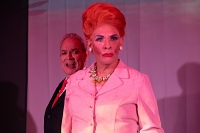
A Loving, Delight‑Packed Celebration: Joan Crawford Goes to Hell Marks 25 Years of Handbag
31 August 2026 in Theatre in ReviewHell in a Handbag Productions celebrates its 25th year with a revival of Joan Crawford Goes to Hell, a sharp,…

An Immersive Sunday in the Park with George at Kokandy Productions
31 August 2026 in Theatre in ReviewComposition, tension, balance, light, and harmony come together seamlessly in Kokandy Productions’ revival of Sondheim’s opus, ‘Sunday in the Park…

Robert Falls to Direct the World Premiere of FLYING MONKEYS, by L.C. Bernadine, at Redtwist Theatre, Dec 6 - Jan 17
31 August 2026 in Upcoming TheatreAward-winning Redtwist Theatre, launching its 22nd season with Prayer Circle, September 17 - November 8, by Erik Gernand and directed by Executive Artistic Director Dusty Brown, announces today…

Buffalo Theatre Ensemble Names Daniel Millhouse as New Managing Artistic Director
31 August 2026 in Theatre BuzzBuffalo Theatre Ensemble (BTE), the professional theater company in residence at the McAninch Arts Center (MAC), is pleased to announce that, in keeping…
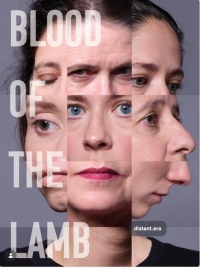
Promethean Theatre Ensemble to offer talkbacks after selected performances BLOOD OF THE LAMB, opening September 5 and 6
31 August 2026 in Upcoming TheatrePromethean Theatre Ensemble announced today it will offer post-show audience talkbacks following two performances of their Chicago premiere of BLOOD OF…

City Lit’s Shane Saddles Up a Classic Western With Fresh Heart
30 August 2026 in Theatre in ReviewCity Lit Theatre’s world premiere of Shane, adapted for the stage and directed by Mark Pracht, brings a fresh, nostalgic…
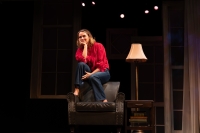
In Sisters, Barrie Turns an AI Fable into an Impressive Character Study
29 August 2026 in Theatre in ReviewThe rise of artificial intelligence raises many questions about its effect on humanity. What does it mean if we become…

Buddy Holly’s Brilliance, Reawakened on the Drury Lane Stage
27 August 2026 in Theatre in ReviewDrury Lane Theatre opens its latest musical with a warm jolt of rock ’n’ roll energy as Buddy – The…
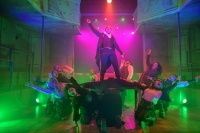
Kokandy's JEKYLL & HYDE Extended by Popular Demand
26 August 2026 in Upcoming TheatreBroadway In Chicago is pleased to announce a darkly delicious Halloween surprise: Kokandy Productions’ critically acclaimed revival of JEKYLL & HYDE will be extended…

Following Obama Center premiere, Manual Cinema's acclaimed productions return to Chicago's Studebaker Theater
26 August 2026 in Upcoming TheatreChicago-based Emmy Award-winning performance collective and film/video production company Manual Cinema premiered two new hand-animated films at the Obama Presidential Center Museum…

Playmakers Lab’s That’s Weird Grandma’s 25th Birthday is a fine place to giggle
25 August 2026 in Theatre in ReviewIf you need an energy boost, skip the can of Monster and get yourself, plus loved ones of any age,…

Victory Gardens Theater presents the World Premiere of Zayd Ayers Dohrn's The Humanities September 10 through October 4
25 August 2026 in Upcoming TheatreVictory Gardens Theater (2433 N. Lincoln Avenue), an historic incubator for new play development, proudly announces the World Premiere staging of The…
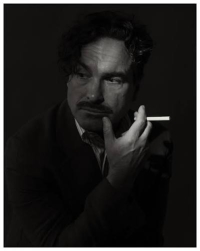
Lookingglass Kowalski starring Johnny Galecki and Jacob Moskovitz September 15 through October 25
25 August 2026 in Upcoming TheatreJoining the previously announced stars of Kowalski Johnny Galecki ("The Big Bang Theory," "The Little Dog Laughed") as Tennessee Williams and Jacob Moskovitz ("Elle") as Marlon…

Shattered Globe Theatre Opens 36th Season with Midwest Premiere of VLADIMIR October 2 – November 14 at Theater Wit
25 August 2026 in Upcoming TheatreShattered Globe Theatre is pleased to open its 36th Season with the Midwest premiere of Erika Sheffer's Vladimir, an unflinching drama of resistance directed by Ensemble Member Lou Contey*,…

TICKETS FOR A 20 RETURNS WITH SPECIALLY PRICED $20 TICKETS FROM HOT TIX AUGUST 27-SEPTEMBER 14, 2026
24 August 2026 in Theatre BuzzThe League of Chicago Theatres announces the return of Tickets for a 20. From Thursday, August 27 through Monday, September 14, 2026, theatregoers can…

Babes With Blades's announces William Shakespeare's KING LEAR, October 15 - November 21
24 August 2026 in Upcoming TheatreBabes With Blades Theatre Company’s (BWBTC), now presenting the world premiere of yo ho. through August 29 at The Edge Off-Broadway, shares the…

BrightSide Theatre announces THE ADDAMS FAMILY MUSICAL, to play October 2 - 18
24 August 2026 in Upcoming TheatreBrightSide Theatre has announced cast and crew for THE ADDAMS FAMILY MUSICAL - the kickoff production of BrightSide's 15th Anniversary season.…

35th Annual Dance for Life Saturated with Excellence
23 August 2026 in Dance in ReviewFrom its beginning in 1992 on the tiny stage of a modest theater, Dance for Life (DFL) has grown and…

Chicago Shakespeare Theater announces Two Shakespeare Productions in Repertory beginning October 13 - January 3
21 August 2026 in Upcoming TheatreChicago Shakespeare Theater (CST) announces the cast and creative team for the company's fall Shakespeare Repertory productions, an unforgettable theatrical event at the heart…
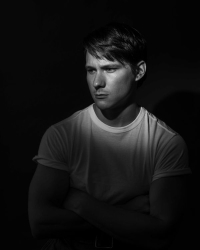
Rising star Jacob Moskovitz to play Marlon Brando in the Chicago presentation of Kowalski at Lookingglass Theatre
20 August 2026 in Theatre in ReviewRising star Jacob Moskovitz ("Elle") has joined the cast of Kowalski as Marlon Brando, alongside previously announced Chicago theater veteran Johnny Galecki ("The Big Bang Theory," "The Little…

McHenry Outdoor Theater: Nostalgia With a Modern Heartbeat
20 August 2026 in Theatre BuzzThere was a particular kind of magic to seeing a movie outside when I was a kid in 1970s Chicago…
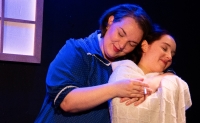
‘Anatomy of a Suicide’ Is Hard to Watch, But Not Because of the Subject
18 August 2026 in Theatre in ReviewPerhaps surprisingly, Anatomy of a Suicide is not an overwhelmingly emotionally gripping play, nor is it horrifying. Instead, it vividly…

Gwydion Theatre Company presents The Chicago Premiere of Por’ Knockers at the Greenhouse Theater’s Studio 44 September 10 - October 4
18 August 2026 in Upcoming TheatreThis narrative tracks five individuals within the "People’s Diasporatic Party"—outfitted in corporate attire—as they take refuge in a desolate East…





Latest Articles
-
 Standing Room Only Crowd for Chicago’s Leading Theater Artistic Directors
Written by Bill EslerIt must have been heavenly for the creative leaders of Goodman, Steppenwolf, Chicago Shakespeare and Court, Chicago’s top regional theaters, to be greeted by a standing room only crowd. But there they were, on a panel moderated by the eminent…
Standing Room Only Crowd for Chicago’s Leading Theater Artistic Directors
Written by Bill EslerIt must have been heavenly for the creative leaders of Goodman, Steppenwolf, Chicago Shakespeare and Court, Chicago’s top regional theaters, to be greeted by a standing room only crowd. But there they were, on a panel moderated by the eminent… -
 The Best of Us: Marriott Theatre’s Come From Away
Written by Kimberly KatzCome From Away begins from a place of deep uncertainty, yet what emerges is a story grounded in the steady, everyday kindness people offer when they have nothing else to give. Rather than revisiting the events of September 11 themselves,…
The Best of Us: Marriott Theatre’s Come From Away
Written by Kimberly KatzCome From Away begins from a place of deep uncertainty, yet what emerges is a story grounded in the steady, everyday kindness people offer when they have nothing else to give. Rather than revisiting the events of September 11 themselves,… -
 Steppenwolf Theatre Presents Revival of TOPDOG/UNDERDOG September 17 – November 1 / Rehearsals Underway
Written by Buzz Center StageSteppenwolf Theatre Company, the nation's premier ensemble theater company, is pleased to launch its 51st Season with Suzan-Lori Parks' Pulitzer Prize-winning drama Topdog/Underdog, helmed by Tony Award-winning director Kenny Leon, who returns to Steppenwolf following his hit production of King James. Ensemble members Glenn Davis (Windfall, Purpose–Chicago/Broadway, King James) and Namir Smallwood (Windfall, The Book of…
Steppenwolf Theatre Presents Revival of TOPDOG/UNDERDOG September 17 – November 1 / Rehearsals Underway
Written by Buzz Center StageSteppenwolf Theatre Company, the nation's premier ensemble theater company, is pleased to launch its 51st Season with Suzan-Lori Parks' Pulitzer Prize-winning drama Topdog/Underdog, helmed by Tony Award-winning director Kenny Leon, who returns to Steppenwolf following his hit production of King James. Ensemble members Glenn Davis (Windfall, Purpose–Chicago/Broadway, King James) and Namir Smallwood (Windfall, The Book of… -
 Chicago Black Dance Legacy Project Gala: Radiant & Sumptuous at the Harris
Written by Mitchell OldhamThe first thing you notice about the meticulously curated Black dance performance held at the Harris Theater over the weekend is language. The eloquence and weight of the words used to explain why the Chicago Black Dance Legacy Project (CBDLP)…
Chicago Black Dance Legacy Project Gala: Radiant & Sumptuous at the Harris
Written by Mitchell OldhamThe first thing you notice about the meticulously curated Black dance performance held at the Harris Theater over the weekend is language. The eloquence and weight of the words used to explain why the Chicago Black Dance Legacy Project (CBDLP)…


Does your theatre company want to connect with Buzz Center Stage or would you like to reach out and say "hello"? Message us through facebook or shoot us an email at This email address is being protected from spambots. You need JavaScript enabled to view it..
*This disclaimer informs readers that the views, thoughts, and opinions expressed in the text belong solely to the author, and not necessarily to Buzz Center Stage. Buzz Center Stage is a non-profit, volunteer-based platform that enables, and encourages, staff members to post their own honest thoughts on a particular production.