
Displaying items by tag: Court Theatre
Two Trains of Thought in Court Theatre’s ‘Two Trains Running’

August Wilson is best known for a series of 10 plays known as the “Pittsburgh cycle” which chronicle the African American experience in America. For me, Wilson’s greater achievement is giving voice to African American men. Grown African American men over a certain age. Wilson allows his male characters to achieve something he didn’t achieve ...old age. Mr. Wilson died in 2005 at the relatively young age of 60. It is unfathomable what he would have written if given another 10 years. Sadly, too few playwrights write and value older Black men as Wilson did.
“Two Trains Running” takes place during the turbulent 60’s. 1969 to be exact. A time when for every action there is an equal and opposite action. Think Malcolm X and Dr. Martin Luther King. Think LBJ’s war on poverty and Black neighborhoods being burned to the ground. The 1960’s was a time when there were always two distinct trains of thought running at the same time. Wilson made the best of these times without making a boring historical drama. Let’s face it, Black folks had a hard time in the 60’s.
The setting is the Hill District diner of Memphis Lee, scheduled for demolition but not before the city pays the asking price. Memphis (A.C. Smith, in a performance he will be long remembered for) is a recently single man since his wife walked out on him. It doesn’t take long to figure out why. He treats his sole employee Riza like she is a maid. Memphis is a man who remembers what it was like to live in the south, he often mentions it. You would think that he would treat his employee better because of what he has gone through, but no, he subjugates her until you almost feel sorry. Almost.
Riza, (in a strong performance by Kierra Bunch) gives as well as she can take, and she takes a lot. Nothing bothers Riza she has seen it all. She has scarred her legs to deter the attention of men to no avail. Although she wants the best casket for her friend, she refuses to view the body. Again, those two trains of thought at play.
Holloway (played with wisdom by Alfred Wilson) has some of the evening’s most profound lines as well as some of the funniest. There is a line about the Undertaker West burying people with the same suit that is hilarious. Alfred Wilson has a finely developed sense of humor, and it is put to excellent use here.
Ronald L. Connor cast as neighborhood predator/numbers runner Wolf is a stroke of genius. In a big ass afro it would be easy for Connor to slip into caricature, but he keeps this character real and recognizable. Despite constantly being told not to play numbers in the diner by Memphis. Memphis is one of his most reliable customers…again, two trains of thought. Wolf knowing how seemingly dangerous Sterling is has no problem selling him a gun, on credit no less.
Some of the most beautiful scenes in this play were done by Jerrod Haynes as Sterling and Joseph Primes as Hambone. Jerrod is a scary Sterling on first meeting him. He has no problem telling anyone who would listen he just got out of the penitentiary. He’s the kind of guy that takes what he wants and is very sure of himself. He operates on no pretense. Joseph Primes has a face that tells one everything they need to know. His Hambone was aware. His Hambone was a fighter. Since I’ve seen the play several times before I concentrated on Hambone when he wasn’t talking. A million things were going thru his head, and they all came back to “I want my ham”. The story of the ham is two trains of thought, Lutz offered Hambone a chicken to paint his fence and if he did a really good job, Lutz said he would get a ham. Hambone felt he did a really good job, Lutz thought different.
Rounding out this coterie of characters is West, the Funeral Owner. In an unrecognizable role Cedric Young reminds us of how he got rich and how he’s gonna stay rich.
The period costumes were done by Christine Pascual…They were excellent. The costumes never got in the way of the story. These characters were real. A special shout to Christine for making sure Riza wasn’t in an afro. In 1969, women were hot-combing their hair and trying to look like Diana Ross and The Supremes. The set by Jack Magaw with the small details informed you that this is Pittsburgh.
Ron O.J. Parsons has done a marvelous job as usual. Proving he knows this language better than just about anyone in Chicago. There are performances here that will last forever “Two Trains Running” is a play one listens to. It stays with you a very long time.
Thru June 12th at Court Theatre.
Court Theatre's 'The Mousetrap': Feel the Suspense Building in this Very Funny Production

Do you love a good whodunnit? If so, you will love this rich and funny production of ‘The Mousetrap’ directed with great staging and humor by Sean Graney.
Agatha Christie's ‘The Mousetrap’ opened in London in 1952 and never stopped running. It is the longest running play in stage history, and for good reason. Its well-crafted script is entertaining throughout, is filled with colorful characters and keeps one guessing right until the very end. And Graney takes the play in a great direction by casting character actors with serious chops in all roles.
Mollie and Giles Ralston (wonderfully played by Kate Fry and Allen Gilmore) are a newly married couple who have decided to turn the house she inherited into a bed and breakfast. The couple are a little overwhelmed by the flurry of guests that arrive on their opening when they all become snowbound in the house and get news that a murder has occurred nearby - and the killer is still at large, and most likely heading their way. It doesn’t take long before everyone becomes a suspect.
While piecing clues together, audience members can enjoy an eyeful of color and textures in the fabulous set design thanks to scenic design by Arnel Sancianco with lighting by Claire Chrzan, sound by Kevin O’Donnell and costumes by Alison Siple, which include a tall window with real rain falling and a smoky fireplace are ominous and luxurious at the same time. The costumes for all cast members are stylish and multi-layered and particularly delightful to the eye are Alex Goodrich’s in head to toe orange patterns and David Cerda’s in a spectacular ensemble of royal purple with fur trim on his floor length winter coat.
No spoiler alerts here, if you have never seen the play you will have a great time guessing who the murderer is and if you have seen it, this well done production will still keep you engaged right up until the end.
Erik Hellman gives a great performance as Detective Sgt. Trotter, the lawman who arrives on snow skis in the middle of the storm, earnestly trying to protect all the houseguests from becoming murder victims.
My favorite performances in this cast came from Alex Goodrich as Christopher Wren and David Cerda as Mr. Paravicini. Both are outstanding. Cerda is well known for his superb camp theater productions as the Artistic Director, actor, resident playwright and co-founder of Hell in a Handbag Productions. In this very funny production, Cerda steals every scene he is in and provides great comic relief as the tension on the set builds and builds all while dressed to the nines in royal purple, silk knee high knickers.
Goodrich has also made his mark in Chicago area theater and is perhaps best known for his many leading roles at Marriott Theatre and Chicago Shakespeare. The talented actor reminds me so much of another great Chicago comic actor, John C. Reilly, and he fills the room with an energy of youthful disgust mixed with childlike wonder as he flutters about the large stage getting big laughs with his over-the-top manic energy, spot on delivery and physical comedy.
Carolyn Ann Hoerdemann plays a very convincing and killable guest as the picky and annoying Mrs. Boyle, while Tina Munoz Pandya is mysterious as Miss Casewell and Lyonel Reneau gives us a strong Major Metcalf.
I highly recommend this funny, exciting, and well-paced production of the classic Agatha Christie murder mystery for a night of suspense and laughs on a cold wintry eve at the lovely Court Theatre. For more show information visit www.CourtTheatre.org.
Lightning Strikes in Powerful Production of King Hedley II

Booming thunder unleashed by a violent storm marks a scene change in King Hedley II, the sound and fury expressing the clash of deep emotional confrontations playing out as the stage goes to black.
Under the direction of Ron OJ Parson, Court Theatre gives us what is surely a definitive rendition of August Wilson’s 2000 play.
Wilson gives vivid voice to the life of his African American characters, showing them hemmed in and struggling for opportunity accorded readily to others. In King Hedley’s 1980s setting, amid trickle down economics, Americans saw greater divides between rich and poor, and rising mass incarceration. And against this backdrop, Wilson’s characters live life – with all its glory, and all its monumental tragedy, which abounds in the play.
In King Hedley II, the action takes place in 1985 in the backyards of two modest brick homes. Following five years in prison, Hedley (Kelvin Roston Jr.) returns to the home where his aunt raised him, optimistic, and aiming to rebuild his life. He plans to marry Tonya (Kierra Bunch). His aunt died while he was away, and his birth mother Ruby (actress Taylar) is now living in the house.
Hedley plants flower seeds, a perfect metaphor for his aspirations to reclaim his life, then struggles to stop others from trampling his young plants, and dragging him down with pessimism. His mother warns him the soil is too weak. Tonya, already a single mom, rebuffs Hedley’s overtures.
“I got to make it whatever way I can,” says Hedley (Kelvin Roston Jr.). “I look around and say 'Where's the barbed wire?”
“You could cut through barbed wire,” says Mister (Donald L. Conner). “But you can’t cut through not having a job.”
The ninth in Wilson’s ten-part Pittsburgh Cycle, each play takes place in that city, and each in a different decade. A Pulitzer finalist, it earned Viola Davis a Tony in its original Broadway run. I had the chance to see it in 2001 at Goodman Theatre, and barely understood what I watched then.
But at Court I threw down my program and leapt to my feet to cheer and applaud, like the rest of the audience, even before the final spotlight ended. It is that good, and hopefully we the people are better audiences for Wilson than 20 years ago.
Though August's womenfolk are more guarded than optimistic, there is a hopefulness brought to Hedley by his buddy Mister, who works in a nail factory. Characteristically, Mister is hoping for a raise, that never materializes, even though business is booming. Hedley is in line to work on a demolition job for the City of Pittsburgh, but his employer (presumed to be African American) was denied the contract because the bid was too low, and the city doubted his capabilities.
Hedley and Mister devise side jobs, including re-selling refrigerators and, as opportunities narrow, plan a heist at a jewelry store. The plan and execution will remind you of David Mamet's American Buffalo.
Into this intriguing setting come two even more powerful dramatis personae: the neighbor Stool Pigeon (Dexter Zollicoffer), a quirky person who is a hoarder, and delivers thundering prophecies drawn in ominous tones from long Bible passages.
The other arrival is Elmore (A.C. Smith), hoping to recapture his lost love Ruby, and aiming to unburden himself of a secret that Ruby wanted both of them to take to her grave. (No spoiler here.)
Smith tears up the stage with his larger than life Elmore. But then so does Zollicoffer as Stool Pigeon, a haunting character impossible to forget. And Taylar, Conner and Bunch all deliver remarkably good performances. And Roston gives us a complex, and nuanced portrait of Hedley.
Wilson, who died in 2005, loads his plays with high-octane dialog. These can be challenging to deliver, or watch – with extra hurdles in understanding the overtones for white people like me. Parsons, working with this great cast, keeps each performance in balance with the others.
This is no small achievement when you realize that any of these characters could be the main protagonist in any other play. And indeed some recur in other works in the Pittsburgh Cycle. Act I of King Hedley II runs 80 minutes; after a 10 minute intermission Act II runs 70 minutes. You will be amazed at how quickly the time passes. Highly recommended for those who like great performances, staging, and a complex play. See King Hedley II through October 13 at Court Theatre in Chicago.
.
Review: 'For Colored Girls/Who Have Considered Suicide When the Rainbow is Enuf' at Court Theatre

Some theatre is so unique that it defies genre, or even creates its own. 'For Colored Girls/Who Have Considered Suicide When the Rainbow is Enuf' by Notzake Shange is considered a choreopoem, a first and only of its kind to appear on Broadway. This pivotal work debuted on Broadway in 1975 and remains as potent today as it was then. Court Theatre's revival, going on now, is directed by original cast member Seret Scott.
You may be asking yourself what a choreopoem is. As defined by Shange's work, it's a beautiful combination of spoken word poetry, song and dance. While narrative structure is fluid, there is a central storyline flushed out over the 90 minute run. 'For Colored Girls' tells eight black women's stories of urban life in sometimes joyful, sometimes tragic, but mostly empowering vignettes. The characters are identified only by the color of their dress, but are made distinct by their individual voices and stories.
This piece isn't produced very often as it requires a solid and specific casting. Seret Scott has assembled a stellar cast for her production. Melody Angel as Lyric creates the rhythmic backbone as she shreds an electric guitar. Though all the women in this ensemble are hair-raisingly spectacular, Anji White's performance is truly transcendent. There's a moment near the middle of the show when White takes center stage as Lady in Red. From there on, you cannot take your eyes off her. The final monologue leaves an audience entirely surrendered to both her sensuality and gut-wrenching story.
'For Colored Girls' is a timeless exploration of black female themes in American life, but perhaps there is no better time than right now to celebrate being other. If you've always wanted to see this piece performed to the best possible standards, don't skip this powerful production.
Through April 14 at Court Theatre. 5535 S Ellis. 773-753-4472
Scientist Rosalind Franklin Finally Gets Credit for DNA Research Role in Photograph 51

Walking in as curtain time neared for Photograph 51, the towering set took my breath away: a backdrop nearly three-stories tall, built of a latticework of delicately framed, vertical windowpanes with spiral staircases swirling down at each end, to meet a floor of foot-square hexagonal tiles.
Heavy quarter-sawn oak laboratory tables and cabinets filled the setting, a research lab that would play a pivotal role in the discovery of the structure of DNA molecules. As the play commenced, illumination flowed down the pillars of the window panels and along the irregular channels at the edges of the tile, creating an electrifying vision - mimicking the hexagon shape of those DNA molecules.
Strains of an evocative original score swelled as the action began in the laboratories of King’s College in London - the site of crucial research that led to the now familiar double helix structure of DNA molecules described by University of Cambridge researchers (and eventual Nobel laureates) James Watson and Francis Crick.
This play tells of unsung research heroine in that saga, Rosalind Franklin (played excellently by Chaon Cross), a chemist whose X-ray crystallography photographs (Photograph 51 was the big one) that provided a visual key unlocking the riddle of how DNA molecules were structured.
Watson (Alex Goodrich) and Crick (Nicholas Harazin) went on to Nobel glory, as did Franklin’s research partner Maurice Wilkins (played by Nathan Hosner), while Franklin’s pivotal role was largely forgotten. That is, until Watson’s outrageously misogynist portrayal of her in Double Helix, his autobiography. As the rare creature of her day, a woman research scientist, Franklin suffered the critiques of male peers that are familiar - she wasn't feminine enough, was hard to get along with, made the least of herself in dress and style. Needless to say, these were taken more seriously in the 1950s.
"Why collaborate with someone who's hard to get along with," as one of Franklin's peers puts it. Nonetheless, in this retelling of the story, Franklin asserted herself, insisting she be accorded equal respect, and resisting attempts to subordinate her research to her male lab partner, Maurice Wilkins.
"Dr. Wilkins, I will not be anyone's assistant," Franklin tells him, and she insists he refer to her as Dr. Franklin.
Watson’s characterization of Franklin in Double Helix was widely criticized. Harvard, where Watson was teaching, refused to publish it.
Watson’s reputation and career has also been devastated by his advancement of theories that there is a link between race and intelligence.
Having lost his income, he became the only Nobel prize winner who to sell his award. U of C, which sustains the Court Theatre, may be trying to get on the right side of the issue by presenting Franklin’s story on stage – though it might want to revisit the distinguished alumni award it made to Watson in 2007.
Would that the play measured up to such worthy goals, and the promise of its sets by Arnel Sancianco (scenic design), Keith Parham (lighting) Jeffrey Levin (sound). Instead, we have a show with great acting and production values – it reminds me of a Netflix pilot film – but with a story line, yet only a wandering plotline.
Plays need a drama to succeed, and instead we are given a timeline. All very interesting, to be sure, but not gripping.
As a result, instead of Franklin being the star of her own story, she is a supporting character. The closest thing we have to a protagonist is her partner Wilkens, who secretly carried a torch for her. That these scientists are such a nerdy bunch must have made it all the more difficult for playwright Anna Ziegler to develop the work. It was a success in London starring Nicole Kidman. The University of Chicago lent its academic bona fides and knowledge base to Court Theater’s production, and that greatly enriches the show.
There are moments, to be sure, including a wonderful soliloquy on the loneliness of a scientist's pursuit of knowledge. Likewise, the tortured moments of Wilkins, who struggled to recognize and express his feelings for Franklin.
We have a wonderful theatrical spectacle, and the direction by Vanessa Stalling made the most of Photograph 51, “mining Ziegler’s text for all its thematic complexities,” as artistic director Charles Newell puts it. Watson & Crick’s discovery in 1953 of the double helix changed history, and our view of ourselves as humans. The knowledge of DNA’s role – and the potential for engineering new directions using it – is the basis for a world of change in arts and sciences.
Photograph 51 is an illuminating story, and we are fortunate it is being told so beautifully - and perhaps that is enough to recommend it. The show runs through February 17 at Court Theatre.
*Now playing through February 23, 2019
Review: Manuel Cinema's 'Frankenstein' at Court Theatre

It’s a rare treat to get to experience anything as unique as Manual Cinema’s production of ‘Frankenstein’ at Court Theatre. With several productions of ‘Frankenstein’ going on this year, one might wonder how they’re each distinguishing themselves. Manual Cinema’s original adaptation is just that, a manual cinema. Told with intricate shadow puppets on classroom overhead projectors, ‘Frankenstein’ is like spending the evening in a toy box.
In a collaboration with Court Theatre as part of their season, Manual Cinema returns to University of Chicago where they started. The company was formed in 2012 by University of Chicago faculty members and has since evolved into an internationally acclaimed performance art troupe. Manual Cinema still resides in Chicago.
This theatrical production of ‘Frankenstein’ is unlike anything you have ever seen. Drew Dir’s concept closely follows Mary Shelley’s novel and even includes an intermittent story arc about how Mary Shelley came to write ‘Frankenstein’. Unlike a traditional play, this production contains no spoken dialogue. Instead, the cast furiously dashes around the set creating a visual splendor on several overhead projectors. Though, there are scenes of more traditional acting or, pantomime, layered into the play as well. The show is projected onto a main screen but it’s nearly impossible not to sneak away glances to the corners where the visuals are being created. A live orchestra beautifully scores the play with original music composed by Kyle Vegter and Ben Kauffman.
This production is riveting. Not only are the projections and music sumptuous but the shadowy atmosphere created by Manual Cinema is haunting. The staging is set up in a way that encourages the audience to watch how the projections are created. The story is somewhat simplified but in that simplicity is an almost pop-up book version of Shelley’s classic horror story. The cinematic score propels the action and provides an emotional component to the piece. The two-hour run time seems to breeze by and you’re left not wanting the excitement to end.
‘Frankenstein’ is Manual Cinema’s sixth full length show but hopefully that means there will be plenty more. If you’re wondering which ‘Frankenstein’ to see this fall, this is the one. There is surely nothing else like it.
Through December 1st at Court Theatre. 5535 S Ellis Avenue. 773-753-4472
"Radio Golf" Scores a Hole-in-One in Powerful and Compassionate Production

Common sense dictates doing the right thing. On the surface, that seems obvious, but in August Wilson’s final play, Radio Golf, which premiered in 2005 and is receiving a timely and propulsive revival at Court Theatre, this is not at all clear. Though the characters are archetypal, and the situations contrived, it is precisely these extremes that cast the arguments of the play into sharp relief. What makes sense? No matter which side you choose in this examination of urban redevelopment, there is no outcome that benefits the residents of the Hill District or the protagonists of Wilson’s play, because no matter how far they have come, no matter what their ideals, it is 1997 and they are black and living in a racist America. Unfortunately, Wilson’s play has aged well—though broadly drawn, the events of the play are no less a reflection of American realities than they were two decades ago.
According to the program, director Ron OJ Parson has directed 25 productions of August Wilson’s plays. This is evident in his assured, lyrical work on this production. The characters are detailed, and the poetry of Wilson’s language emerges from the physical language of the blocking, so that the cracks in the sometimes conventional structure do not emerge until long after the final blackout. Though he allows Wilson’s humor to suffuse the evening, Parson has created a powerful and engrossing dialectic that offers much food for thought and few answers. Parson’s interpretation creates a sense of community and warm comradery among the characters, which accentuates the fact that the real threat lies beyond the action onstage. Given the surging poetry of Wilson’s script, it seems that this is the production that Wilson was writing to receive. Parson’s vision is complemented by a design team that is equally meticulous, setting the scene with unobtrusive but finely tuned details. Scenic designer Jack Magaw has created a grimy but well-appointed ground floor office for the Bedford Hills Development, Inc., jammed between neighboring buildings and accessed by a concrete stairwell. There are hints of the grandeur of the past in the tin ceiling and bay window, but the green-painted walls are stained, and the linoleum floor is more practical than elegant. Claire Chrzan lights most of the interior scenes in harsh, bright light, occasionally softened by practicals. She subtly shifts between moods and time, extending the magical realism to the windows of neighboring residences. Costume designer Rachel Anne Healy creates a period-perfect uniform for each character that allows each to evolve according to their fortunes, without veering into caricature. Sound designer Christopher M. LaPorte uses a funk-injected jazz score to set the tone, as well as contributing cool radio tracks and jarring sounds that invade the relative sanctuary of the office from the outside.
The cast of Radio Golf is uniformly excellent. As Harmond Wilks, the real estate developer hoping to bring back Pittsburgh’s Hill District while launching his bid to be mayor of both black and white citizens of the city, Allen Gilmore lends an Obama-esque, unruffled cool to his idealistic character, which gives way to almost petulant panic when he finds himself fighting for a future that seemed more secure than it turns out to be. As his golf-playing partner and newly-minted bank vice president Roosevelt Hicks, James Vincent Meredith is smoothly overbearing and casually abusive, while maintaining a boyish charm and ambition—he goes far enough in his self-serving tirades to draw derision but retains enough humanity to elicit sympathy. As Wilks’ wife, Mame Wilks, Ann Joseph is warm, no-nonsense and imperious; her attempt to open her husband’s eyes to the consequences of his choices for them both is heart-wrenching and powerful. Alfred H. Wilson plays Elder Joseph Barlow with a kinetic physicality that mirrors his scattershot philosophizing, rarely pausing as he reveals a strong gravitational center to his wandering thoughts. James T. Alfred brings comic timing and a self-aware physicality to the almost excessively forthright ex-con Sterling Johnson, who, while he has stopped punching everyone in the mouth to make himself feel good, still seems perfectly capable of doing so if he sees a need. As Wilks finds himself entangled in bonds that he thought had dissolved long ago, and Hicks finds himself presented with ways to turn his race into an asset, the battle lines are drawn, and it becomes clear that all the characters are casualties of a war that is being waged for profit by others, but there are promotions to be had if they join the winning side. As an ensemble, all the actors find the humor and good will in their characters, without allowing them to become bathetic or cartoonish. Though sometimes broadly drawn, each character finds his or her dignity in the sensitive and emotionally grounded portrayals onstage at Court.
Radio Golf alternates between laugh-out-loud (though at times decidedly un-PC) humor and incisive social commentary, spot-on examinations of familial and geographic loyalties and nearly stereotypical portraits of the members of a community and the different paths they take, and director Ron OJ Parsons and his expert cast, supported by a perfectly tuned design team, weave the tonal shifts into powerful, perfectly modulated quintet. On the surface, August Wilson’s final work may seem less haunting and lyrical than the previous plays of the ten-play Century Cycle that it completed, but this production belies that impression. Though some elements may seem facile, when the curtain comes down, one realizes that Wilson left behind a complex and uncompromising challenge for his audience. Wilson was an American who wrote about his country with awe, humor, rigor and compassion. In Radio Golf, he took on the issue of gentrification and redevelopment, and what happens when revitalization becomes disenfranchisement. In Court Theatre’s production, the play is an entertaining, empathetic and unyielding plea for doing the right thing, especially for those who wield the power to do so.
Radio Golf runs through September 30 at Court Theatre, 5535 S. Ellis Avenue, Chicago. Tickets, priced $50 - $74, are available at the Court Theatre Box Office, but calling (773)753-4472, or online at www.CourtTheatre.org.
Review: Court Theatre's 'Guess Who’s Coming to Dinner'

By now we all know who’s coming to dinner. Based on the 1967 film starring Sidney Poitier and Katharine Hepburn, Court Theatre presents a new stage adaptation of ‘Guess Who’s Coming to Dinner.’ Written in 2013 by Todd Kreidler, this fresh look points at the progress America has made regarding interracial marriage, as well as the progress that still lies ahead.
Marti Lyons directs this quickly-paced comedy-drama. The scenes are trimmed with a sweeping score that recalls the golden era of 60s television. The mid-century mod set by Scott Davis drops us square into 1960s suburban San Francisco. A solid white house on a hill, obvious symbolism. Kriedler’s script begins on an impossibly rosy note, a sure sign that trouble is afoot for these fine looking white folks.
Christina (Mary Beth Fisher) and Matt Drayton’s (Tim Hopper) upper middle class, pseudo-liberal lifestyle is upended when their adult daughter Joanna (Bryce Gangel) brings home an acclaimed African American doctor, John (Michael Aaron Pogue). The two naïve lovers wish for their parents’ blessing before they proceed with a hasty marriage. In asking, Joanna and John call into question everything they’ve known about their so-called progressive parents.
In today’s world, some may see an interracial marriage as no big deal. And largely, for most parts of America, it’s not a big deal. That’s what’s so interesting about this script. The characters don’t spend much time debating if it’s right or wrong for races to intermarry. What’s at stake for them is how the world will perceive their coupling and whether it’s actually putting them in danger.
This is a prickly little play about the nuances of race. That is not to say it’s not funny. In fact, it’s the sit-com style set-up of jokes and physical humor that make this show so fun to watch. Mary Beth Fisher is a gifted physical comedian. It’s a real treat to see her quickly twisting facial expressions, she’s able to get so much across without dialogue. Working off her is Sydney Charles in the role of the Drayton’s maid, Tillie. Sydney Charles has some of the best one-liners of the evening and really brings her character to the focal point.
The young lovers portrayed by Bryce Gangel and Michael Aaron Pogue are what this show comes down to. There’s so much chemistry between these two and that is key. The audience has to believe in this love in order to believe in the parent’s eventual coming around. Gangel so aptly captures the stubborn optimism of her character through an almost lilting speech pattern. In her final monologue, Gangel goes from school girl crush to a woman seriously in love.
The Court Theatre’s area premier of Todd Kriedler’s stage adaptation of ‘Guess Who’s Coming to Dinner’ is very cute. It’s strange to say a play about tense race relations is cute, but it’s a play about love. It’s also incredibly sleek. The costumes and sets are like an episode of Mad Men. While the direct themes may not be entirely relevant in a post Marriage Equality world, there are still indirect themes that must be discussed. This play is making a bigger point about the subtler forms of racism that are present in even the most liberal minded places.
Through April 15th at Court Theatre. 5535 S Ellis Avenue. 773-753-4472
Review: All My Sons at Court Theatre

Whenever things get hot in America, Arthur Miller comes back in vogue. It's hard to fathom what he would think of today's world though. Court Theatre features Miller's first hit play 'All My Sons' . Directed by Charles Newell, this provocative new production is vibrant and exceedingly well acted.
'All My Sons' first appeared on Broadway in 1947, establishing Arthur Miller as a major playwright. Though considered among his best, there's an amount of melodrama here that later Miller works would shed. In this dark play, he examines the moral and psychological effects of WWII on ordinary Americans.
John Judd plays Joe Keller, the good-guy neighbor type who has just arrived home from prison. He's been acquitted of manufacturing faulty airplane parts that caused plane crashes in WWII. His partner remains in jail having accepted all responsibility. His adult son Chris, played by Timothy Edward Kane survived the war while his brother Larry did not. On an ordinary summer day Chris invites Larry's former fiance and daughter of Joe's business partner, Annie (Heidi Kettenring) for a visit. Chris' mother Kate (Kate Collins) cannot reconcile that Larry is dead and is slowly unraveling.
Newell takes this script in an interesting direction. The central conflict is Joe, a normal guy with a huge moral dilemma. "I know you're no worse than most men, but I thought you were better." Miller writes. It's through Kate Collins that Newell puts the emphasizes on the women's narrative of this play though. Kate's dialogue swings from reality and delusion so rapidly. Collins' interpretation has an eerie Blanche DuBois quality to it. This is also a story about a woman losing her grip in a time when life was supposed to be cheerful.
Heidi Kettenring brings Annie to the foreground in this version. With 'All My Sons' Miller wanted to show how aspects of the war effected all parts of America. Many women were left widows. Social constructs made finding love more challenging for women. Kettenring captures every scene she's in. Her portrayal of a lonely woman with few options is haunting.
Newell's production is artful. The staging is vivid and unique. When every theater company is offering Arthur Miller, it's cool to see how these works are being reinterprated to appeal to a new generation. For some, two and a half hours of classic American theater sounds like a school field trip. Newell's production proves that there's always a new way to see a play.
Through February 11th at Court Theatre. 5535 S Ellis Ave. 773-753-4472
Court Theatre's "Five Guys Named Moe" is non-stop fun

The live sounds of 30’s and 40’s jazz transform Court Theatre into a music venue in this production of Five Guys Named Moe. Written by Clarke Peters and directed by Resident Artist Ron OJ Parson, with Music Director Abdul Hamid Royal and Associate Director Felica P. Fields, this lively musical is a tribute to the great songwriter and saxophonist Louis Jordan (1908-1975), who went down in history as an innovator and popularizer of “jump blues,” a dance forward mix of jazz, blues and boogie-woogie, that paved the way for rock’n’roll in the 1950’s.
The uncomplicated plot provides the perfect canvas for Louis Jordan’s greatest hits and goes something like this: Nomax (Stephen ‘Blu’ Allen) is a clueless but perfectly lovable young lad who is broke and heartbroken because his girlfriend left him. Drinking at home one night and listening to Louis Jordan’s hits on the radio, depressed Nomax is whining about his life, when out of the blue (no pun intended) his radio erupts with five guys, who climb out one by one, introduce themselves as Big Moe (Lorenzo Rush Jr), Eat Moe (James Earl Jones II) , No Moe (Eric A. Lewis), Four-Eyed Moe (Kelvin Roston Jr), and Little Moe (Darrian Ford), and get the party started with ‘Five Guys Named Moe.’ Because five heads are better than one, The Five Moes are very helpful in trying to solve Nomax’s lady problem; the dynamic and superbly fun hits “I Like ‘Em Fat Like That” and “Messy Bessy” are prove of that. Not to mention “I know What I’ve Got” and “Safe, Sane and Single,” which were outstanding. Louis Jordan’s use of comedy in his songwriting had become one of the most prominent elements in his music, for he “laughed to keep from crying”. Besides, having been married five times, he most certainly contemplated the relations between the opposite sexes in his own life.
There was some great talent on that cleverly designed stage made to look like inside of an old radio (scenic design by Courtney O’Neill). Powerful voices, the most remarkable of them Darrian Ford’s [whose new original vocal jazz album, The New Standard, is set to release later this year], impressive dancing with occasional somersaults thrown in for a good measure (by James Earl Jones II), Lorenzo Rush, Jr’s commanding presence and hilarious relic, always on.
The band is no slouch either: led by the pianist/Music Director, winner of the NAACP Image Award for Broadway’s Five Guys Named Moe composer/arranger Abdul Hamid Royal, who had worked with many recording artists, such as Liza Minelli, Stevie Wonder, Natalie Cole, and Christina Aguilera, to name just a few; it produces a tight sound.
By the end of the First Act, the audience is playfully forced to sing the silly lyrics to “Push Ka Pi Shi Pie,” and some fortunate first row attendees are dragged onto stage to dance with the cast and then led to the lobby bar. Hey, “What’s the Use Of Getting Sober?”, right?
Second Act takes us to The Funky Butt Club, where the Five Moes have a gig to do. The sounds of old jazz are like an anti-anxiety remedy, taking us to a different time far, far in the past, it seems. What great 63rd Season opener for Court Theatre! “Five Guys Named Moe” is being performed at Court Theatre through October 8th. For more show information visit www.courttheatre.org.
*Now extended through October 15th
“A Strange Loop” Lets the Intrusive Thoughts Win at Raven Theatre in partnership with About Face Theatre
17 October 2026 in Theatre in ReviewA musical, but it’s just the voices in your head. Sounds just crazy enough to win the 2020 Pulitzer for…

Announcing Goodman's 22nd New Stages 2026 Festival Line-Up
15 October 2026 in Upcoming TheatreFrom a "Kung Fu rom-com" to a witchy new musical, The Goodman's popular New Stages Festival in its 22nd year continues…

TIMELINE THEATRE’S 100TH PRODUCTION, THE CHICAGO PREMIERE OF LAURA WADE’S HOME, I’M DARLING, DIRECTED BY MECHELLE MOE, SATIRIZES THE SEDUCTIVE FANTASY OF A “SIMPLER PAST,” NOVEMBER 11 - DECEMBER 13
14 October 2026 in Upcoming TheatreTimeLine Theatre’s 30th Anniversary Season at its new home in Uptown rolls merrily along in November with the company’s 100th…

Court Theatre announces America@250 - Now is the Time: Artists Go to Work
14 October 2026 in Theatre BuzzUnder the leadership of Marilyn F. Vitale Artistic Director Avery Willis Hoffman and Executive Director Angel Ysaguirre, Court Theatre proudly…
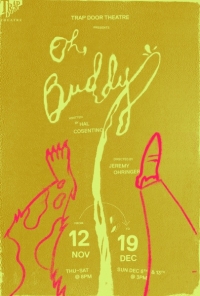
Trap Door Theatre Presents the World Premiere of OH, BUDDY, by Hal Cosentino. Opening November 12th, 2026
14 October 2026 in Upcoming TheatreTrap Door Theatre is thrilled to continue its 33rd season with a Chicago Premiere of Oh, Buddy, written by Hal…

Announcing the Cast of the 49th A CHRISTMAS CAROL
14 October 2026 in Upcoming TheatreTis the season, in spite of today's unseasonable temps, as A Christmas Carol begins rehearsals for The Goodman's 49th annual…

NOVA ENTERTAINMENT CURRENT AND UPCOMING 2026 CIRCA PINTIG UPDATES
14 October 2026 in Now PlayingNova Entertainment is pleased to announce the upcoming performance schedule and updates for CIRCA Pintig, with a visual rebrand and…

Steppenwolf Theatre Announces "ha ha ha ha ha ha ha" January 13 – February 7, 2027
14 October 2026 in Upcoming TheatreThe blurb is: hahahahahahahahahaha hahahahahahaha hihihi hahahahahahaha hoho hahahhahaha hehe hahahahahahahahahaha. Julia Masli's award-winning solo phenomenon ha ha ha ha…

'Sanctuary Stories' Ventures Into Emotional Drama Behind the News on Immigration
13 October 2026 in Theatre in ReviewSanctuary Stories plumbs the line between theater and journalism, and the powerful human dramas both can depict. Funded by a Northwestern…
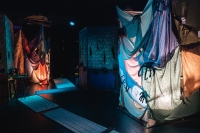
Inside Six Strange Worlds: Exquisite Corpse VI: LULLABIES
13 October 2026 in Theatre in ReviewFor its sixth Halloween season, Rough House Theater Co. has transformed Steppenwolf’s Merle Reskin Garage into a spectacular puppet haunted…
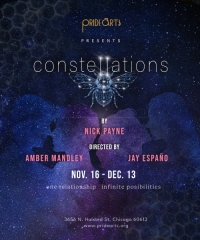
PrideArts announces cast and production teams for Nick Payne's CONSTELLATIONS, performed by alternating same-sex casts, November 13- December 13
12 October 2026 in Upcoming TheatreThursdays – Saturdays at 7:00 pm, Sundays at 3 pm Additional Saturday matinees at 3:00 pm on November 28 and December…
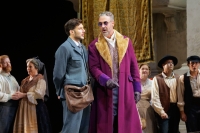
Robert Falls Directs a Sinfully Satisfying Don Giovanni at Lyric Opera of Chicago
11 October 2026 in Theatre in ReviewLet he without sin cast the first stone, Lyric’s “Don Giovanni” seemingly says when they bring up the house lights…

Teatro Vista Productions in collaboration with Audible presents Cafecito & Loops: A Mexodus Listening Tour Headed South Sundays, through November 1st
11 October 2026 in Now PlayingTeatro Vista Productions (TVP), the Midwest's only Latine-led Equity theatre company, in collaboration with Audible, presents Cafecito & Loops: A…
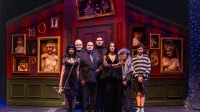
BrightSide’s Addams Family Musical Revives the Wonderfully Weird World of the Addams Clan
10 October 2026 in Theatre in ReviewThey're creepy and they're kooky, Mysterious and spooky, They're altogether ooky, The Addams Family. Yes, ooky. BrightSide Theatre’s production of…
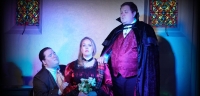
Chicago City Opera Delivers a Rare Operatic Haunting with Der Vampyr
08 October 2026 in Theatre in ReviewWith Halloween creeping closer, there’s something fitting about revisiting one of opera’s earliest flirtations with macabre horror - especially in…

Avalanche Theatre stages the world premiere of They Broke Up by Skyler Tarnas November 6–22, 2026
08 October 2026 in Upcoming TheatreAvalanche Theatre announces the world premiere production of They Broke Up by Chicago playwright Skyler Tarnas, November 6–22, 2026. Opening…

Oil Lamp Theater Announces the cast and creative team for the return of IT'S A WONDERFUL LIFE: A LIVE RADIO PLAY, Nov. 20 - Dec. 27
08 October 2026 in Upcoming TheatreOil Lamp Theater is proud to announce the cast and creative team for its next production and the final production…
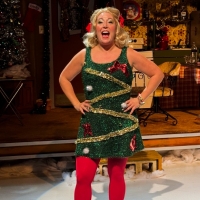
Adults-only holiday fun: Who's Holiday! brings R-rated Cindy-Lou Who back to Theater Wit for her sixth year, Nov. 27-Dec. 27
08 October 2026 in Upcoming TheatreChristmas Day is in our grasp. Why the vodka? Glad you asked! Who's Holiday! brings R-rated Cindy-Lou Who back to…

Two-Time Tony Award-Winning Actress Victoria Clark To Receive the Sarah Siddons Society Award at Annual Benefit on Monday, November 9, 2026
08 October 2026 in Theatre BuzzThe Sarah Siddons Society is pleased to present its 2026 Award to actress and director Victoria Clark, who recently starred…
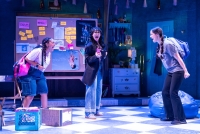
Goodman's Dead Girl’s Quinceañera: When Fifteen Meets the Adult World
07 October 2026 in Theatre in ReviewAt fifteen, the world can feel like a television show you haven't quite figured out how to turn off. For…

Steppenwolf Theatre's ADIRONDACK CHAIR CIRCLE In Rehearsal – Playing October 22 – December 6, 2026 – World Premiere!
07 October 2026 in Upcoming TheatreSteppenwolf Theatre Company, the nation's premier ensemble theater company, is pleased to launch its 51st Season with the world premiere of…
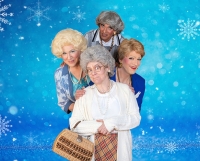
Hell in a Handbag Productions Announces 25th Anniversary Season!
07 October 2026 in Upcoming TheatreHell in a Handbag Productions is thrilled to announce its 25th Anniversary Season, featuring three "camptacular" shows guaranteed to delight lovers of…
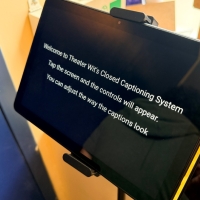
Chicago’s Theater Wit introduces new Watchword closed captioning system, dramatically improving access in all three of its theaters
07 October 2026 in Theatre BuzzChicago’s Theater Wit is now offering new, state-of-the-art closed captioning service, marking a dramatic improvement in making live theater more…

Paramount Theatre’s reimagined A Christmas Carol promises to be a dazzling new, all-ages spectacle for Chicago’s holiday theater season, November 11-January 3
07 October 2026 in Upcoming Theatre“God bless us, everyone,” because there’s a fresh, new, reimagined version of Charles Dickens’ classic tale A Christmas Carol debuting…
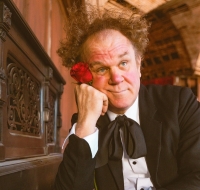
"John C. Reilly is Mister Romantic" Returns to Steppenwolf Theatre - December 10 – 13, 2026
06 October 2026 in Upcoming TheatreFollowing last year's critically acclaimed, sell-out engagement, Steppenwolf Theatre Company is pleased to announce the return of John C. Reilly…

Saint Sebastian Players Open 45th Season With A Murder Is Announced by Agatha Christie Classic Miss Marple Mystery Runs Oct. 23–Nov. 15
06 October 2026 in Upcoming TheatreThe Saint Sebastian Players open their 45th season of travels to different places with A Murder is Announced, a classic Miss Marple mystery…

Announcing "The Goodman, For Good" Campaign
06 October 2026 in Theatre BuzzToday, Goodman Theatre raises the curtain on its future as leadership and artists share a vision for its next century…

Two Edge Theater Company to stage A VIEW FROM THE BRIDGE as its inaugural Chicago production, December 4 through January 10
05 October 2026 in Upcoming TheatreTwo Edge Theater, a reincarnation of the Edge Theater Company that enjoyed eight successful seasons in the Denver, Colorado area,…
Frankenstein at Studebaker Theater adds performances for Halloween run
05 October 2026 in Upcoming TheatreChicago's historic Fine Arts Building and Studebaker Theater are thrilled to announce their Halloween co-production of Manual Cinema's acclaimed Frankenstein…

ANY REBELLION OF WILL - Trap Door Theatre - Through November 1st
05 October 2026 in Now PlayingTrap Door Theatre is thrilled to continue its 33rd season with Any Rebellion of Will, written by S.L. Daniels and…




Latest Articles
-
 “A Strange Loop” Lets the Intrusive Thoughts Win at Raven Theatre in partnership with About Face Theatre
Written by John AccroccoA musical, but it’s just the voices in your head. Sounds just crazy enough to win the 2020 Pulitzer for Drama. “A Strange Loop” by Michael R. Jackson finally makes its Chicago premiere at Raven Theatre in a co-production with…
-
 Announcing Goodman's 22nd New Stages 2026 Festival Line-Up
Written by Buzz Center StageFrom a "Kung Fu rom-com" to a witchy new musical, The Goodman's popular New Stages Festival in its 22nd year continues to offer a first glimpse at the latest works by a handful of the hottest contemporary playwrights. This year's four-play…
-
Chicago Danztheatre Ensemble Announces 2026-2027 Season
Written by Buzz Center StageChicago Danztheatre Ensemble (CDE) is pleased to announce its 2026 - 2027 season. CDE will open this artistic season with Copestic Vibrations: A Music Festival, Friday, Nov. 13 and Saturday, Nov. 14, followed by a fully staged production of For…
-
Eos Theatre Company Announces Second Production with The Thin Place
Written by Buzz Center StageEos Theatre Company is pleased to announce their second production with Lucas Hnath's horror play The Thin Place, directed by JC Clementz (Steppenwolf's Director of Casting and Artistic Operations), playing February 5 - 28, 2027 in Bramble Arts Loft's Beatrice Theater, 5545 N…


Does your theatre company want to connect with Buzz Center Stage or would you like to reach out and say "hello"? Message us through facebook or shoot us an email at This email address is being protected from spambots. You need JavaScript enabled to view it..
*This disclaimer informs readers that the views, thoughts, and opinions expressed in the text belong solely to the author, and not necessarily to Buzz Center Stage. Buzz Center Stage is a non-profit, volunteer-based platform that enables, and encourages, staff members to post their own honest thoughts on a particular production.