
Displaying items by tag: Chicago
A Spoonful of Magic: Lyric Brings Mary Poppins to Life

Lyric Opera of Chicago’s film‑with‑live‑orchestra series has become one of the city’s most engaging hybrid arts experiences, transforming the opera house into a cinematic concert hall where classic films gain new dimension through live performance. Recent presentations such as Singin’ in the Rain (February 2025) and Coco in Concert (October 2025) have showcased how a full orchestra can elevate familiar scores, bringing warmth, clarity, and emotional immediacy to every musical moment. The format takes full advantage of Lyric’s grand acoustics and visual scale, allowing audiences to rediscover beloved movies with a heightened sense of drama and immersion. It’s a rare blend of nostalgia and spectacle - a celebration of film and music that feels both timeless and newly invigorated each time the orchestra begins to play. Now, the series continues its momentum as Anthony Parthner leads The Lyric Opera of Chicago Orchestra in performing the cherished score to Mary Poppins.

Dick Van Dyke and Julie Andrews in Mary Poppins.
Released in 1964 and starring a dream duo of Dick Van Dyke and Julie Andrews, Mary Poppins follows the magical arrival of an extraordinary nanny who descends - quite literally - into the lives of the Banks family on Cherry Tree Lane. As the children, Jane and Michael struggle under the strict expectations of their distracted father and the anxieties of their well‑meaning mother, Mary Poppins brings order, wonder, and unexpected joy through a blend of firm guidance and whimsical adventure. With the help of her cheerful friend Bert (the loveable chimney sweep), she leads the family through imaginative escapades that reveal deeper lessons about connection, kindness, and the importance of seeing the world with curiosity. By the time she departs, the Banks household has been transformed, not by magic alone, but by the rediscovery of affection and unity.
This film is an ideal showcase for the Lyric Orchestra, and they rise to it beautifully. The score for Mary Poppins was composed by the celebrated songwriting team Richard M. Sherman and Robert B. Sherman, whose work helped define the sound of Disney’s mid‑century musical era. Known as the Sherman Brothers, they created a bright, whimsical, and emotionally rich collection of songs that blend clever lyricism with instantly memorable melodies. Their contributions to the 1964 film produced some of Disney’s most enduring musical moments - from the exuberant “Supercalifragilisticexpialidocious” to the gentle poignancy of “Feed the Birds” - shaping a sonic identity that remains inseparable from the film’s legacy. Their score not only set the tone for Mary Poppins but also solidified the Shermans as two of the most influential composers in the Disney canon.

Conductor Anthony Parnther.
Lyric Opera of Chicago was especially thrilled to welcome Anthony Parnther to the podium, a conductor whose versatility and musical sensitivity made him an inspired choice for a score as iconic as Mary Poppins. One of the busiest conductors in Los Angeles and a world‑class bassoonist with an international performance career, Parnther brought both technical precision and a keen ear for orchestral color - qualities that served him well in shaping a live performance of this beloved film soundtrack. Watching him work was a genuine pleasure. His approach emphasized clarity and warmth, guiding the orchestra in a way that honored the Sherman Brothers’ classic melodies while subtly enhancing the film’s emotional contours in real time. For Lyric, his leadership reflected not only artistic excellence but a continued commitment to presenting musicians who could seamlessly bridge concert performance with cinematic storytelling.
With the success of its recent live‑to‑film presentations, Lyric’s film‑with‑live‑orchestra series continues to build steady momentum, and the company is already preparing for its next project: a live orchestral performance of Amadeus in 2027. Mary Poppins in Concert Live to Film is presented in a limited engagement on April 10 and 11. Click here for more information.
This review is proudly shared with our friends at www.TheatreInChicago.com.
At Chicago Shakespeare Theater, Mrs. Krishnan’s Party Feeds the Soul

As I entered the black box studio at Chicago Shakespeare Theater, I’ll admit - I wasn’t in the best frame of mind. Before leaving home, I’d watched the news: the endless cycle of violence, bombings, and that tired “us versus them” narrative that seems to define our moment. My spirit felt worn down. On top of that, I had spent the day finishing a review from earlier in the week, so I arrived more drained than inspired. Theatre, on this night, felt like an obligation.
Then Mrs. Krishnan’s Party happened - and everything shifted.
Instead of the usual routine of being guided to my seat by The Saints, I was greeted at the door by James (Justin Rogers), dressed in an outfit that immediately caught my attention. He asked my name. We talked. It wasn’t forced or performative - it was genuinely human. By the time he led me to my seat, the invisible barrier between audience and performer had already begun to dissolve. He introduced me to the people around me: to my left, a well-traveled gentleman from Ohio by way of India; to my right, a mother and daughter who helped identify James’s attire as a South Indian costume, rich with cultural specificity. Already, I wasn’t just watching a show - I was part of a group.
That’s when I realized we were not simply audience members, but guests of James, who was hosting a surprise party for his landlady. The occasion is Onam - a vibrant harvest celebration rooted in the southern Indian state of Kerala. What unfolds is not just theatre, but an act of radical hospitality. Music pulses. Conversations bloom. Strangers become co-conspirators in joy. This show is more than immersive - it is enveloping, dissolving the line between performer and audience until you’re no longer watching a story, you’re living inside it.
This approach is the hallmark of Indian Ink Theatre Company, the New Zealand-based ensemble behind the production. Founded by Justin Lewis and Jacob Rajan in the late 1990s, the company has earned an international reputation for creating intimate, actor-driven works that blend South Asian storytelling traditions with contemporary theatre. Their work explores identity, migration, and cultural hybridity through a deeply human - and often humorous - lens. More than anything, they prioritize connection: their productions don’t just tell stories; they build shared experiences.
And that’s what undid me.

Photo courtesy of Indian Ink Theatre Company.
When Mrs. Krishnan (Kalyani Nagarajan) finally arrives, she is startled to find the back of her small shop filled with strangers. There’s hesitation - this wasn’t her plan - and beneath it, something heavier lingers. As the evening unfolds, we begin to feel the weight she carries: the loss of her husband, the quiet ache of a son - an architect - now gone. These moments settle into the space with a tender gravity, reminding us that her warmth is hard-earned.
And yet, just as the story begins to lean into that sorrow, the play grabs and lifts us again. Laughter breaks through, balloons appear. Music returns. The room brightens. What begins as disruption transforms into delight as she embraces the gathering and, in a gesture both intimate and communal, decides to cook daal for all of us. In that moment, grief and joy exist side by side—each making space for the other.
Somewhere between the laughter, the dancing, and the smell of daal, the heaviness I carried into the theatre dissolved. Not in a naïve or escapist way, but in a way that felt necessary. Soundly directed by Justin Lewis, the show doesn’t ignore the fractured world outside; it quietly insists on another possibility within it: community, warmth, shared humanity.
By the end of the evening, I realized I hadn’t just watched a play - I had been in community with people different than me, yet deeply the same. In a time when division dominates the headlines, Mrs. Krishnan’s Party offers something deceptively simple and profoundly radical: a room full of strangers choosing, for a moment, to be together.
And that, right now, feels like everything.
Recommended
When: Through May 3rd
Where: Chicago Shakespeare Theatre 800 East Grand Avenue in Chicago.
Tickets: $74 - $90
Box Office: 312.595.5600
Info: www.chicagoshakespeare.com
This review is proudly shared with our friends at www.TheatreInChicago.com.
Eos Turns Ancient Anguish Electric in a Blazing Trojan Women

I’m going to start with a bit of backstory. In high school we all read (more or less voluntarily) The Iliad, Homer’s poetic exploration of a war that occurred during the Bronze Age yet continues to resonate with twenty-first century significance. Homer focuses (naturally!) on the guys: heroic Greek Achilles and his lover Patroclus; Hector, prince and hero of Troy; Greek King Menelaus vs. Paris, Prince of Troy. The women are pretty much either pawns or plunder. The Iliad begins with Hector’s baby bro Paris swiping Helen, wife of Menelaus. Menelaus and Paris duel, intending Helen to be the prize, but when Paris is defeated, Aphrodite delivers him to Helen’s bed before Menelaus has a chance to kill him – a good example of the ambivalent outcomes when the gods and goddesses mix it up with mortals. THE TROJAN WOMEN actually begins with an introduction by Poseidon (Brian Weddington), god of the sea, and Rachel Sledd as Athena, goddess of war.
THE TROJAN WOMEN analyzes the costs of war through the trauma and grief of the Trojan women after their city has been sacked, their husbands killed, and their remaining families taken away as slaves. It’s set in a present-day hospital maternity ward that’s serving as confinement for troublesome females. The Chorus (Morgan Lavenstein), that hallmark of ancient Greek drama who provides insight into events both on- and offstage, appears as a woman vastly pregnant and chained to the bed. She’s not best pleased at any of this, and no more tickled about rooming with Hecuba (Ashway Lawver), queen of vanquished Troy and vehemently unreconciled to its overthrow.
Ben Page is Talthybius, a Greek herald who pops in and out with news bulletins, each more hideous than the last. His is the task to reveal to the women their destinies: Hecuba will be given to the Greek king Odysseus, the widowed princess Andromache (Jazmine Mazique) is to be the concubine of Achilles’ son, and Cassandra (Liliana Mastroianni) is destined to become the conquering king Agamemnon’s doxy. Cassandra is clairvoyant, which one might assume to be an asset, but her mother has always dismissed her revelations as hysterical attention-seeking, especially as in such grievous times the future may not be something you really want to hear about. Andromache, Princess of Troy, has just borne a son to her ex-husband ex-Prince Hector, and Talthybius must also break the news that her baby must die, as the Greeks fear he will grow up to avenge his father Hector. And Helen (Morgan Burkey), whose beauty launched a thousand playwrights, ends up back with her husband Menelaus (Marcus Castillo). There’s lots of babies around – we’re in a maternity ward, remember? – and babies are a natural outcome of the unbridled rape that is ubiquitous in wartime; in fact, it appears that the primary position of women in conquered Troy is prone. Plus, ça change, plus c'est la même chose.
OK, are you more or less caught up on characters and setting? cos I need to tell you about Eos Theatre Company. Their stated mission is ‘to shine light into the darkness of the human condition and to amplify women’s voices and stories’, and they’ve chosen THE TROJAN WOMEN as their inaugural presentation because it does both brilliantly. The four co-founders of Eos united at the first table read of The Trojan Women in February 2025. That production was not only fabulous but propagative as well: the four decided to remount the show and simultaneously create a brand-new, all-woman company, named EOS in honor of the Greek Goddess of the dawn who flies her chariot across the sky, pulling back the curtain of night to usher in the light of the sun.
Rachel Sledd is a born-and-bred Chicagoan who lived and acted between New York and Los Angeles until 2006, when she returned to her hometown. Ashway Lawver grew up in Los Angeles. Her passion for the art and study of Acting led her to Chicago to attend The School at Steppenwolf and she found in Chicago her true theatrical home. Morgan Lavenstein began acting in Baltimore at the ripe old age of 8. She attended The School at Steppenwolf and Chicago became her forever home. Morgan Burkey is originally from Texas. In 2017 she was accepted into School at Steppenwolf, where she met fellow co-founders Morgan Lavenstein and Ashway Lawver. Amazing, innit, how extraordinary people from far-flung origins are drawn together? Call it destiny, fate, or kismet, in this case it’s providential.
The production team was as superb as the cast. Co-founder Rachel Sledd was Director and Michael Lesko Stage Manager. Shayna Patel’s Set Design portrayed the ambience before the actors took the stage. The story was encompassed by Mason Absher’s Sound; his choices of music interlocked perfectly and toward the end the impassioned sound pulled the storyline together, as did Garrett Bell’s breathtaking lighting effects.
Seeing THE TROJAN WOMEN was thrilling not only for the splendid play itself, but for the chance to witness the emergence of Eos, a feminist company whose development is sure to beguile and invigorate Chicago for years to come.
Running through April 18th at Bramble Arts Loft
RECOMMENDED
This review is proudly shared with our friends at www.TheatreInChicago.com.
Chicago Takes Its Shot: Hamilton’s 2026 Comeback

Nearly a decade after it first upended the American musical, Hamilton returns to Chicago’s CIBC Theatre as part of Broadway In Chicago’s 2026 season, and its cultural voltage hasn’t dimmed one bit. Inspired by Ron Chernow’s book, Alexander Hamilton, Lin‑Manuel Miranda’s genre‑shifting epic — part biography, part political thriller, part hip‑hop opera — still hits with the force of a story determined to be heard. Having seen it in its inaugural year, I can say this revival lands even sharper, richer, and more assured than ever.
Alexander Hamilton didn’t just witness the birth of the United States — he helped engineer its architecture. As a delegate at the Constitutional Convention, he argued fiercely for a unified national government, and though not the primary drafter, he became one of its most influential defenders, authoring the majority of The Federalist Papers to secure the Constitution’s ratification. His imprint only deepened from there: he built the nation’s financial system from the ground up, established the U.S. Treasury, championed a national bank, and laid the groundwork for the country’s credit, industry, and economic identity. In Hamilton, these achievements aren’t treated as dry civics lessons but as the combustible fuel of a man determined to transform a fragile collection of states into a functioning nation — a legacy as complicated as it is foundational. The musical captures not just his ascent, but the way his ideas became the scaffolding of a country still deciding what it wanted to be.
Through songs like “My Shot,” “The Room Where It Happens,” and “Hurricane,” Miranda reframes the Founding Fathers not as marble statues but as flawed, hungry, deeply human figures fighting to define a nation and themselves. What Miranda is ultimately trying to convey — and what this production underscores beautifully — is that America’s story has always been messy, contested, and built by people who rarely saw themselves as the heroes of their own narrative.
Director Thomas Kail’s staging remains a masterclass in kinetic storytelling. The turntable choreography, the razor‑sharp transitions, and the way bodies carve through space all contribute to a sense of history constantly in motion. Under his direction, the show feels both epic and immediate — a revolution unfolding in real time.

l-r-Tyler Fauntleroy as Alexander Hamilton and A.D. Weaver as George Washington in Hamilton at CIBC Theatre. Photo by Joan Marcus.
What continues to astonish about Hamilton is how much storytelling power resides in its deceptively simple visual world. David Korins’ now‑iconic set — all timber, ropes, brickwork, and scaffolding — frames the action like an unfinished nation still under construction. The exposed architecture becomes a living metaphor for the country Hamilton is trying to build, while the revolving stage keeps history literally turning beneath the actors’ feet. Paul Tazewell’s costumes layer silhouettes with subtle modern inflections, allowing the cast to move with the velocity the score demands while still grounding the story in its 18th‑century roots. The palette shifts almost imperceptibly as alliances form and fracture, and the contrast between the Schuyler sisters’ elegance, the soldiers’ grit, and King George’s absurd opulence adds texture to every scene. Together, the set and costumes create a world that feels both historical and urgently contemporary — a perfect visual match for Miranda’s reimagined revolution.
This Chicago cast brings its own intensity. The Chicago engagement of Hamilton boasts a powerhouse company led by Tyler Fauntleroy, who delivers a relentless, razor‑sharp Alexander Hamilton—equal parts tactician, poet, and live wire. His performance feels carved from pure momentum, capturing both Hamilton’s brilliance and his self‑destructive drive. Opposite him, Jimmie “J.J.” Jeter turns in a magnetic, exquisitely controlled Aaron Burr, layering charm, calculation, and simmering envy into a portrayal that peaks beautifully in a soul‑baring “Wait For It” and a show‑stopping “The Room Where It Happens.” Lauren Mariasoosay brings warmth, emotional clarity, and a quiet steel to Eliza Hamilton (through April 12th), while Amanda Simone Lee commands the stage with fierce intelligence and vocal fire as Angelica Schuyler. Lily Soto shifts effortlessly between the wide‑eyed innocence of Peggy Schuyler and the seductive, wounded edge of Maria Reynolds through April 12th, with Nadina Hassan stepping into the roles beginning April 14th. A true force, A.D. Weaver anchors the production with statesmanlike gravitas as George Washington, and Christian Magby all but steals the show with his dual swagger as Lafayette and Jefferson—two performances so distinct they feel like separate universes. Nathan Haydel brings youthful fire and heartbreaking vulnerability to both John Laurens and Philip Hamilton, while Eddie Ortega grounds the ensemble with muscular presence as Hercules Mulligan and James Madison. And rounding it out, Matt Bittner delivers a perfectly petty, wickedly funny King George III, milking every entrance for maximum delight, stealing the moment with a perfectly calibrated blend of comedy and menace in “You’ll Be Back.”.
Musically, the production remains a marvel. The blend of hip‑hop, R&B, traditional musical theatre, and lyrical density still feels revolutionary, and the orchestra at the CIBC gives the score a muscular, propulsive energy. Even familiar numbers feel newly alive in this space. The production is expansive and brimming with moments that land with exhilarating force.
The run at the CIBC Theatre continues through April 26th, giving audiences a generous window to revisit — or finally experience — the show that redefined what Broadway could be.
In a city that knows its way around bold storytelling, Hamilton still stands out. It’s a reminder that history is not a fixed monument but a living argument — and that the voices shaping it are far more diverse, complicated, and compelling than the textbooks ever let on. Whether you’re seeing it for the first time or the fifth, this production makes the revolution feel brand new.
Highly recommended.
For tickets and/or more show information, click here.
This review is proudly shared with our friends at www.TheatreInChicago.com.
Hear Us Roar: The Trojan Women Will Leave You Speechless

Last night, while waiting in the tranquil lounge of the Bramble Arts Loft, a familiar question floated around the theatergoers: Does art imitate life or does life imitate art? It’s a philosophical question that has been around for ages. It probably passed through the minds of those who first saw the play some 2,000 years ago. It’s a question I never tire of. The debates change based on the context of the time it is asked, and the mindset of the individual. For no matter how many times it is asked, no two answers are ever alike; life and the medium are inextricably linked. There’s no better example of this currently playing in Chicago than The Trojan Women, the inaugural production of Eos Theatre Company, now playing at the Bramble Arts Loft.

Ashway Lawver as Hecuba. Photos by Steven Townshend / Distant Era.
A blisteringly relevant modern-day version of Euripides' anti-war play, The Trojan Women, has been rewritten and is set in a mother-and-baby unit of a prison. The war is over. Beyond the prison walls, Troy and its people burn. Inside the prison, the city's captive women await their fate. Stalking the antiseptic confines of its mother and baby unit is Hecuba, the fallen Trojan queen, whilst the pregnant Chorus is shackled to her bed. But their grief at what has been before will soon be drowned out by the horror of what is to come, as the Greek lust for vengeance consumes everything – man, woman, and baby – in its path. This caustic and radical new version of Euripides' classic tragedy comes from one of the UK's most exciting young poets, Caroline Bird, and is directed by Rachel Sledd Iannantuoni. It is an intense, gripping look at what happens when the world collapses.

Photo by Steve Townshend | Distant Era
The Trojan War is ancient history, relegated to stories retold through modern media countless times over. Yet the story of the war and The Trojan Women remains as relevant today as it did thousands of years ago. Euripides’ The Trojan Women takes place at the end of the war. Troy is burning while the city's captive women wait to be told their fate by the victorious Greeks, who penetrated the city walls hiding inside the famous Trojan horse. Caroline Bird’s modern adaptation of Euripides' 415 BCE tale sets the play in a Trojan hospital turned prison by the Greek invaders. “Her work is a fierce exploration of the complex intersections of class, gender, patriarchy, and nationality,” says Iannantuoni. “It is timely and timeless. Sometimes comical. Often absurd. Ultimately heartbreaking.” Superbly acted by members of the Eos Theatre Company, The Trojan Women is a production that will stay with you long after you leave the theater.

Photo by Steve Townshend | Distant Era
War is hell. While many of us might not experience it firsthand, we can empathize with the horrors it leaves in its wake, for war is as timeless as the stories that come from them. Yet again, we’re faced with a meaningless war started by the few and fought by the many. Yet again, humans are faced with unfathomable choices. Yet again, we both come together and tear each other apart over claims of moral and ethical superiority. The Trojan Women could have easily been written today. The plight of women in a patriarchal world is reduced to little more than incubators and spoils of war. The question of the role men play in war: protectors or pillagers? The questions of gratitude and honor, dignity and demise. The Trojan Women beautifully – hauntingly -- explores all of this and inevitably leads us to ask ourselves a single question: Does art imitate life or does life imitate art? See this incredible and timeless production, and let’s get together at Simon’s Tavern to discuss.
Unlike the Trojan War, The Trojan Women only runs through April 18th at Bramble Arts Loft (5545 N Clark St 2nd Floor, Chicago). Ferry your ships and set a course for Andersonville to get your tickets and a glimpse of this tragically timeless tale today.
This review is proudly shared with our friends at www.TheatreInChicago.com.
About Face’s Modern Gentleman Adds a Valuable Piece to a Fascinating Puzzle

There are thousands of stories you’d love to see brought to the stage. Stories that slip into the lives of people who walk through the world either unseen or are barely considered by those possessing more standard existences. People who, because of the way they look or talk or are intrinsically wired to move through life find themselves on the periphery. Or who mask their true selves by pretending to be something they’re not. With all the same desires, hopes and dreams of a common human being, something about them hinders them from freely striving for type of self-actualization we all crave.
How they see themselves, relate to others and fulfill their aspirations can produce illuminating and often engrossing stories about who and what we, as a species, inherently are. They’re in the family of stories queer focused About Face Theatre has been telling boldly and honestly since 1995. And it’s current production by playwright Preston May Allen, Modern Gentleman, fits snugly in the theater company’s oeuvre of truth.
By stepping into and exploring the life of Adam, a trans man living in present day New York, About Face again provides a platform to enlighten through alternative storytelling. Uniquely structured, and under Landree Fleming’s novel direction, Modern Gentleman presents ideas, beliefs and circumstances that provoke serious and stimulating contemplation. Despite all the things it either suggests or leaves a mystery, it’s the common threads of life that stand out most distinctly.
Passion, drama and rewardingly precocious humor are the trinity that pervade this profile of a person trying to live their most complete life in the gender they feel most comfortable.
Its passion that opens the play as Adam (Alec Phan) and his girlfriend Lily (Kaylah Marie Crosby) tumble through the front door of Adam’s apartment tearing at each other’s clothes in their rush to get busy between the sheets. A young articulate couple, they’ve been together for five years and have that satisfyingly acclimated aura of a happily nested pair. The only odd note is that after a certain point, they seem to be a little awkward about undressing in front of one another.
It isn’t long before the barely visible specter of foreboding that steals over them gets pulled from the shadows. Sometime since they’ve been together, Adam’s found the courage to confess his desire to transition from being a woman and become male. When they originally met, they were two women, lesbians whose relationship led to love. It may have been a startling revelation for Lilly. But that depends on the amount of candor that defined their union. Others in her position would have left immediately. Lilly stayed, but two years into a regimen of testosterone treatments and the transformation of her once girlfriend’s physical appearance, and Lilly is experiencing a change of heart. She eventually tells Adam she can’t go do it and leaves.
Her departure though doesn’t prove final. She keeps resurfacing, coming back to the apartment to house sit and care for Adam’s diabetic cat when he needs to travel for work. Stopping by repeatedly to clarify her position and probe his. Through their back and forth, we get an enlightening, indeed an enlivened picture of the complexity and far-reaching ripple effects a single very personal decision can produce.
Because they’re both so expressive, so fluent in disclosing their innermost feelings, we learn the rupture isn’t at heart due to superficialities. It seems to center on personal perception of self and how they both want to experience intimacy beyond sex.
Because he has allies, Adam enjoys the benefit of other insights. His friend Samuel (Omer Abbas Salem), whose “gayese” is superb and whose piquant wit is lined with razors, has tons of excellent advice. Adam’s sister Natalie (Ashlyn Lozano) is equally supportive and just savvy as Sam. We never know why neither Samuel or Natalie seem to care for Lily who, despite the amount of time she has on stage and the good sense she consistently demonstrates, seems bereft of boosters in her corner.
A woman Adam meets at a family social event and eventually hooks up with, Alycia, played with wonderfully brash assurance by Emma Fulmer, helps paint a bracing image of what dating looks like 2 ½ decades into the 21st century. Through her frankness, she lets Adam get a clearer picture of how a trans man who hasn’t had any below the belt alterations can fit into today’s sexual cosmos.
Milo Bue’s subdued polished set offers an unobtrusive and pleasing backdrop to this edifying drama of the heart. Ethan Korvne’s sound design and original music bring unexpected texture to Adam’s story and shows how well composed sound elements can complement dramatic theater. And thanks to Catherine Miller’s cosmopolitan approach to casting, we gain a promising view into the possible.
Language that sometimes strays toward the ponderous, and occasionally less than fluid scene transitions, prove only mildly distracting. They don’t lessen the suspense of how Adam will come to fully accept himself as the man he now is rather than some fantasized ideal. Nor do they leave us less curious of about how that kind of epiphany will impact his relationship with Lily.
What Modern Gentleman does most gratifyingly is shed thoughtful and intelligently humane light on one of the unseen and unheralded in our midst to give us a fuller understanding of ourselves.
Modern Gentleman
Through April 18, 2026
About Face Theatre
Venue: Raven Theater
6157 N. Clark Street
Chicago, IL 60660
For more information and tickets: https://aboutfacetheatre.com
This review is proudly shared with our friends at www.TheatreInChicago.com.
Off-Key and Missing the Mark: Off Nights at the Sometimes Cafe at Bramble Arts Loft

If all the world’s a stage and we are all merely players, then we must be prepared when we are thrust into the spotlight. Not everyone will be ready. Some of us might freeze or forget our lines or simply wave the spotlight on, forgoing the opportunity to perform, content with playing in the shadows or the wings. Others, however, crave the attention and demand to be center stage, presumably because they have something to say. Whether or not you signed up to be in the play or part of the production, it’s essential to be prepared, to know what you would say or do when given a stage. This past weekend, I witnessed just such an opportunity during a performance of Off-Nights at the Sometimes Café. The stage was set, the players cast, and an attentive audience seated. The trouble was, when the spotlight was on, nothing was said.
Off-Nights at the Sometimes Café is billed as a campy parody of a noir mystery, following a cafe pianist in lieu of a detective. As the pianist/narrator plays his way through the show, he guides the audience through the tangled web of attraction, seduction, and general silliness that occurs when a bunch of attractive queer people end up in the same place.
On its surface, Dave Walther’s Off-Nights at the Sometimes Café aims to be a delightful, poignantly unserious celebration of queer joy and desire, and a heartwarming portrayal of how to find a chosen family— warts and all. But that message, along with the representation it aims to spotlight, is completely lost in a story lacking in formula, pace, or purpose. There is no particular plot with a beginning, middle, and an end. There’s no catalytic event or climax. It’s more of a drawn-out setting of a café scene, focusing on the introduction of six characters that takes over one hour of the play’s seventy-five-minute run time to fully explain. There is no protagonist – or spoken scenes for that matter -- save for the curmudgeonly monotonous narrator who tells the story in the same sad minor keys the musical numbers are played in. The only time the characters speak is through song. While the players have exceptional voices, the choice of opera as a medium is an interesting one. The operatic numbers all focus on love (both absent and unrequited), but they don’t particularly move the story forward or really accentuate or explain the characters’ motivations or sentiments. Save for a few witty one-liners and repetitive drag numbers, there isn’t much depth or substance to this story, so it begs the question: Why was this put on?
Off-Nights at the Sometimes Café is simply doing too much for a message of love, acceptance, and community to shine through. At least that is what I took away from the production. It’s neither an homage to film noir nor a parody. It’s lacking in elements such as a femme fatale, lover’s quarrels, a whodunnit with high-contrast lighting, nonsensical voice narration, hyperbolic metaphors, or, said succinctly, a storyline, something nearly every film noir/parody possesses. The same goes for the opera homage and lack thereof. Key operatic elements are also lacking, such as libretto (text/story), aria (emotional solo), a recitative (speech-like narrative singing), and most importantly, the theatre and spectacle that opera is known for. None of that is found in this play. To be fair, perhaps that was the whole point, and it simply missed me as quickly as the 70-degree day in Chicago. If you squinted, you could see where Off-Nights was trying to go. The problem was in the execution and pace of the story. It was simply doing too much and not enough at the same time. Director Clare DiVizio’s introduction to the play provided more grounding and heart than the entirety of the run of the show, the reminder to all that queer and trans rights matter, now more than ever in today’s volatile and violent world. Off-Nights lingers so heavily in the descriptions of characters and their identification that we miss the ‘why?’ Why are we here? Why should we care about these characters? What do you want the audience to take away from this production, outside of a love story that references the last great love was when dinosaurs were drinking beers? Off-Nights, unfortunately, misses their mark.
When given a spotlight, one must be ready and prepared to step into it with something to say. No matter the medium chosen to convey one’s story, the story still needs to be easy to follow. It should have heart and depth even if it’s told through parody and satire. If the message you wish to impart to your audience is lost in translation, or simply doesn’t exist, was it ready for its moment on the stage? Did the story linger in the shadows too long, or was it simply not ready for the spotlight? With some rewriting, staging choices, and script alignment to any of the formulas the play aims at parodying, Off-Nights at the Sometimes Café could become the queer extravaganza it bills itself as. Until then, the audience is waiting for something great to take the stage and have its moment in the spotlight.
Check out the other 2026 season of events and shows at Bramble Arts Loft and learn more about The Thompson Street Opera Co. and their mission to bring inclusivity to the operatic art form.
Reimagined Madama Butterfly at the Lyric a Masterpiece in its Own Right

Created in 1904, Giacomo Puccini’s Madama Butterfly has become one of the world’s greatest and most popular operas. New York’s Metropolitan Opera alone had performed it 902 times prior to the beginning of its 2023-24 season. Renowned for his gifts for melody, Puccini’s musical component is ravishingly beautiful. His manner of intermixing cultural references into his orchestration also makes it exquisitely complex. Enhanced with a gripping story about the power of trust and the fragility of love, Madama Butterfly qualifies as an irrefutable masterpiece. Throughout its existence though, the opera has also been an artistic triumph with issues.
An adaptation of a one-act play written in 1900, which itself was based on a short story by an American author, John Luther Long two years earlier, it’s been criticized as being a flawed fantasy. One created by white men about the essence of another culture. In this case, Japan. In Madama Butterfly, an American, Lt. B. F. Pinkerton, arrives in the island country and soon begins a quest for love. A love that he never plans to be lasting. Once he returns state side, he’ll re-enter the mainstream and marry traditionally.
Since its origin, issues of perception and portrayal have always haunted Puccini’s Madama Butterfly. He composed it in partnership with Giuseppe Giacosa and Luigi Illica who wrote the text or libretto. For most of the opera’s existence, the way Japanese culture and its people were projected robbed them of dimension and ultimately diminished their humanity. In both early productions of the opera and in virtually all that followed, Japanese men saw their virility erased while Japanese women watched their deference be reduced to an exaggerated docility. As intrinsically lovely Madama Butterfly is as a creative jewel, for the Japanese people and many others of color, it has also been deeply problematic.
For Matthew Ozawa, Director and Chief Artistic Officer of the Lyric Opera of Chicago, it was as well. As a Japanese-American director of operatic works, his relationship with Puccini’s masterpiece has been fraught. He knew intrinsically as a director he could never present it in a conventional way. If he were ever to take on the challenge of staging the piece, he would do it through more enlightened eyes. The current production of Madama Butterfly he directs at the Lyric, running through April 12th, shows how spectacular a 122-year-old classic can look and feel with a total makeover by a gifted artisan.
Ozawa’s Madama Butterfly, co-produced by the Cincinnati Opera, Pittsburg Opera, Detroit Opera and the Utah Opera, dismantles the old format and completely rebuilds it in a contemporary context. The overhaul was so comprehensive, keeping the original orchestration and libretto unaltered and intact was a condition for greenlighting his vision.

The Company of Madama Butterfly.
Like many men of his generation, Ozawa loved playing video games growing up. It wasn’t a leap for him to envision Madama Butterfly taking on the features of a machine generated video game offering a portal to an alternate reality. Pinkerton (tenor Evan LeRoy Johnson) would travel to Japan through his headset and begin a journey that would lead to the devastating consequences we all know will follow.
But first, like any talented leader, Ozawa needed to assemble a team to bring his concept to fruition. Based on opening night’s performance at the Lyric, a better dream team probably doesn’t exist. Recruiting all females as his key collaborators, who were either Japanese or Japanese-American, cultural accuracy and agency would no longer be a concern. Each of them a heavy hitter in her respective craft, the composite experience they created was so remarkable it could easily be considered revelatory. The superb impact of Kimie Nishikawa’s set designs and Yuki Nakase Link’s lighting talents made on the production’s visual potency and dynamism can’t be overstated.
A muted background would suddenly blaze in dramatic color and fill with subtly ornate splendor when Pinkerton donned the goggles that would transport him to Japan. There, Maiko Matsushima’s costume designs bowled you away with their texture, imagination, sophistication and beauty.
Even when we first finally meet Cio-Cio-San, Butterfly, played by Karah Son, we’re visited with the unexpected. She’s as small and delicate as butterflies are, but in her words and carriage you sense the steel in her spine. At 15, she may have become a geisha to support herself, but she’s clearly proud of the fact that she’s also “well-bred”. That inner dignity is an ever-present element of her character.
Son has played this crucial character in houses around the globe; in her native Korea, Warsaw, Berlin, Bologna, Los Angeles and San Francisco just to list a few. This production marks her Lyric debut. She knows this part. From the excellence of her soprano Saturday night, and the flawlessness of her acting abilities, she is this part.
Johnson, a wonderful tenor who’s also making his debut at the Lyric, makes a compelling Pinkerton. He doesn’t quite comprehend the import of his words when Sharpless (Zachary Nelson) tells him to “Be Careful, she trusts you”, until it’s too late. Finally realizing what that trust has cost releases his humanity. But it can’t stop the payment deception exacts.
In the final scene, where only pathos is expected, this presentation all but blinds you with the complex beauty of real life through the fiction of a story. Ozawa’s brilliant directing, Son’s gifts as a marvelous actress/vocalist and Puccini’s stunning score converge to cause the soul to quake.
Puccini’s Madama Butterfly now truly soars.
Madama Butterfly
Through April 12, 2026
Lyric Opera of Chicago
20 N. Wacker Drive
Chicago, IL 60606
For more information and tickets: https://www.lyricopera.org
Highly Recommended
This review is proudly shared with our friends at www.TheatreInChicago.com.
Joffrey Ballet completes major refresh of its Joffrey Tower

The Joffrey Ballet has completed a major refresh of its Chicago-based home, The Joffrey Tower (10 E. Randolph Street), featuring interiors by Rubiostudio, and vivid environmental graphics by acclaimed artist & designer Bob Faust, renowned for crafting work with typography at its core, and showcasing visually-stunning examples of Concrete Poetry, courtesy of the national Poetry Foundation, also based in Chicago. Together, this interdisciplinary collaboration of art, design, architecture, dance, and poetry aims to re-imagine Joffrey Tower as both a home for ballet and a living work of art; creating an environment as inspiring and dynamic as the Company itself.
Under the direction of Joffrey President and CEO Greg Cameron, Joffrey leadership began re-thinking the environment of The Joffrey Tower post-COVID, aiming to create an integrated campus within the Tower’s four floors to strengthen engagement between the Company Artists, its Grainger Academy of The Joffrey Ballet students, Community Engagement students, and administrative personnel. Key elements of the resulting $2.5 million restoration, funded by generous Joffrey supporters, include the creation of an industry-leading Health and Wellness center and the installation of new Harlequin Wood Sprung Floors. The project also expanded the Tower’s Anne L. Kaplan Costume Shop, the Grainger Academy lobby, and administrative facilities, adding meeting rooms and workspaces.
“To support their work on stage, it is of the utmost importance that our Company Artists and students are taken care of off stage, so we sought for Joffrey Tower’s surroundings to be mindful of both the artists’ physical and mental wellbeing. A great deal of attention was paid to providing leading-edge fitness equipment and spa facilities in our expansive new Health and Wellness Center, along with offering a variety of comfortable and vibrant spaces for our artists to both individually renew and to congregate for camaraderie,” offered Cameron.
To carry out this first renovation since the Tower opened in 2008, the Company enlisted architect (and Joffrey Board Director) Elva Rubio and Corporate Concepts Inc. to facilitate the interior architecture. Rubio, founder of Chicago-based Rubiostudio, has over 30 years of experience in various practice fields, including urban design, interior design, design education, communications design strategy, and the built environment.
“My firm clearly understood the assignment put forth by the Joffrey Board: to design a practical and functional floor plan that brings the administrative and artistic functions together, enabling a great exchange of energy and ideas. Given my 20 years as a supporter of the Joffrey, it has been an honor to help deliver a space that serves all the Company’s needs, and I’d like to think our design has created a ‘wonderful chaos’ of interactivity,” said Rubio.
Upon completion of the structural foundation, and with over 6,000 sq. ft. of wall space as his canvas, Faust then dramatically embellished walls throughout Joffrey Tower with his signature “Wallworks,” larger-than-life kaleidoscopically re-mixed photographs. Seeking to interpret themes of movement, the origin photos – now remixed in sizes up to 50 x 400 feet – ranged in subject from Joffrey rehearsal and performance shots to behind-the-scenes costumes and scenic props.
“Working closely with Elva and her team, the ‘Wallworks’ installation for the Joffrey is unique in that she made the decision early on to design the space, knowing there would be art activations throughout. Many of the usual design details were omitted in exchange for clean white space. I sourced imagery, not usually celebrated but no less critical to performance making, for its details, colors, and textures to create ever-evolving and ‘moving’ patterns across these key walls. Visitors will encounter fragments of costumes, props, backstage mechanicals, and even former advertising remixed into contemporary patterns to bring a definable visual identity to Joffrey Tower,” added Faust.
And, in furthering the Joffrey’s commitment to Chicago artists and culture, Faust’s colorful wall installations are accompanied by inspirational lines of poetry, designed as site-specific Concrete Poems, works that are as much a piece of visual art as they are poems. Curated as part of a new collaboration between the Joffrey and the Chicago-based Poetry Foundation, incorporated into the environment are excerpts of work by six local poets: Alfonso Carrara, Tarfia Faizullah, Angela Jackson, José Olivarez, Anne Stevenson, and the former (and inaugural) Poet Laureate of Chicago avery r. young.
The Joffrey Ballet concludes its 2025-2026 70th Anniversary Season with the highly anticipated Chicago Premiere of Yuri Possokhov’s Eugene Onegin, a richly layered and deeply human exploration of love, loss, and redemption inspired by Alexander Pushkin’s poetic novel. From the acclaimed creative team behind Anna Karenina, Eugene Onegin—a co-production with San Francisco Ballet—features an original score by the award-winning composer, performer, and conductor Ilya Demutsky and an immersive set design that plunges audiences into the fragility of the human heart. Eugene Onegin is presented for ten performances only at the historic Lyric Opera House, 20 North Upper Wacker Drive in downtown Chicago, from June 4 to 14, 2026.
ABOUT THE JOFFREY BALLET
The Joffrey Ballet is one of the premier dance companies in the world today, with a reputation for boundary-breaking performances for 70 years. The Joffrey repertoire is an extensive collection of all-time classics, modern masterpieces, and original works.
Founded in 1956 by pioneers Robert Joffrey and Gerald Arpino, the Joffrey remains dedicated to artistic expression, innovation, and first-rate education and engagement programming. The Joffrey Ballet continues to thrive under The Mary B. Galvin Artistic Director Ashley Wheater MBE and President and CEO Greg Cameron.
The Joffrey Ballet is grateful for the support of its 2025–2026 70th Anniversary Season Sponsors: The Abbott Fund, Alphawood Foundation Chicago, Daniel and Pamella DeVos Foundation, Gallagher, The Florian Fund, Anne L. Kaplan, and Robert and Penelope Steiner Family Foundation. Live Music Sponsors Sandy and Roger Deromedi, Sage Foundation, and The Marina and Arnold Tatar Fund for Live Music. The Joffrey also acknowledges our Season Partners: ATHLETICO and Chicago Athletic Clubs.
For more information on The Joffrey Ballet and its programs, visit joffrey.org. Connect with the Joffrey on Facebook, Instagram, and LinkedIn.
National Hellenic Museum's Trial of Odysseus: Hero or Criminal?

King Odysseus returns home to Ithaca after twenty years’ absence: ten years’ fighting the Trojan War (it takes time to build a big enough wooden horse), followed by a ten-year journey during which everything that could go wrong does go wrong: think rush-hour traffic on the Kennedy under construction. When he finally arrives, Odysseus finds yet another complication: in his absence a hundred men have undertaken to lay claim to his throne, actually taking up residence in Odysseus’ palace, scarfing down his harvests, seducing his servants, and harassing his wife.
Penelope has made every effort to discourage the putative suitors, her most recent gambit being a challenge to string Odysseus’ mighty bow, then use it to shoot an arrow through a line of a dozen axe handles. That’s pretty serious and, unsurprisingly, none of the opportunists manages. Everyone is amazed therefore when a stranger (Odysseus disguised as a beggar) nails it. The disappointed contenders aren’t happy about this, and are further aggrieved when the ‘beggar’ throws off his rags, identifies himself, and advises the intruders to hit the road.
Odysseus, legitimately vexed at the situation, answers their disgruntlement with violence and all hundred freeloaders are … well, the proper verb is in question, as it’s unclear whether Odysseus righteously executes or viciously murders them. This is the issue we explore in TRIAL OF ODYSSEUS: is Odysseus a champion, heroically defending his title, his home, and his family? Or is he a villain, goaded by jealous rage into a frenzy of unwonted slaughter?
TRIAL OF ODYSSEUS was … what to call it? to be honest it was not truly theater. TRIAL OF ODYSSEUS was presented as an actual trial, with Antonio M Romanucci and Daisy Ayllón of Romanucci & Blandin LLC prosecuting and Patrick M. Collins and Tinos Diamantatos of King & Spalding LLP arguing for the defense. A panel of four judges (Georgia M Alexakis, Sara L Ellis, Jeffrey G Chrones and Anthony C. Kyrikopoulos) and twelve jurors examined and cross-examined both the witness Phimeus (Leonardo Sfondouris) and Odysseus, played by Christos Vasilopoulos.
The final decision, however, was ours. Each audience member was provided with their choice of two tokens, blue for guilty and white for innocent. At the close of examination these tokens were collected and their count served as the verdict: Odysseus was found Not Guilty., I suspect that those voting Guilty did so from the viewpoint of twenty-first century law. I can’t believe anyone in the Bronze Age, roughly 1200 BCE, would not fully sympathize with Odysseus’ reaction, however grisly.
I’m totally ignorant of judicial matters, and someone better acquainted with legal procedure might have found problems with how the trial was portrayed, but I thought it was as credible as it was entertaining. For one, it certainly reflected the delay encountered in our modern magisterial system, as the event under arbitration occurred more than 3,000 years ago. A real trial for first-degree murder would probably incorporate less humor, but the Court had no difficulty drawing parallels across the three-millennium time difference; many of these comments were quite amusing and were certainly appreciated by the audience.
TRIAL OF ODYSSEUS was instructive, engaging, and just plain fun! The bad news is that it was a single production; there will be no further performances. But keep your eye on the National Hellenic Museum, as they offer regular events and exhibitions.
This review is proudly shared with our friends at www.TheatreInChicago.com.
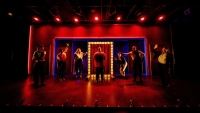
“A Strange Loop” Lets the Intrusive Thoughts Win at Raven Theatre in partnership with About Face Theatre
17 October 2026 in Theatre in ReviewA musical, but it’s just the voices in your head. Sounds just crazy enough to win the 2020 Pulitzer for…

Announcing Goodman's 22nd New Stages 2026 Festival Line-Up
15 October 2026 in Upcoming TheatreFrom a "Kung Fu rom-com" to a witchy new musical, The Goodman's popular New Stages Festival in its 22nd year continues…

TIMELINE THEATRE’S 100TH PRODUCTION, THE CHICAGO PREMIERE OF LAURA WADE’S HOME, I’M DARLING, DIRECTED BY MECHELLE MOE, SATIRIZES THE SEDUCTIVE FANTASY OF A “SIMPLER PAST,” NOVEMBER 11 - DECEMBER 13
14 October 2026 in Upcoming TheatreTimeLine Theatre’s 30th Anniversary Season at its new home in Uptown rolls merrily along in November with the company’s 100th…

Court Theatre announces America@250 - Now is the Time: Artists Go to Work
14 October 2026 in Theatre BuzzUnder the leadership of Marilyn F. Vitale Artistic Director Avery Willis Hoffman and Executive Director Angel Ysaguirre, Court Theatre proudly…
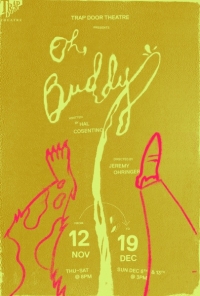
Trap Door Theatre Presents the World Premiere of OH, BUDDY, by Hal Cosentino. Opening November 12th, 2026
14 October 2026 in Upcoming TheatreTrap Door Theatre is thrilled to continue its 33rd season with a Chicago Premiere of Oh, Buddy, written by Hal…

Announcing the Cast of the 49th A CHRISTMAS CAROL
14 October 2026 in Upcoming TheatreTis the season, in spite of today's unseasonable temps, as A Christmas Carol begins rehearsals for The Goodman's 49th annual…

NOVA ENTERTAINMENT CURRENT AND UPCOMING 2026 CIRCA PINTIG UPDATES
14 October 2026 in Now PlayingNova Entertainment is pleased to announce the upcoming performance schedule and updates for CIRCA Pintig, with a visual rebrand and…
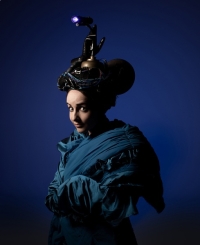
Steppenwolf Theatre Announces "ha ha ha ha ha ha ha" January 13 – February 7, 2027
14 October 2026 in Upcoming TheatreThe blurb is: hahahahahahahahahaha hahahahahahaha hihihi hahahahahahaha hoho hahahhahaha hehe hahahahahahahahahaha. Julia Masli's award-winning solo phenomenon ha ha ha ha…

'Sanctuary Stories' Ventures Into Emotional Drama Behind the News on Immigration
13 October 2026 in Theatre in ReviewSanctuary Stories plumbs the line between theater and journalism, and the powerful human dramas both can depict. Funded by a Northwestern…
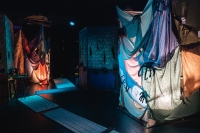
Inside Six Strange Worlds: Exquisite Corpse VI: LULLABIES
13 October 2026 in Theatre in ReviewFor its sixth Halloween season, Rough House Theater Co. has transformed Steppenwolf’s Merle Reskin Garage into a spectacular puppet haunted…
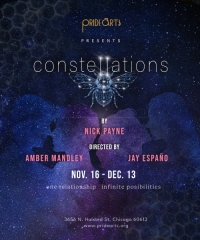
PrideArts announces cast and production teams for Nick Payne's CONSTELLATIONS, performed by alternating same-sex casts, November 13- December 13
12 October 2026 in Upcoming TheatreThursdays – Saturdays at 7:00 pm, Sundays at 3 pm Additional Saturday matinees at 3:00 pm on November 28 and December…
Robert Falls Directs a Sinfully Satisfying Don Giovanni at Lyric Opera of Chicago
11 October 2026 in Theatre in ReviewLet he without sin cast the first stone, Lyric’s “Don Giovanni” seemingly says when they bring up the house lights…

Teatro Vista Productions in collaboration with Audible presents Cafecito & Loops: A Mexodus Listening Tour Headed South Sundays, through November 1st
11 October 2026 in Now PlayingTeatro Vista Productions (TVP), the Midwest's only Latine-led Equity theatre company, in collaboration with Audible, presents Cafecito & Loops: A…
BrightSide’s Addams Family Musical Revives the Wonderfully Weird World of the Addams Clan
10 October 2026 in Theatre in ReviewThey're creepy and they're kooky, Mysterious and spooky, They're altogether ooky, The Addams Family. Yes, ooky. BrightSide Theatre’s production of…
Chicago City Opera Delivers a Rare Operatic Haunting with Der Vampyr
08 October 2026 in Theatre in ReviewWith Halloween creeping closer, there’s something fitting about revisiting one of opera’s earliest flirtations with macabre horror - especially in…

Avalanche Theatre stages the world premiere of They Broke Up by Skyler Tarnas November 6–22, 2026
08 October 2026 in Upcoming TheatreAvalanche Theatre announces the world premiere production of They Broke Up by Chicago playwright Skyler Tarnas, November 6–22, 2026. Opening…

Oil Lamp Theater Announces the cast and creative team for the return of IT'S A WONDERFUL LIFE: A LIVE RADIO PLAY, Nov. 20 - Dec. 27
08 October 2026 in Upcoming TheatreOil Lamp Theater is proud to announce the cast and creative team for its next production and the final production…
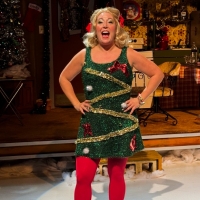
Adults-only holiday fun: Who's Holiday! brings R-rated Cindy-Lou Who back to Theater Wit for her sixth year, Nov. 27-Dec. 27
08 October 2026 in Upcoming TheatreChristmas Day is in our grasp. Why the vodka? Glad you asked! Who's Holiday! brings R-rated Cindy-Lou Who back to…

Two-Time Tony Award-Winning Actress Victoria Clark To Receive the Sarah Siddons Society Award at Annual Benefit on Monday, November 9, 2026
08 October 2026 in Theatre BuzzThe Sarah Siddons Society is pleased to present its 2026 Award to actress and director Victoria Clark, who recently starred…
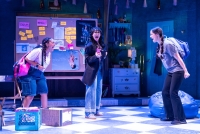
Goodman's Dead Girl’s Quinceañera: When Fifteen Meets the Adult World
07 October 2026 in Theatre in ReviewAt fifteen, the world can feel like a television show you haven't quite figured out how to turn off. For…

Steppenwolf Theatre's ADIRONDACK CHAIR CIRCLE In Rehearsal – Playing October 22 – December 6, 2026 – World Premiere!
07 October 2026 in Upcoming TheatreSteppenwolf Theatre Company, the nation's premier ensemble theater company, is pleased to launch its 51st Season with the world premiere of…
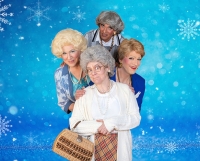
Hell in a Handbag Productions Announces 25th Anniversary Season!
07 October 2026 in Upcoming TheatreHell in a Handbag Productions is thrilled to announce its 25th Anniversary Season, featuring three "camptacular" shows guaranteed to delight lovers of…
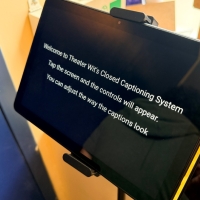
Chicago’s Theater Wit introduces new Watchword closed captioning system, dramatically improving access in all three of its theaters
07 October 2026 in Theatre BuzzChicago’s Theater Wit is now offering new, state-of-the-art closed captioning service, marking a dramatic improvement in making live theater more…

Paramount Theatre’s reimagined A Christmas Carol promises to be a dazzling new, all-ages spectacle for Chicago’s holiday theater season, November 11-January 3
07 October 2026 in Upcoming Theatre“God bless us, everyone,” because there’s a fresh, new, reimagined version of Charles Dickens’ classic tale A Christmas Carol debuting…
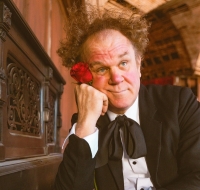
"John C. Reilly is Mister Romantic" Returns to Steppenwolf Theatre - December 10 – 13, 2026
06 October 2026 in Upcoming TheatreFollowing last year's critically acclaimed, sell-out engagement, Steppenwolf Theatre Company is pleased to announce the return of John C. Reilly…

Saint Sebastian Players Open 45th Season With A Murder Is Announced by Agatha Christie Classic Miss Marple Mystery Runs Oct. 23–Nov. 15
06 October 2026 in Upcoming TheatreThe Saint Sebastian Players open their 45th season of travels to different places with A Murder is Announced, a classic Miss Marple mystery…

Announcing "The Goodman, For Good" Campaign
06 October 2026 in Theatre BuzzToday, Goodman Theatre raises the curtain on its future as leadership and artists share a vision for its next century…

Two Edge Theater Company to stage A VIEW FROM THE BRIDGE as its inaugural Chicago production, December 4 through January 10
05 October 2026 in Upcoming TheatreTwo Edge Theater, a reincarnation of the Edge Theater Company that enjoyed eight successful seasons in the Denver, Colorado area,…

Frankenstein at Studebaker Theater adds performances for Halloween run
05 October 2026 in Upcoming TheatreChicago's historic Fine Arts Building and Studebaker Theater are thrilled to announce their Halloween co-production of Manual Cinema's acclaimed Frankenstein…

ANY REBELLION OF WILL - Trap Door Theatre - Through November 1st
05 October 2026 in Now PlayingTrap Door Theatre is thrilled to continue its 33rd season with Any Rebellion of Will, written by S.L. Daniels and…





Latest Articles
-
 “A Strange Loop” Lets the Intrusive Thoughts Win at Raven Theatre in partnership with About Face Theatre
Written by John AccroccoA musical, but it’s just the voices in your head. Sounds just crazy enough to win the 2020 Pulitzer for Drama. “A Strange Loop” by Michael R. Jackson finally makes its Chicago premiere at Raven Theatre in a co-production with…
-
 Announcing Goodman's 22nd New Stages 2026 Festival Line-Up
Written by Buzz Center StageFrom a "Kung Fu rom-com" to a witchy new musical, The Goodman's popular New Stages Festival in its 22nd year continues to offer a first glimpse at the latest works by a handful of the hottest contemporary playwrights. This year's four-play…
-
Chicago Danztheatre Ensemble Announces 2026-2027 Season
Written by Buzz Center StageChicago Danztheatre Ensemble (CDE) is pleased to announce its 2026 - 2027 season. CDE will open this artistic season with Copestic Vibrations: A Music Festival, Friday, Nov. 13 and Saturday, Nov. 14, followed by a fully staged production of For…
-
Eos Theatre Company Announces Second Production with The Thin Place
Written by Buzz Center StageEos Theatre Company is pleased to announce their second production with Lucas Hnath's horror play The Thin Place, directed by JC Clementz (Steppenwolf's Director of Casting and Artistic Operations), playing February 5 - 28, 2027 in Bramble Arts Loft's Beatrice Theater, 5545 N…


Does your theatre company want to connect with Buzz Center Stage or would you like to reach out and say "hello"? Message us through facebook or shoot us an email at This email address is being protected from spambots. You need JavaScript enabled to view it..
*This disclaimer informs readers that the views, thoughts, and opinions expressed in the text belong solely to the author, and not necessarily to Buzz Center Stage. Buzz Center Stage is a non-profit, volunteer-based platform that enables, and encourages, staff members to post their own honest thoughts on a particular production.